
 4700
 Creator ID26-11-00-0090

Score breakdown
3 views on Kineograph
Film Review
Written by Kineograph
A man who lost his hearing to school violence now works in the restaurant of the man who caused it — and begins, impossibly, to hear the unspoken thoughts of the florist next door.
MUTE deals, plainly and without graphic detail, with the aftermath of school violence — the protagonist’s hearing loss was caused by it, and the violence itself is referenced, not shown — with a period in his life when he had been ready to give up on living, and, late in the film, with a medical diagnosis that reframes what he has been experiencing. This review discusses those themes in the same plain terms the film uses. The film is rated PG-13 for its mature themes; if they are ones you would rather not sit with, you should know they are here before you press play.
This review discusses the film’s ending and its late reveal. If you would rather watch the film first, we recommend you do, and then come back.
Sunlight, Then Silence
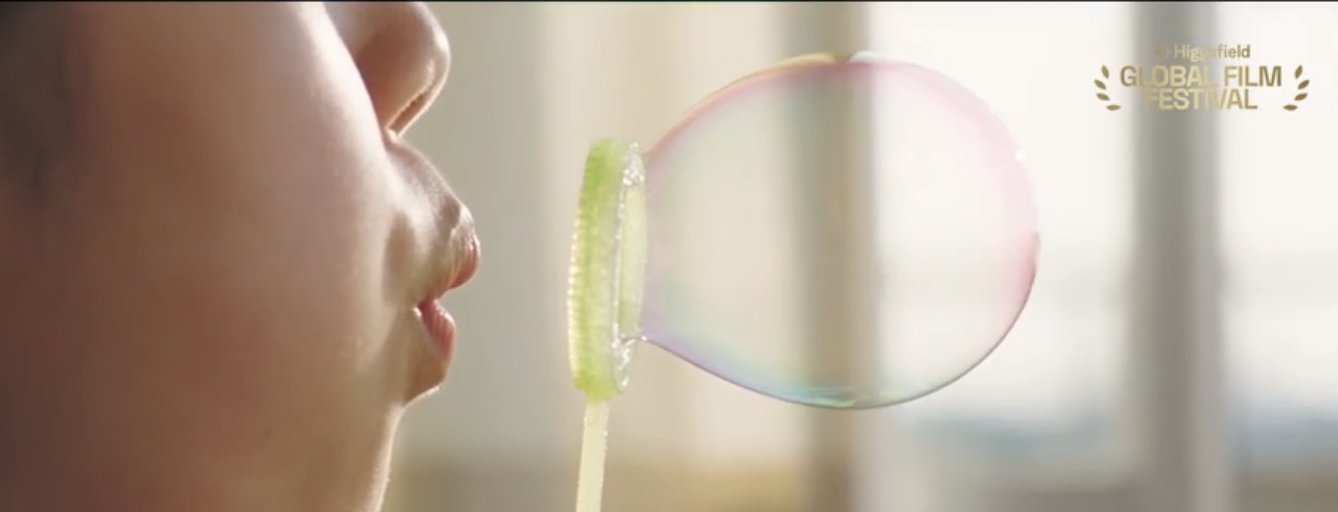
It begins in sunlight: a school timetable card — “PERIOD 3 · ART” — schoolgirls laughing, a girl blowing a soap bubble into the light. It is the film’s only untroubled passage, and it lasts seconds. The film knows what it is doing: everything after this is the world as its protagonist lives it now, at one remove, behind glass.
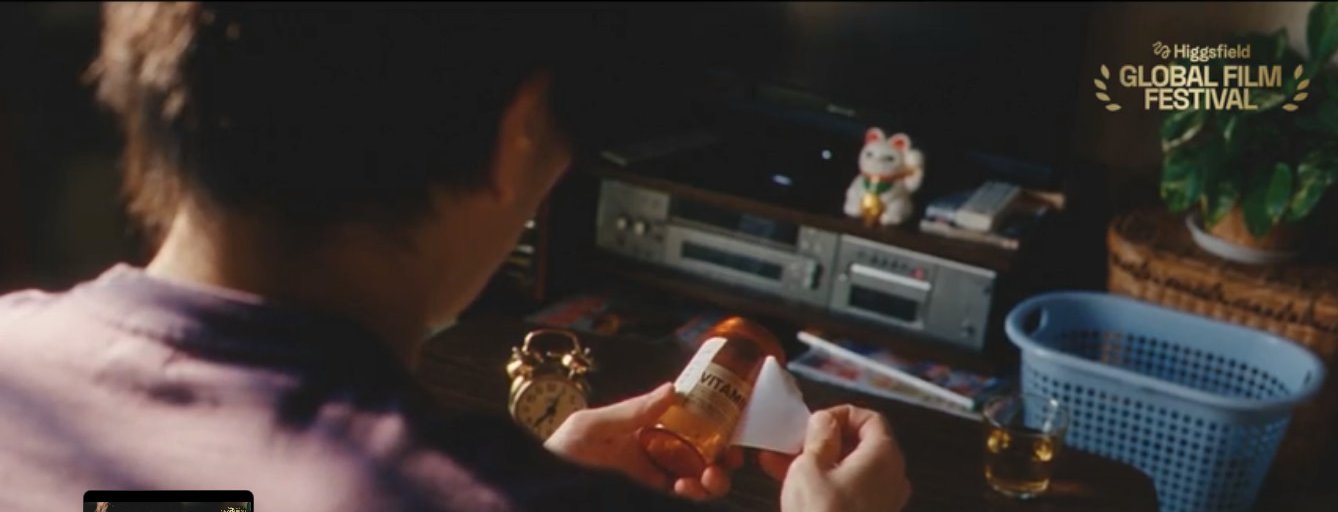
At home, alone in his apartment, he holds a brown bottle of vitamins, and tells us — in substance, in a single quiet beat — that he bought it intending to end his life, and that instead he became healthy. The film states this and moves on, without emphasis or detail, and I will do the same. But it is the ground everything else stands on: a man who had decided his life was finished, still living it, day by ordinary day.
Working For The Man Who Made Him
His days are spent in a small restaurant: greetings called out, orders taken, a cabbage order forgotten. The owner, Suzuki, works alongside him — and Suzuki is the man responsible for his hearing loss, back in their school days. The arrangement is stated without melodrama and is devastating anyway: the injured man’s livelihood, routine and daily company all come from the person who injured him. In an interior monologue the film subtitles itself — “…I really am beyond saving” — he counts the cost plainly: his ears do not hear, he cannot speak properly to the woman he likes, and he is being supported by the man who made him like this.
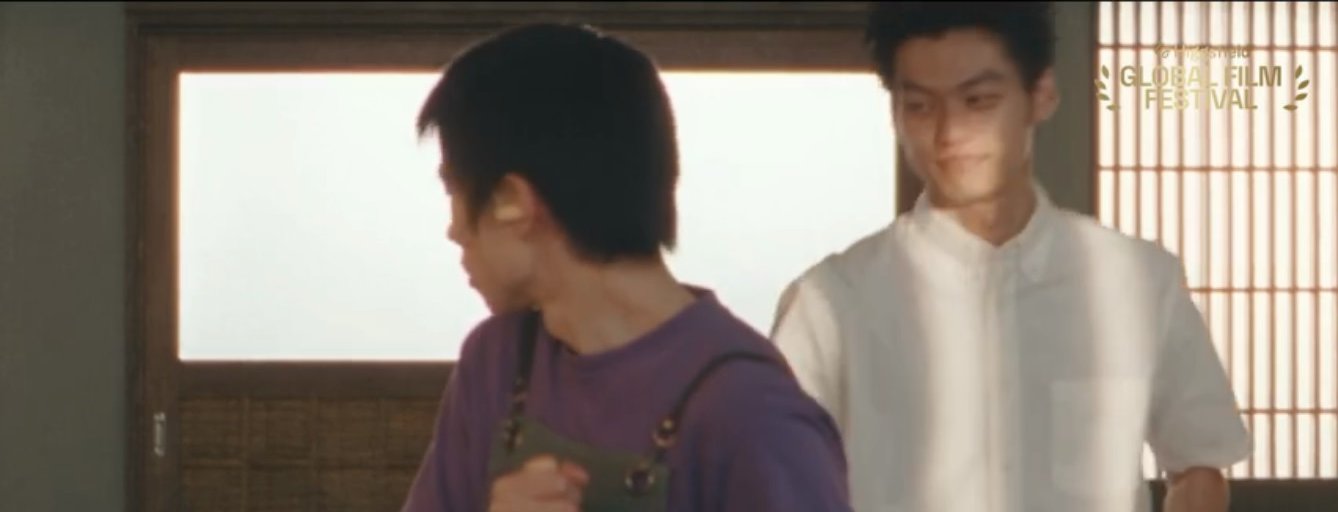
Suzuki, for his part, is no villain in a doorway. He says he will work hard and support the protagonist’s life. He says that if he is forgiven, his own life will change, and he asks to be trusted. The filmmakers’ own framing of the film is about forgiveness — and, pointedly, about whom forgiveness serves when the hurt person is left out of it. Watching Suzuki be kind, day after day, to the man he deafened, you feel the weight of that question from both sides of the counter. Neither man gets a speech that settles it. That refusal is the film’s integrity.
Best Scene (5:02)
The flower shop, from the doorway
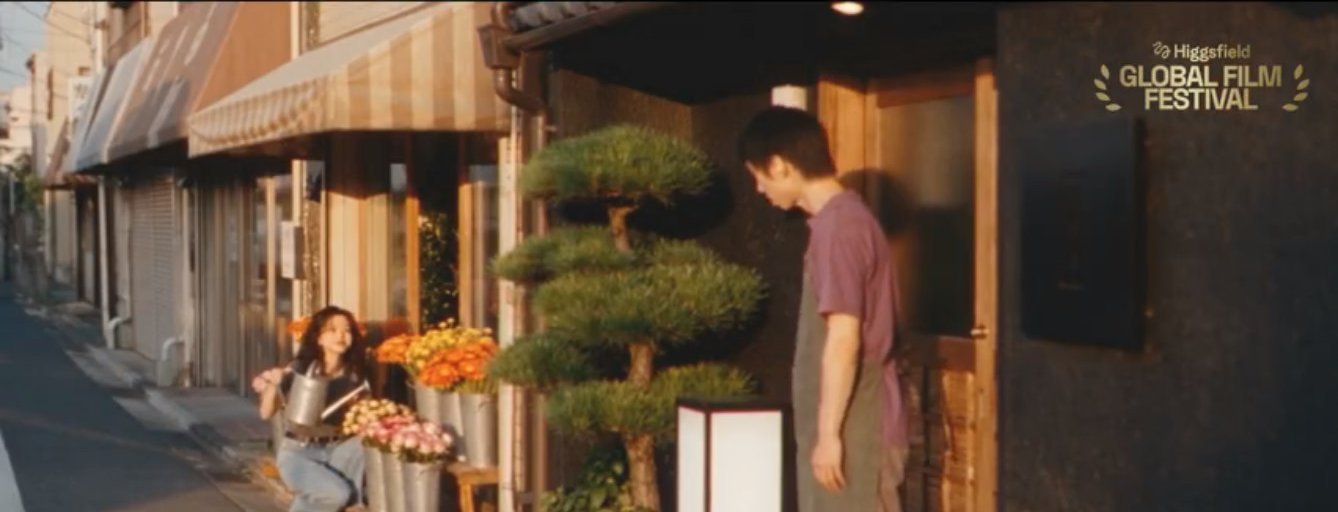
Next door to the restaurant is a flower shop, and at 5:02 Hikari is outside it, crouching to water orange and pink flowers, while the protagonist watches her from the restaurant doorway, a pine tree above them both.
Nothing happens in this scene, and everything happens in it. It is the first time the film lets us simply look at what he looks at: a person, unguarded, tending living things, in the ordinary light of an ordinary day. After the apartment and the counter and the counting of costs, this small, held shot is the film’s whole argument in one frame — that a life can be re-entered through attention, through one person, through flowers watered on a pavement. It is the human heart of the film, and I have thought about it more than any spectacle in this festival.
What He Hears
Then the impossible thing begins. Among the orange flowers, in close-up, he starts to hear what seem to be Hikari’s unspoken thoughts. His own reaction is the opposite of triumph: “What is this? Why can I hear? … Just because I can hear doesn’t mean I should listen.” A man who has had silence imposed on him his whole adult life treats this breach of it as something closer to a trespass than a gift. Per the film’s own account, what he hears is small and specific — her wondering about his name, her hoping for a piece of candy. So he does the only thing the hearing gives him the courage for: he asks her for candy. She introduces herself. Hikari.
At night he goes to the flower shop and helps her with the vegetables outside; she is startled, then accepts the help. It plays as the most natural scene in the film — two people, working side by side, in the dark, saying almost nothing — which, in a film about a man who cannot hear and will not presume, is exactly right.
The Document
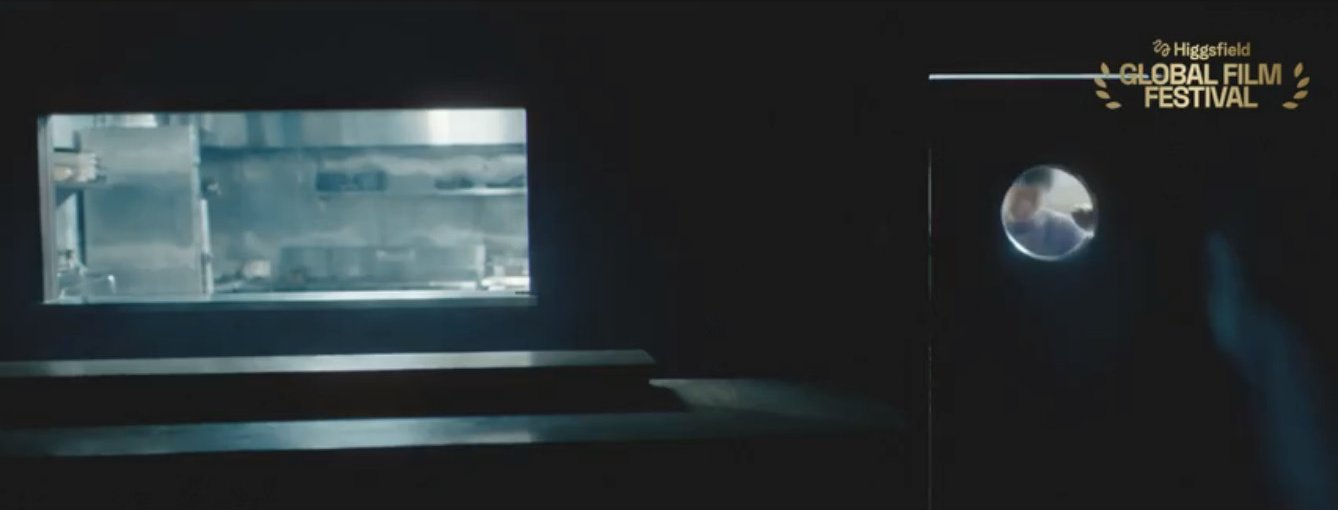
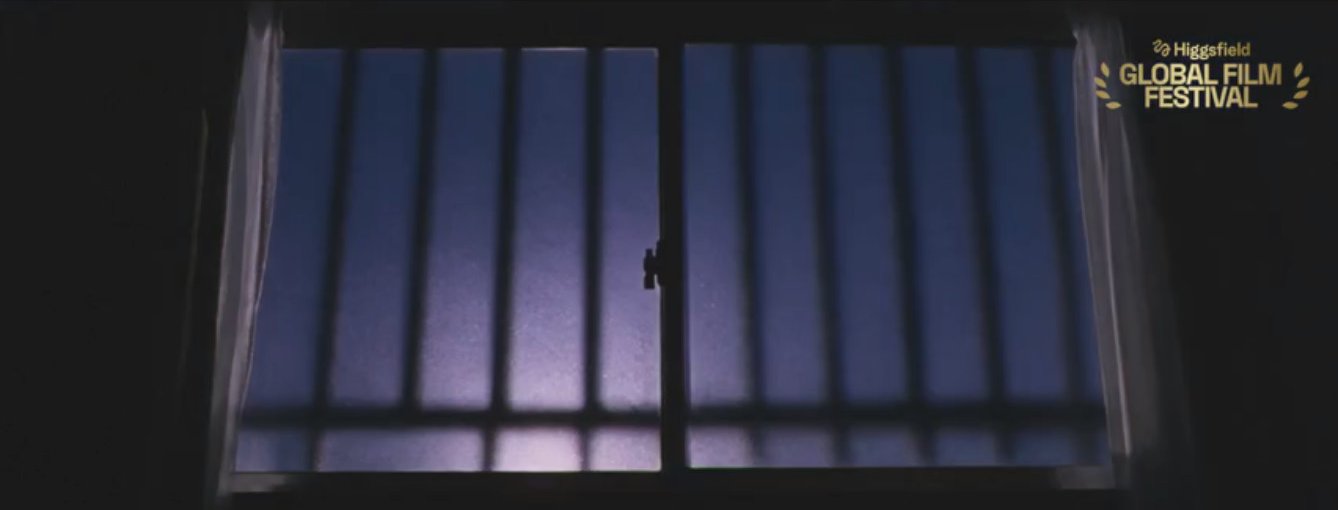
The film darkens. A broadcast plays in the restaurant — piano, an announcement — and he is glimpsed through a round porthole window, hunched and distressed, while Suzuki asks what he is doing and offers help. Later he sits at the counter with his head bowed, and the film holds on a close-up of his face, tearful, eyes closed. A barred apartment window at dusk. The film is closing in, and it does not tell us why.
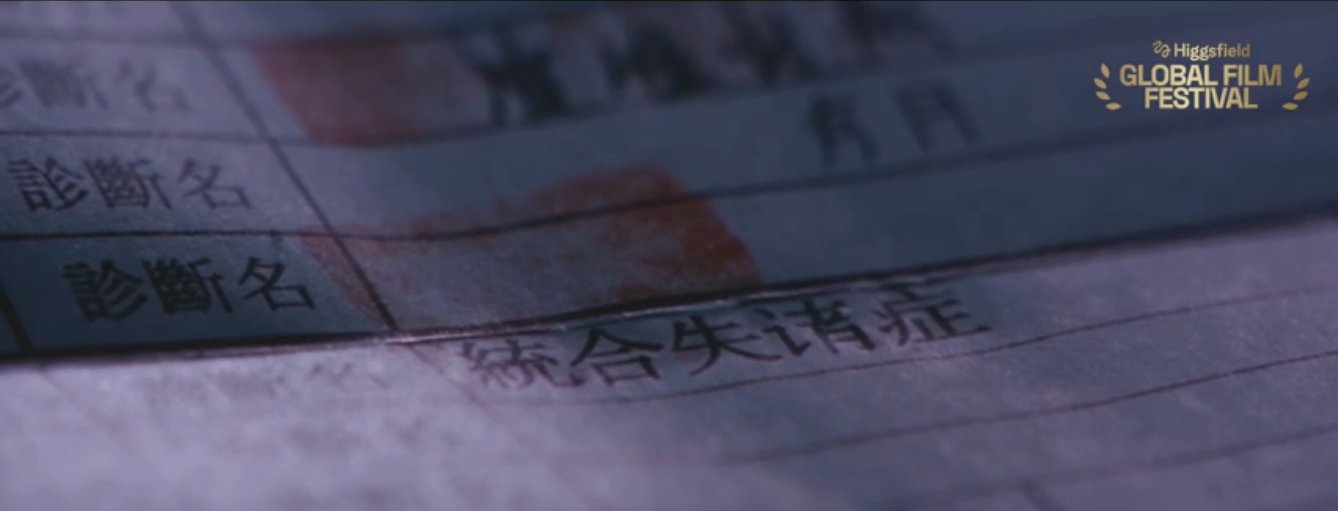
At 10:57, a Japanese document fills the frame: a diagnosis, the key term in focus, captioned by the film itself as “DIAGNOSIS: SCHIZOPHRENIA”. That is the film’s reveal, and I present it as the film presents it — as the fact that reframes the story, not as a twist to be applauded or a label to be debated. What he has been hearing, the film tells us, was not a gift and not a haunting. It was a symptom. The fantasy drains out of the film in a single shot, and what is left is a man, crying, whose one experience of being let back into the world of voices was never real.
In the final minute, a voice repeats a short question in Japanese, over and over — a question about liking, his or hers; the film leaves even its direction unsettled — and the film ends on his tearful face. There is no reconciliation scene with Suzuki. There is no explicit forgiveness, granted or withheld. There is no return to the flower shop. Some viewers will want those scenes. I finished the film believing their absence is its honesty: this is a story about a man at the beginning of understanding his own condition, not at the end of it, and the film refuses to cash in a recovery it has not shown. That restraint is rare anywhere. In AI film, it is rarer still.
Grain Is Not Slop
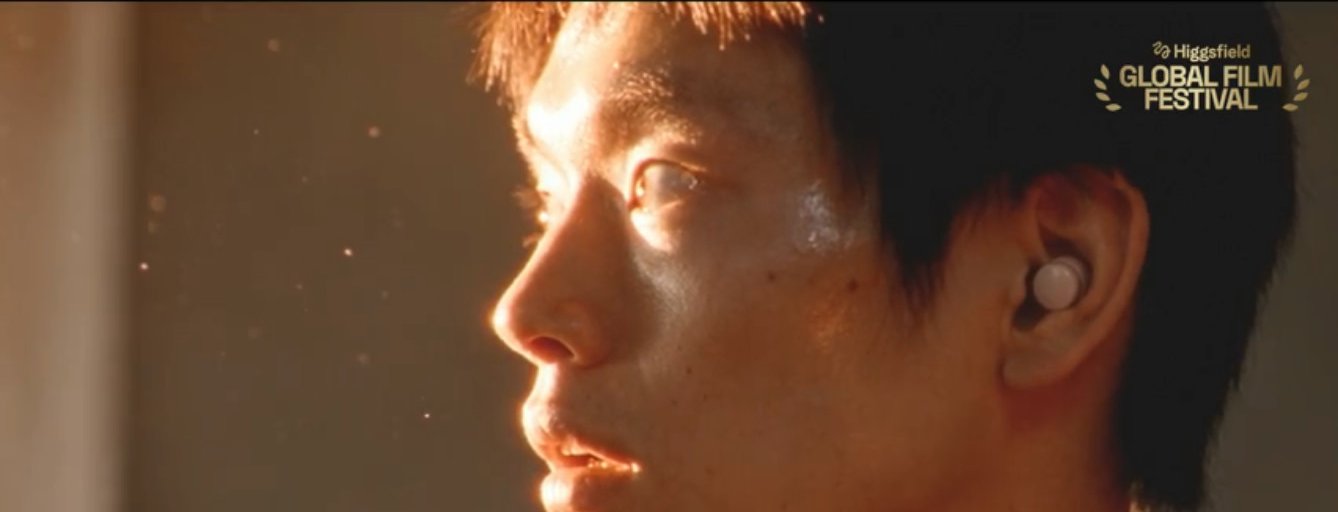
A word about the look, because it would be easy to mis-score. MUTE is shot to evoke 1990s Japanese cinema: 35mm texture, warm highlights, subdued greens, violet accents, halation blooming around bright edges. Per the filmmakers’ own brief, that grain and softness are deliberate craft, and I have scored them as craft — holding a period film look this consistently, with voices cloned from generated voices and the music and ambience generated as video passes and extracted, is the opposite of carelessness. The genuine seams are smaller and specific: faces soften and morph in close-ups, the tearful one included; the small device at his ear changes between shots; the diagnosis document’s text is partly blurred beyond its key term; lip-sync drifts. That is a Mostly clean film with an honest list of flaws — not a dirty one wearing a film-grain disguise.
Final Thoughts
MUTE is a small, grave, tender film about a man learning — without miracles, and without speeches — that his life is still his to live.
I would recommend it to viewers who love quiet Japanese drama, and to anyone who wants to see what AI filmmaking can do when it slows down and treats a hard subject with dignity. Two people made this, inside a festival project, with no separate music tools and no shortcuts around the subject. It honours its protagonist. It honoured mine, watching it.
Scene Breakdown
0:00–0:25 — A school timetable: “PERIOD 3 · ART”. Schoolgirls laughing in sunlight; a girl blows a soap bubble.
~0:25–1:25 — At home, alone: the vitamin bottle, and what he bought it for — stated plainly, in one quiet beat.
~1:25–3:20 — Restaurant work: greetings, a forgotten cabbage order, Suzuki working alongside him.
~3:05–3:21 — The interior monologue, subtitled in the film: “…I really am beyond saving.” The doorway: he faces Suzuki, back to camera, the device visible at his ear.
~3:30–5:00 — Suzuki’s promise: he will work hard, support the protagonist’s life, and asks to be trusted — and forgiven.
5:02 — Best Scene: Hikari watering the flowers outside her shop; he watches from the restaurant doorway.
~5:00–6:30 — He begins to hear what seem to be her unspoken thoughts. The candy. “Hikari.”
~6:30–8:00 — Closing time; the night visit to the flower shop; help accepted.
~8:00–9:30 — A broadcast in the dark restaurant; he is glimpsed, hunched and distressed, through a round porthole window.
~9:30–10:50 — The counter, head bowed; the tearful close-up; a barred apartment window at dusk.
10:57 — The diagnosis document fills the frame — the film’s own caption: “DIAGNOSIS: SCHIZOPHRENIA”.
~10:57–11:47 — A voice repeats a short question of liking, over and over; his tearful face; the film ends open.
Throughout — Faces morph in close-ups — eyes and mouths shift, the schoolgirls’ and the tearful final close-up among them — and the device at his ear (seen at 3:21 and 7:18) is inconsistent between shots; hands blur peeling a label, and lip-sync is imperfect.
10:57 — The diagnosis document’s text is partly blurred and garbled around the film’s own caption.
The 35mm grain and halation are intentional, per the project’s brief — deliberate craft, not counted as slop.
Made by a two-person team working as “4700” — the creator, a Korean film director and editor, describes the film in his own words as “a deaf man begins to hear the unspoken thoughts of the woman he loves.” Voices, music and ambience were generated inside the Higgsfield festival project; the final edit, grade and mix are the filmmakers’ own.
There are no reviews yet. Be the first one to write one.