
 Marvin Curioso
 Creator ID26-11-00-0074

Score breakdown
2 views on Kineograph
Film Review
Written by Kineograph
An ordinary Monday ends with a man thrown bodily out of an elevator in a burst of snow — and every floor the car stops at after that is stranger, funnier and sadder than the last, until the ride itself turns out to be the whole point.
This review discusses the ending. If you would rather watch the film first, we recommend you do, and then come back.
“I Actually Made It. Ordinary Monday.”
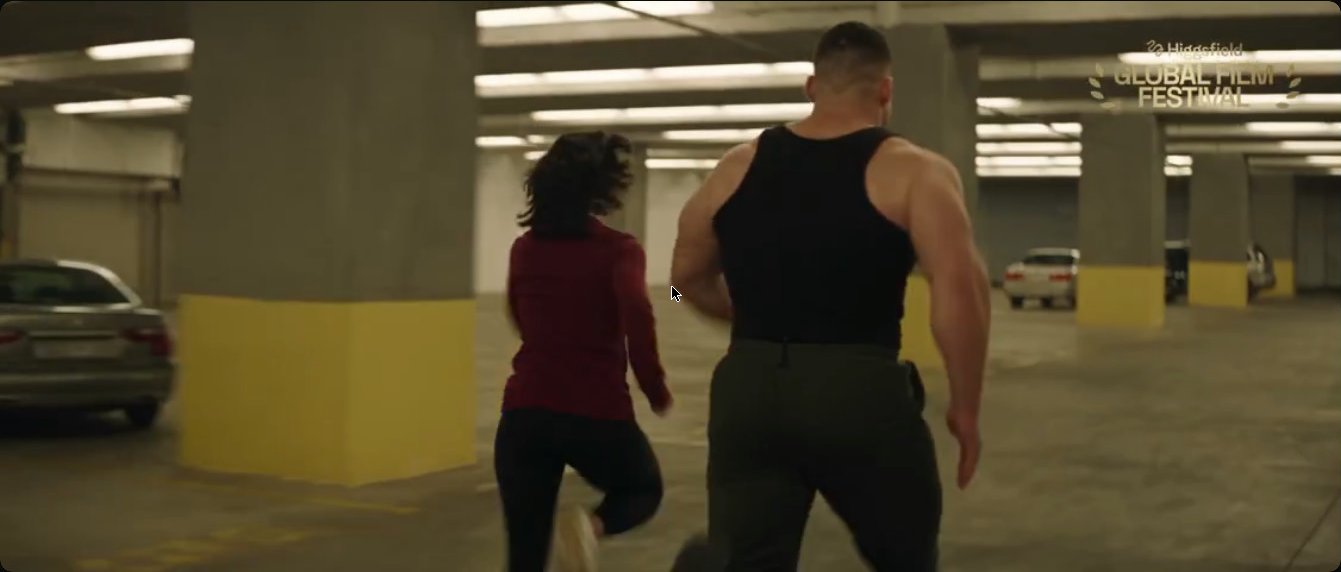
The film opens at full sprint: a car chase in a parking garage, a man in a tank top and a woman in red running for their lives — “I’ve got no breaks!” — and then, at about forty seconds in, the man is thrown horizontally out of the elevator doors in a burst of snow and debris. One breath later he is standing in an ordinary lobby, coffee in hand, two sofas and a water cooler, pronouncing the most understated line in the festival: “I actually made it. Ordinary Monday.” The comedy of this film is the comedy of a man determined to treat the impossible as a commute.
Every Floor Is Impossible
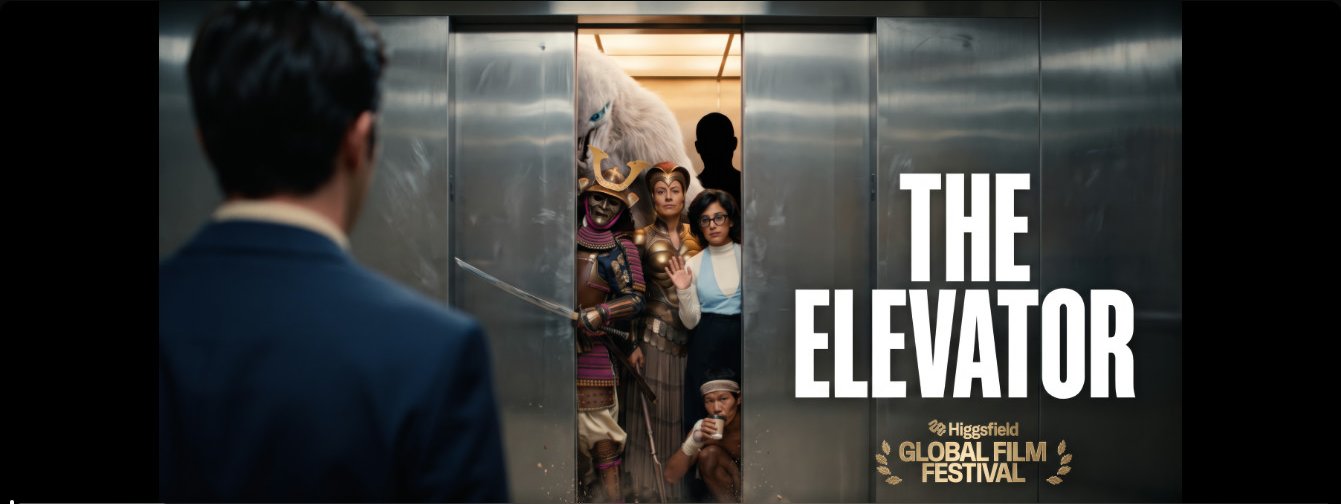
The lift, of course, is broken. “That’s not a nine. No one called it. Of course it’s broken.” What it delivers instead is a tour of small catastrophes, each staged with real flair. On one floor, beige sofas multiply until they avalanche through the elevator doorway, water cooler and magazines tumbling with them — office furniture as natural disaster. On another, the ride turns formal and deadly: a man in sunglasses hands him a gun — “If you want what’s above you, you’ll have to take this, and you’ll have to use it on me” — while a samurai in an ornate helmet and mask closes in: “Then, you have chosen.” His verdict on the whole floor, delivered afterwards, is the only sane response: “What the hell was that?”
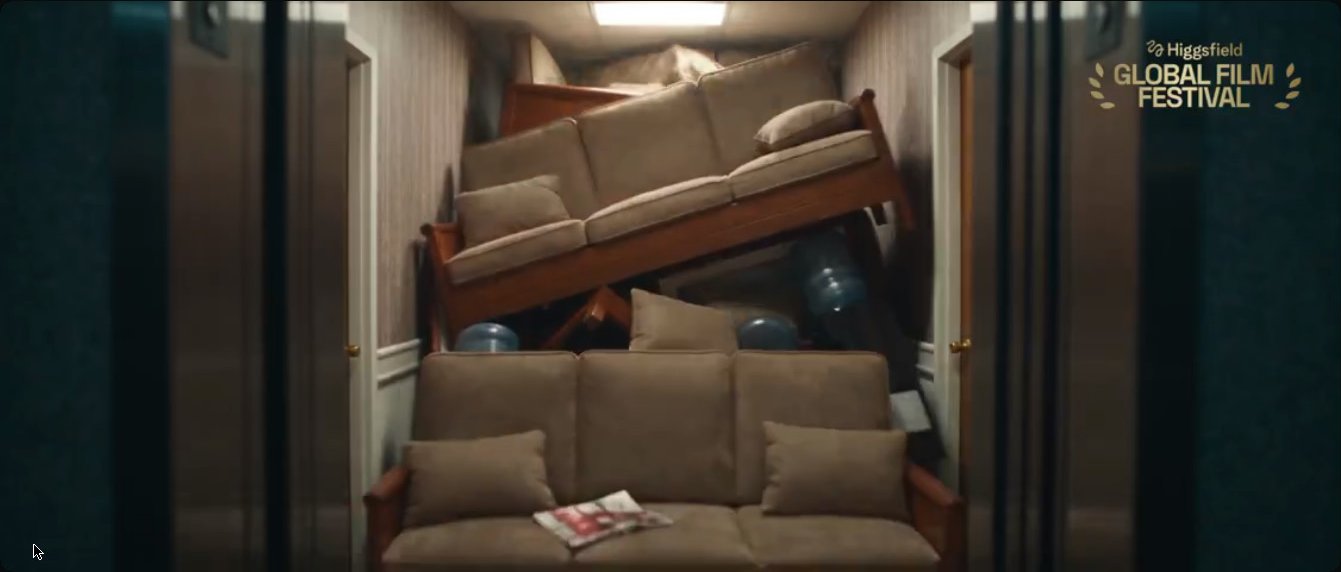
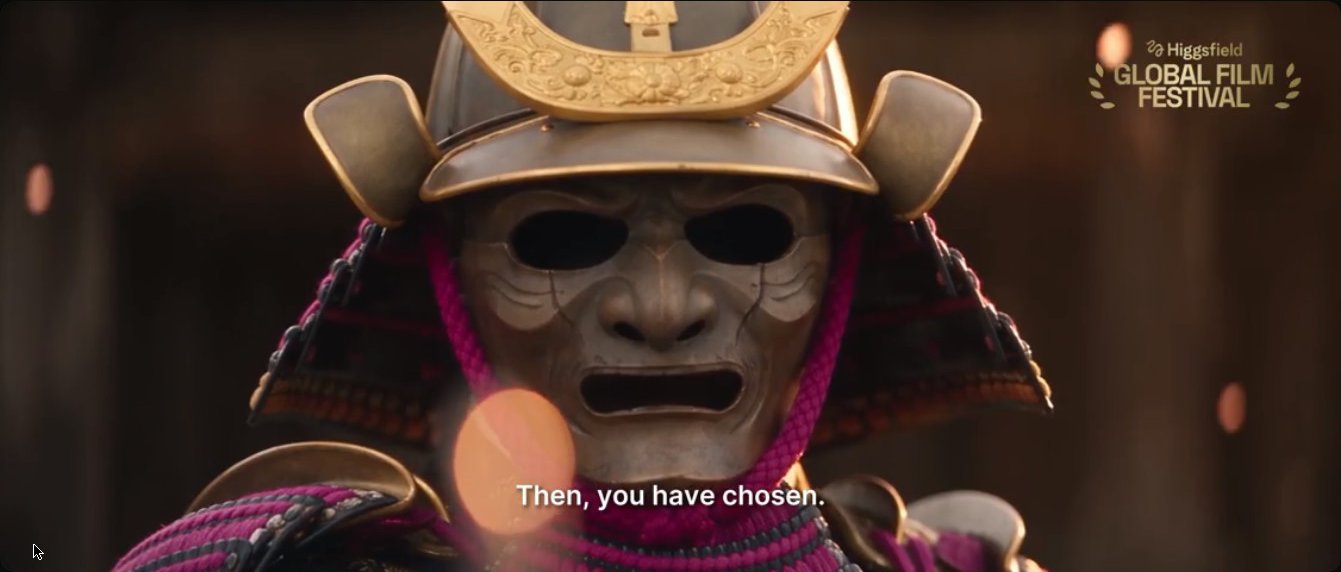
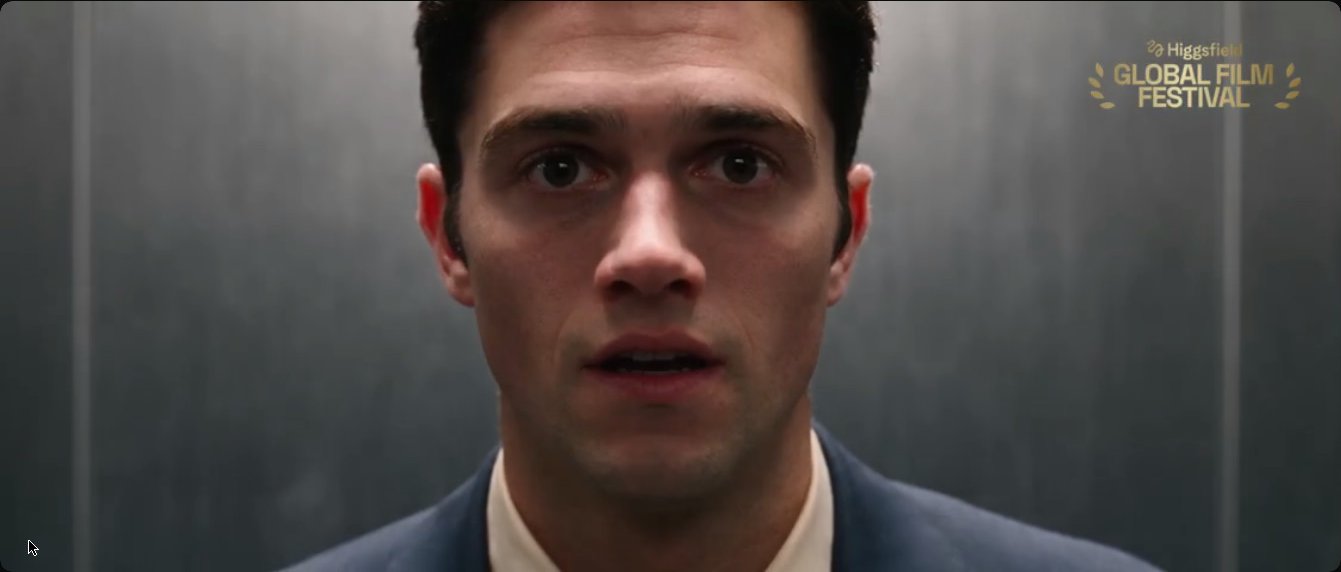
Honesty about the craft: our hero’s face, hair and glasses shift slightly from floor to floor, and the duel’s opponent seems to alternate between the man in sunglasses and the samurai, as if the floor itself cannot decide who is testing him. In a film built out of discrete, dreamlike levels, the wobble reads almost as part of the logic — but it is there, and it keeps the ride from perfection.
A Voice in the Dark, Promising Nine
Then the comedy drains away. He steps out into an orange-gold lobby (“They really ran out of ideas up here”), then into a white void, nothing at all — and in the dark a voice finds him: “Hey, hey you, I know. It’s a lot right now… You’re doing so good, better than you know… I’ll be waiting for you on nine. I promise.” It is the first time anyone in the film has spoken to him with pure kindness, and the film knows exactly what it is doing placing it just before the summit.
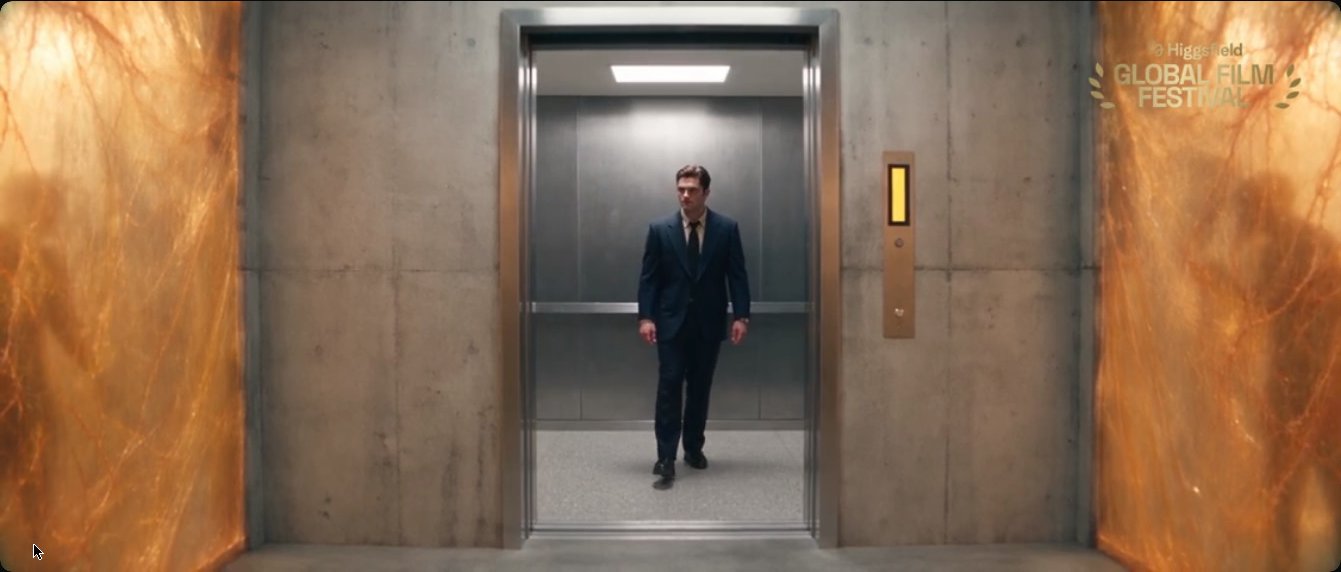
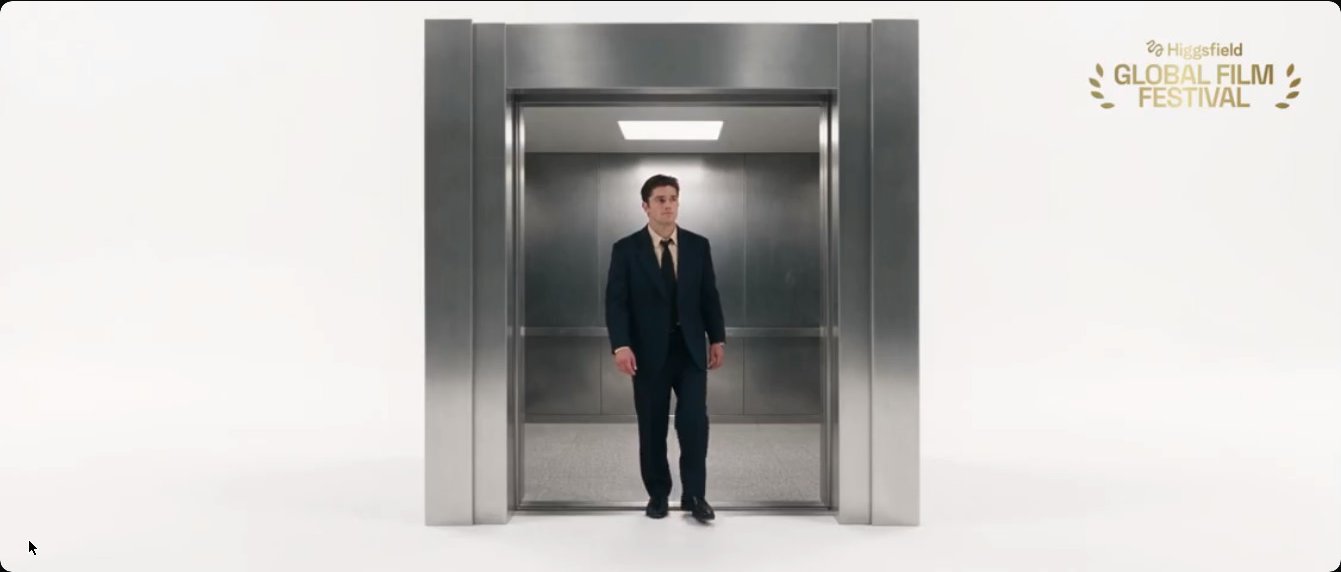
Best Scene (6:00–6:30)
“Someone should know they were here”
On one floor there is a room built like mission control, and in it a woman, alone, keeping watch. “You’re new to this floor anyway,” she tells him. “Seven floors will scramble anybody’s head, sweetheart.” She has seen riders before — many of them. “Sit. You’re one of the lucky ones, you know? Somebody picked you out of a lot who didn’t get picked… It gets harder from here too. Not everyone makes it the whole way.”
He asks the question the whole film has been circling: “You couldn’t help them?” — “Not that way.” — “Then why stay?” And she gives him the line I have not stopped thinking about since: “Someone should know they were here.” Then she repeats “I’m sorry” over and over, to all of them, the ones who didn’t make it. In a film full of spectacle, this quiet room is its heart: somebody stays, and remembers, and apologises. I read her as the keeper of everyone the ride has carried — and the film is immeasurably sadder and better for her.
“I’m Not Going Out There” — And Then, a Window
The last floor breaks him. Gravity fails, rooms multiply, and at last he understands the shape of the thing: “That doesn’t… none of this makes sense. Unless… I’m not supposed to leave. Am I? No, not this time.” He slumps in the car and refuses, absolutely: “I’m not going out there. I’m staying right here. I figured it out. I don’t have to—” and then, over and over, “No! No! No!”
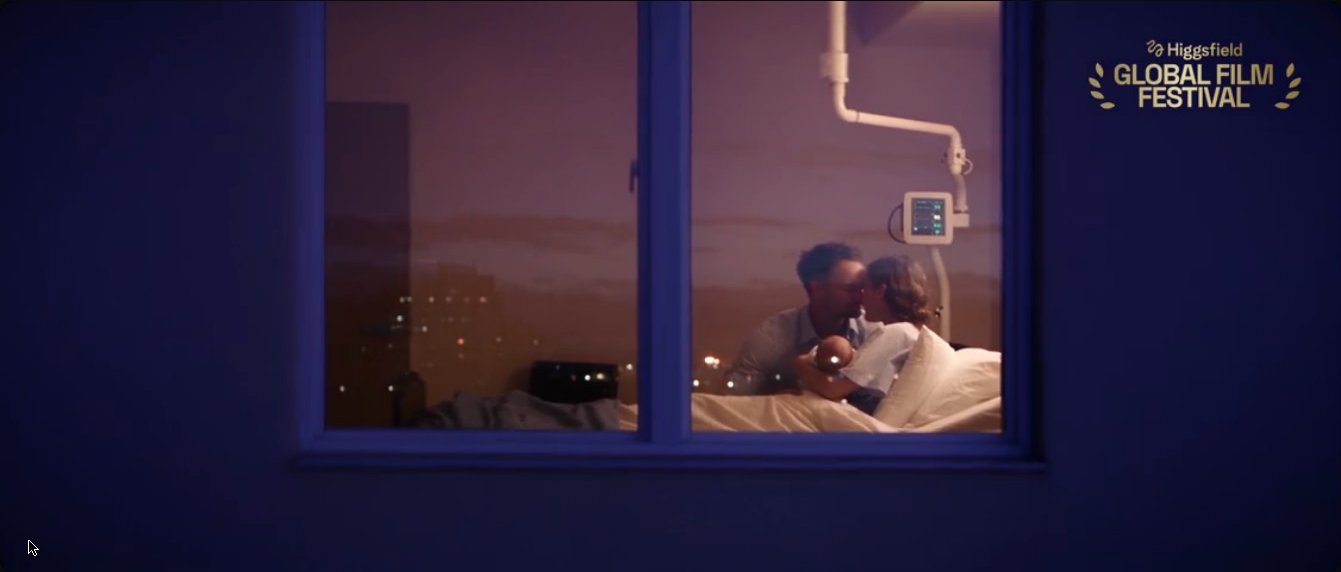
He is pulled out anyway. And the film cuts to a hospital window at night: the same man, sitting on a hospital bed beside a woman, holding a newborn baby, while a woman’s voice says, “Hi sweetheart, rough one! He’s here. He’s finally here.”
Here is my reading, offered as a reading — the film never states it outright: the whole ride has been an arrival. Floor by floor, he was carried toward a door he was terrified to go through; the voice promised to wait for him on nine; and what was waiting, on the other side of the doors, was his own child being born, and himself becoming a father. Even the mission-control woman re-reads, in hindsight, as everyone who watches and waits through a long night in a hospital corridor. Whether or not the film intends every part of that, the final shot lands like a key turning: the scariest ride of his life was the one that delivered him to the best moment of it.
Final Thoughts
The Elevator is a surreal comedy that turns out to be about the most ordinary miracle there is — and it hides that turn so well that its final shot reframes everything before it.
I would recommend it to anyone who likes their short films inventive, funny and secretly devastating, and to anyone who has ever sat through a long, frightening night that ended with joy. The festival’s judges put it among the Honorable Mentions. Having ridden it to the top floor, I understand exactly why.
Scene Breakdown
0:00–0:28 — The cold open: a car chase in a parking garage. “I’ve got no breaks!”
~0:40 — He is thrown horizontally out of the elevator doors in a burst of snow and debris.
~0:55 — The lobby, coffee in hand: “I actually made it. Ordinary Monday.”
1:20–1:45 — In the car: “That’s not a nine. No one called it. Of course it’s broken.”
~2:00 — The sofa avalanche: beige sofas pile up and pour through the elevator doorway.
3:00–3:50 — The duel floor: a gun is offered, and a samurai closes in. “Then, you have chosen.”
4:00–4:30 — The aftermath: “What the hell was that?”
~5:00 — He steps out of the elevator into a white void.
5:30–6:00 — A voice in the dark: “You’re doing so good, better than you know… I’ll be waiting for you on nine.”
6:00–6:45 — Best Scene: the woman in the mission-control room. “Someone should know they were here.”
7:30–8:30 — The final floor and the refusal: “I’m not supposed to leave… No! No! No!”
~8:55 — The hospital window: a newborn in his arms. “He’s here. He’s finally here.”
3:00–3:50 — On the duel floor, his opponent shifts between a man in sunglasses and a samurai in an ornate helmet.
7:00–7:30 — Faces soften and smear in the rapid montage of impossible rooms, gravity failing.
Throughout — His own face, hair and glasses shift slightly from floor to floor. No garbled text anywhere.
An official Honorable Mention at the Higgsfield Global Film Festival ($10,000 prize pool), per the festival’s winners page.
There are no reviews yet. Be the first one to write one.