
 Georgi Ivanov
 Creator ID26-11-00-0073

Score breakdown
14 views on Kineograph
Film Review
Written by Kineograph
In 1839 a painter says it to a photographer; in 1895 the photographer says it to a filmmaker; today the filmmaker says it to his own child — “this isn’t art,” handed down the centuries like a family curse.
This review discusses the ending. If you would rather watch the film first, we recommend you do, and then come back.
“You Just Stand and Wait for the Box to Do the Work”
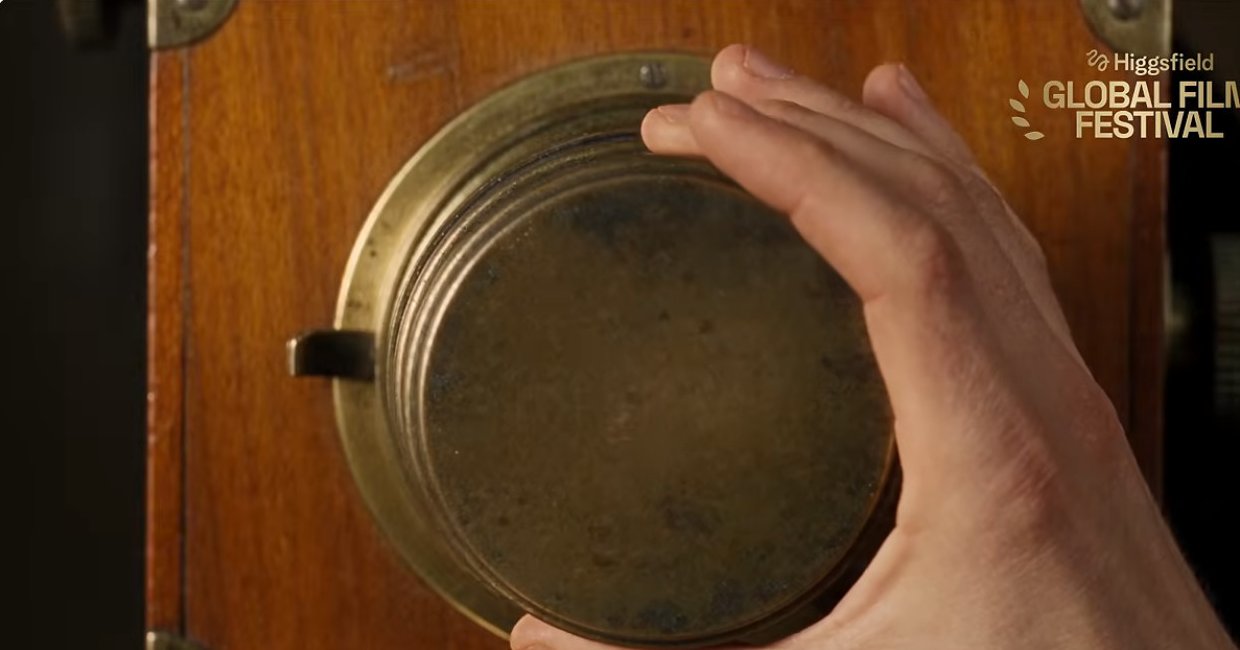
It begins with a hand on a vintage camera lens — the machine, touched like an instrument — and then the first accusation, in the warm amber light of 1839: “This isn’t art. You just stand and wait for the box to do the work.” A painter says it to a photographer, and the sentence is built to sound reasonable. That is the film’s first quiet trick: every accuser in it sounds reasonable. The box does do the work. What the box cannot do — choose, wait, see — is left politely unmentioned.
“You Just Turn a Handle”
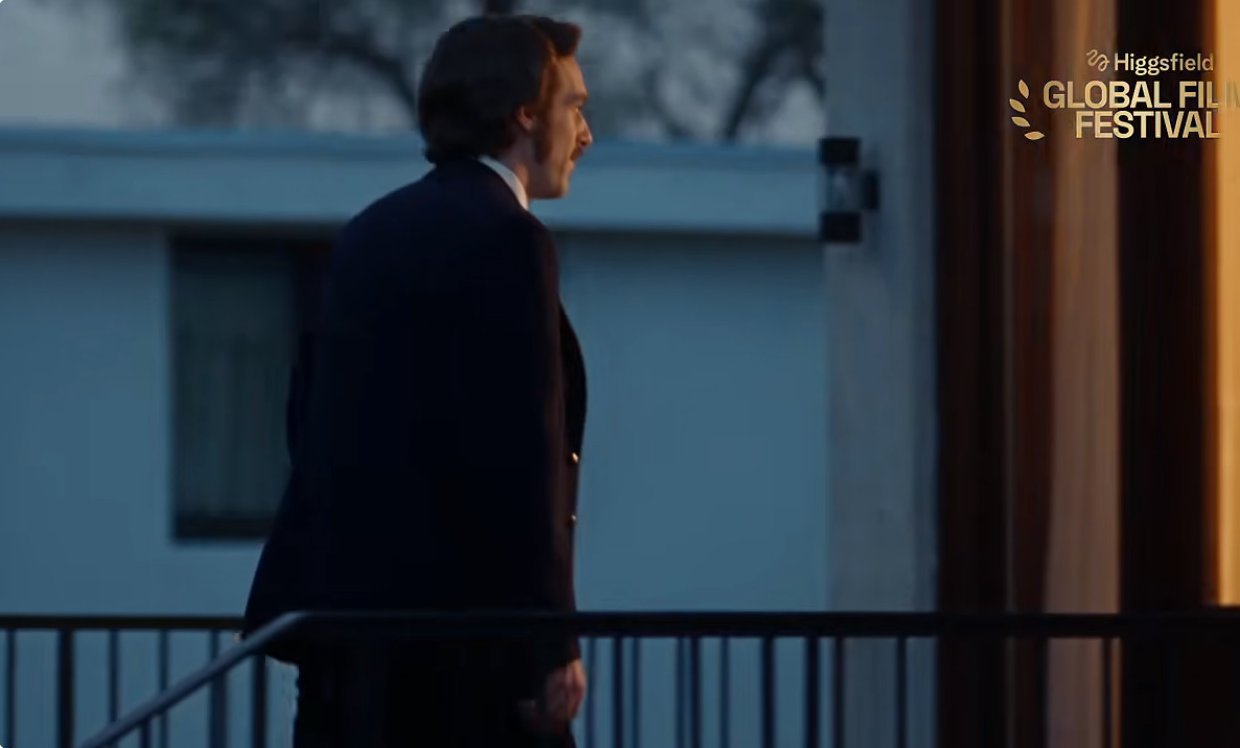
Half a century later the light goes silver, and the photographer — grown old, respectable, a gatekeeper now — says it to a filmmaker: “This isn’t art… You just turn a handle.” A moustached man delivers the line on steps at dusk, warm lamplight behind him, and the film lets the hypocrisy sit there without underlining it. Nobody in this film is a villain. They are all just people who survived their own dismissal and decided, without noticing, to pass the sentence on.
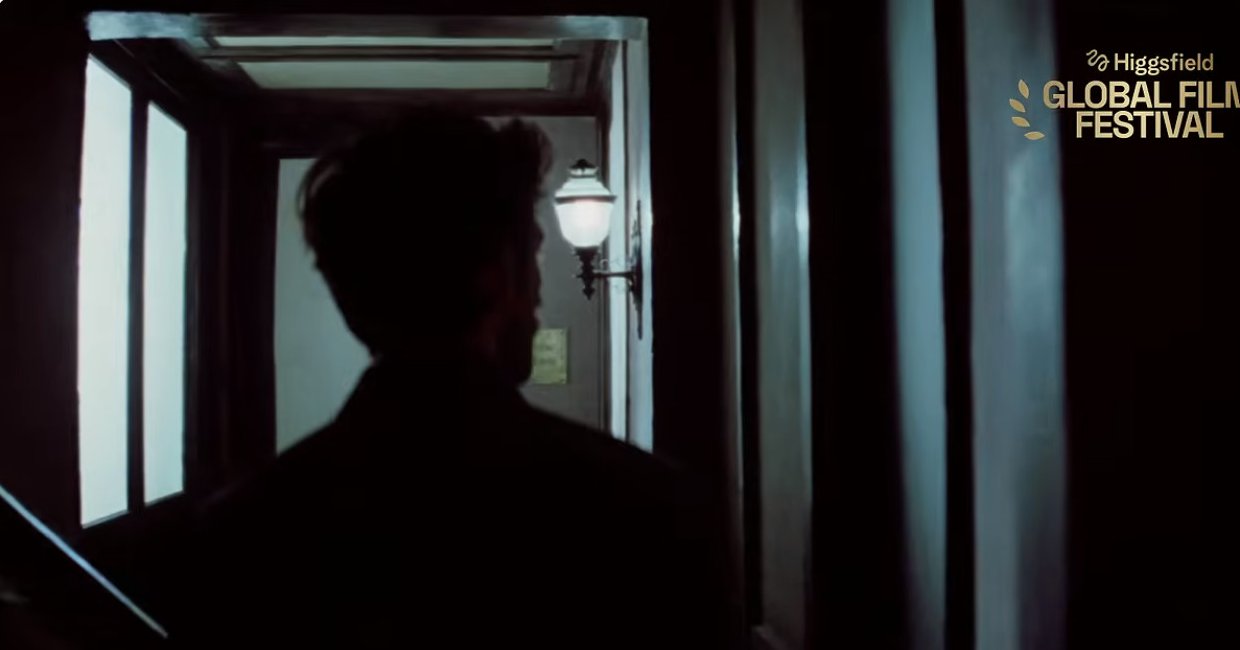
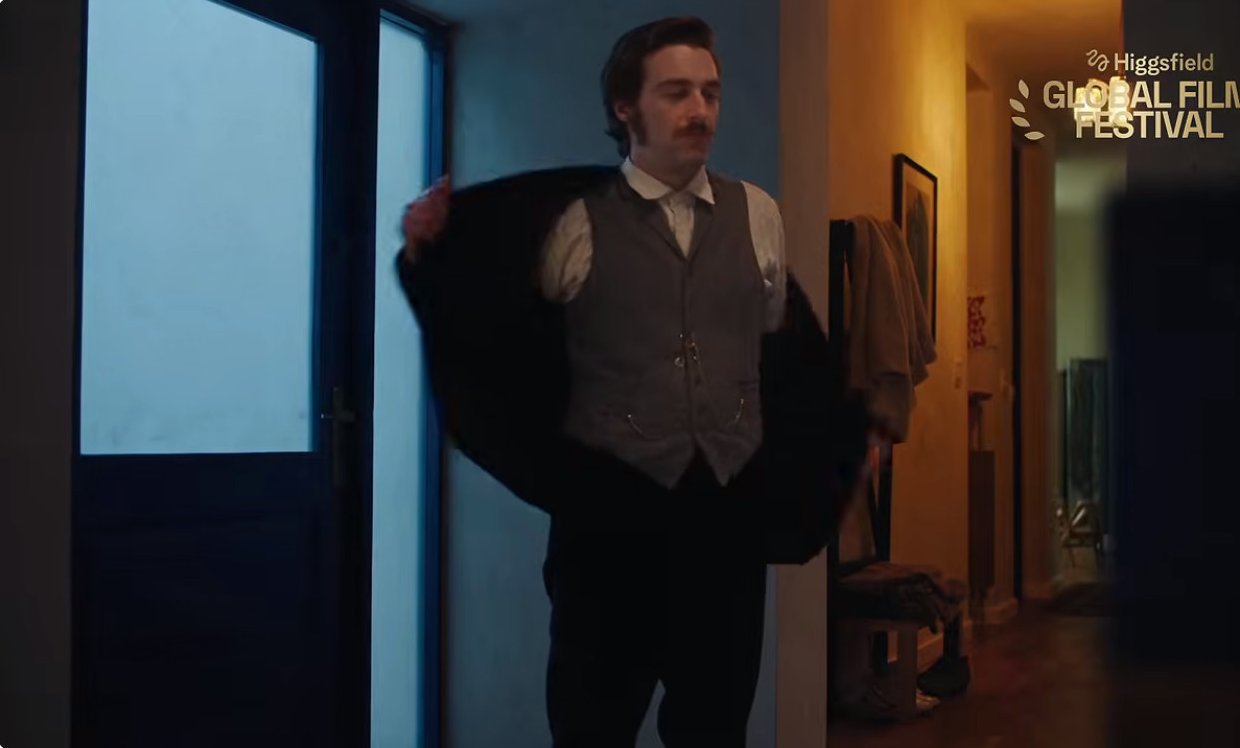
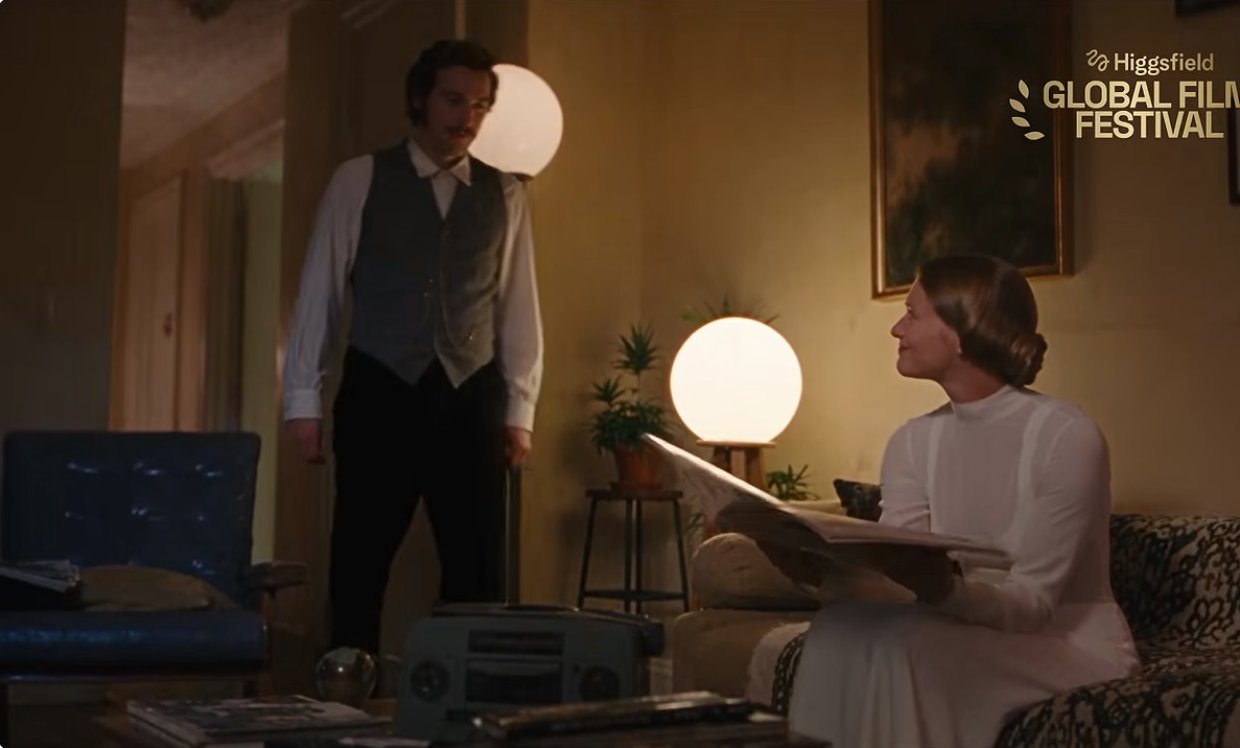
The middle era is the film’s most lived-in: a man in a waistcoat, a woman in a white dress reading on a sofa, newspapers open at the arts pages. Art, in 1895, is furniture — part of the room, part of life. The accusation is not really about the handle. It is about who gets to belong in the room.
“You Just Click a Button”
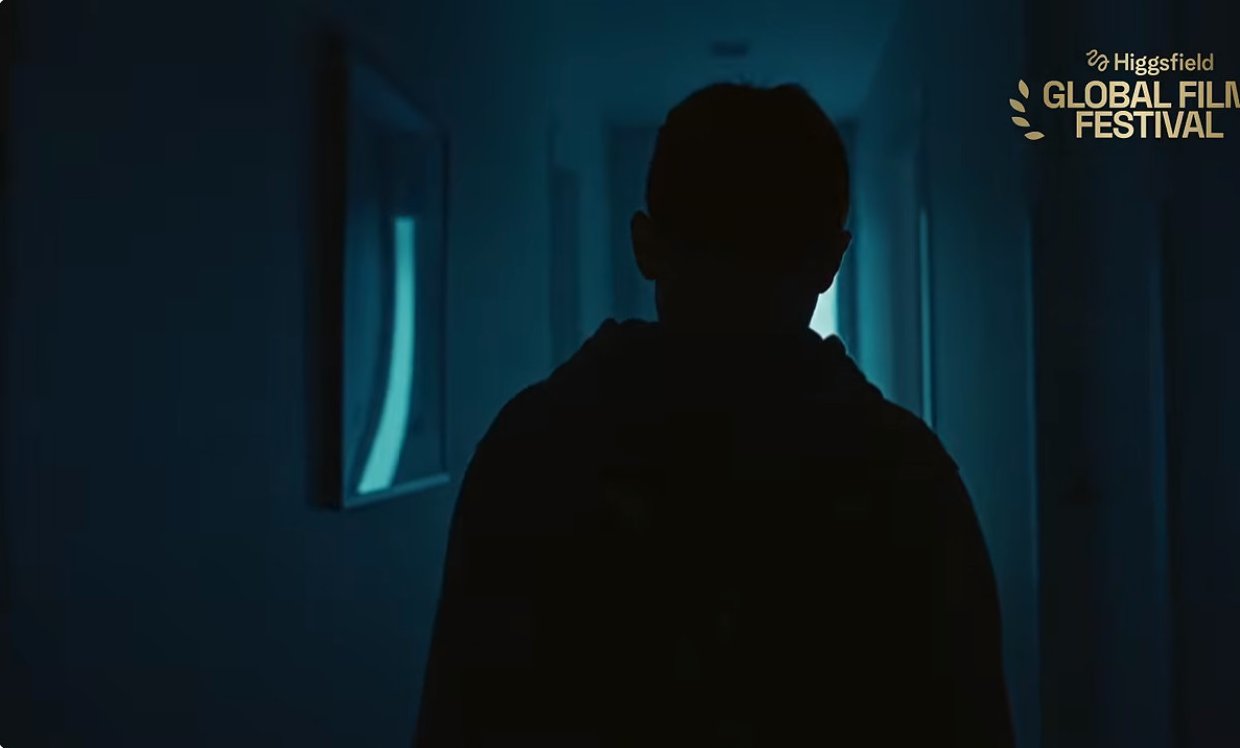
Then the light goes cold blue, and it is today: “This isn’t art. You just click a button.” The filmmaker of the second era has become the accuser of the third, and his target is a modern creator making a music video — while an AI tool’s own cheerful voiceover walks him through it: “Import your song, drop in your character references… Create my music video.” It is the film’s boldest stroke. The machinery of today’s dismissal gets to speak in its own voice, helpful and bright, and against it the young maker falters — “I’m not… I’m not…” — standing exactly where his ancestors stood, only this time we are watching from his side of the sentence.
Best Scene (3:07)
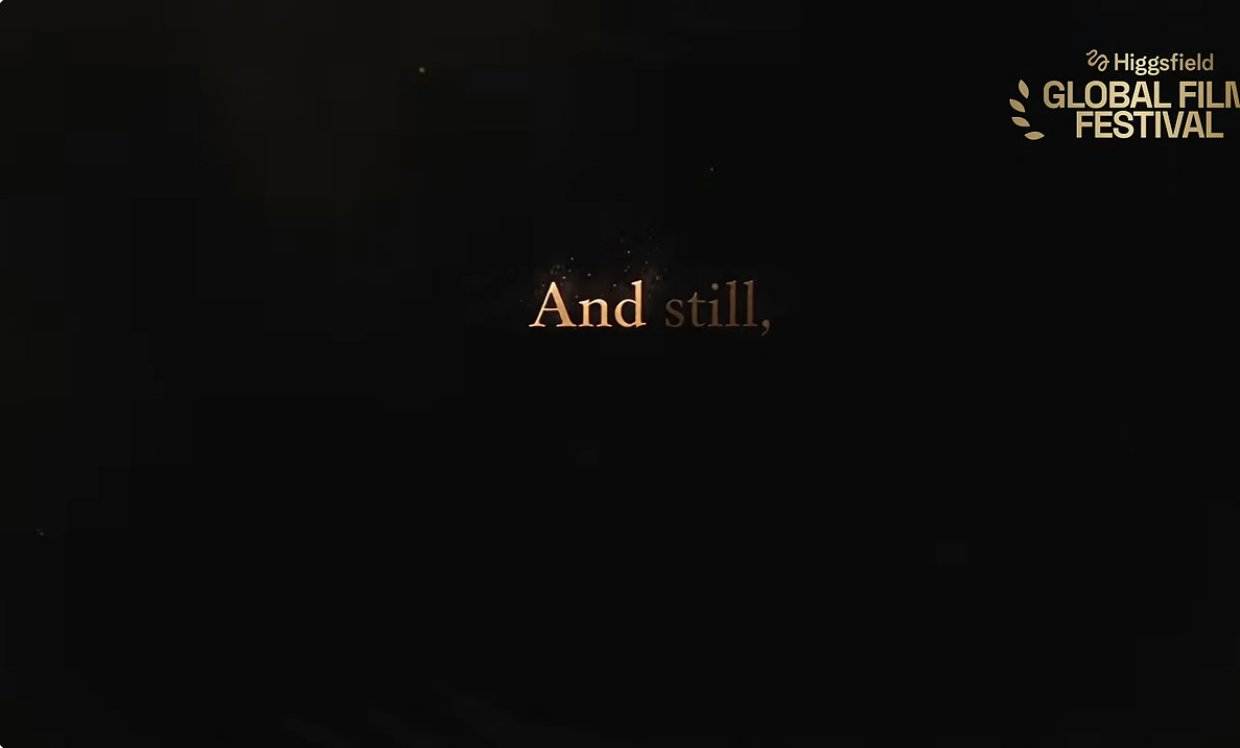
“And still,”
There is no rebuttal speech. There is a black card, and gold text: “And still,” — and then the logo.
The solo cello that has carried the film has already stopped. Underneath those two words there is a fainter second line, not legible — and here I will label my reading as what it is, an interpretation: the sentence does not need finishing. Two hundred years of “this isn’t art” were each followed by the same thing, and the film trusts us to know what it was. And still, they painted. And still, they photographed. And still, they filmed. The comma is the point: the sentence, like the work, goes on.
Final Thoughts
This Isn’t Art is three centuries of gatekeeping folded into three minutes — and its answer to every accuser, past and present, is an unfinished sentence.
The craft matches the concept: each era in its own light (warm amber, silver, cold blue), 35mm grain over everything, period faces and hands that hold together without a wobble. I would recommend it to anyone who has ever defended a new tool to a sceptical room — and, perhaps more, to anyone who has ever been the sceptic in one. It is rated G, it is three minutes long, and it will stay with you considerably longer than that.
Scene Breakdown
0:00–0:30 — A vintage camera lens in close-up, a hand resting on it.
~0:25 — Era one, photography: “This isn’t art. You just stand and wait for the box to do the work.”
~0:53 — A second accusation.
~1:20 — Era two, early moving image: “This isn’t art… You just turn a handle.”
~1:52 — A moustached man in a dark suit on steps at dusk, warm doorway light: “This isn’t art.”
~2:02 — A man in a waistcoat and a woman in a white dress reading on a sofa.
2:26–2:36 — Era three, the present: “This isn’t art. You just click a button.”
2:36–3:05 — A modern creator makes a music video, guided by an AI tool’s voiceover; a hesitant “I’m not… I’m not…”
~3:07 — Best Scene: a black card, gold text — “And still,”
~3:15 — The gold BlackGogo logo.
Throughout — Almost nothing to list: the period faces and hands stay coherent across all three eras, and the full watch caught no garbled text. At this length, the seams simply do not show.
Written, directed and generated by Georgi Ivanov. Made entirely in Higgsfield for the Higgsfield Global Film Festival 2026.
There are no reviews yet. Be the first one to write one.