
 Christopher Satola
 Creator ID26-11-00-0071

Score breakdown
5 views on Kineograph
Film Review
Written by Kineograph
In a prehistoric winter settlement that survives by fearing wolves, a young hunter corners a wolf mother, hesitates — and spends the rest of the film defending the mercy he showed.
This review discusses the ending. If you would rather watch the film first, we recommend you do, and then come back.
“Never Corner an Animal”
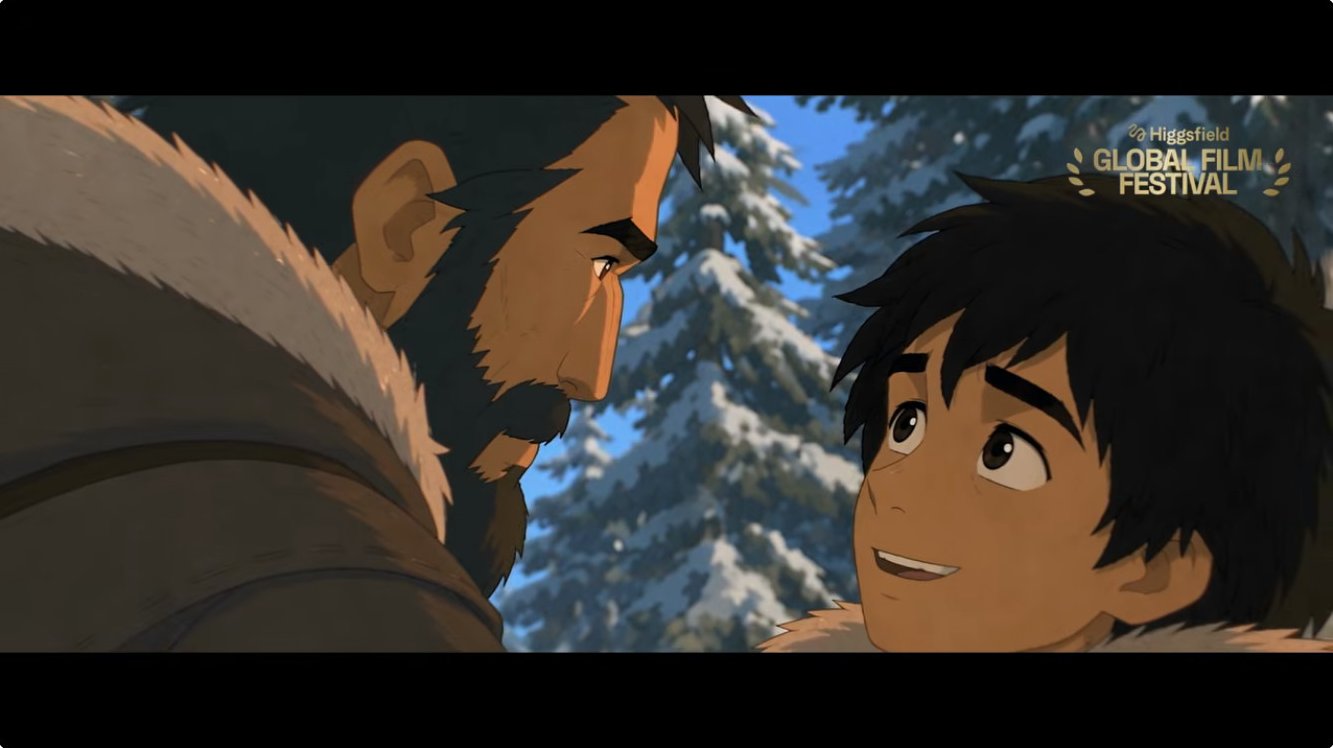
The film opens with its rulebook. In the snow among the pines, an elder teaches the boy the law of the hunt: “Never corner an animal. If it thinks you’re a threat, it will kill you before you get the chance.” It is practical advice, and the film means us to hold onto it — because everything that follows is the story of a boy breaking that rule in the gentlest possible way, and of what it costs when the animal world and the human world both find out.
A Spear, a Wolf, and a Held Breath
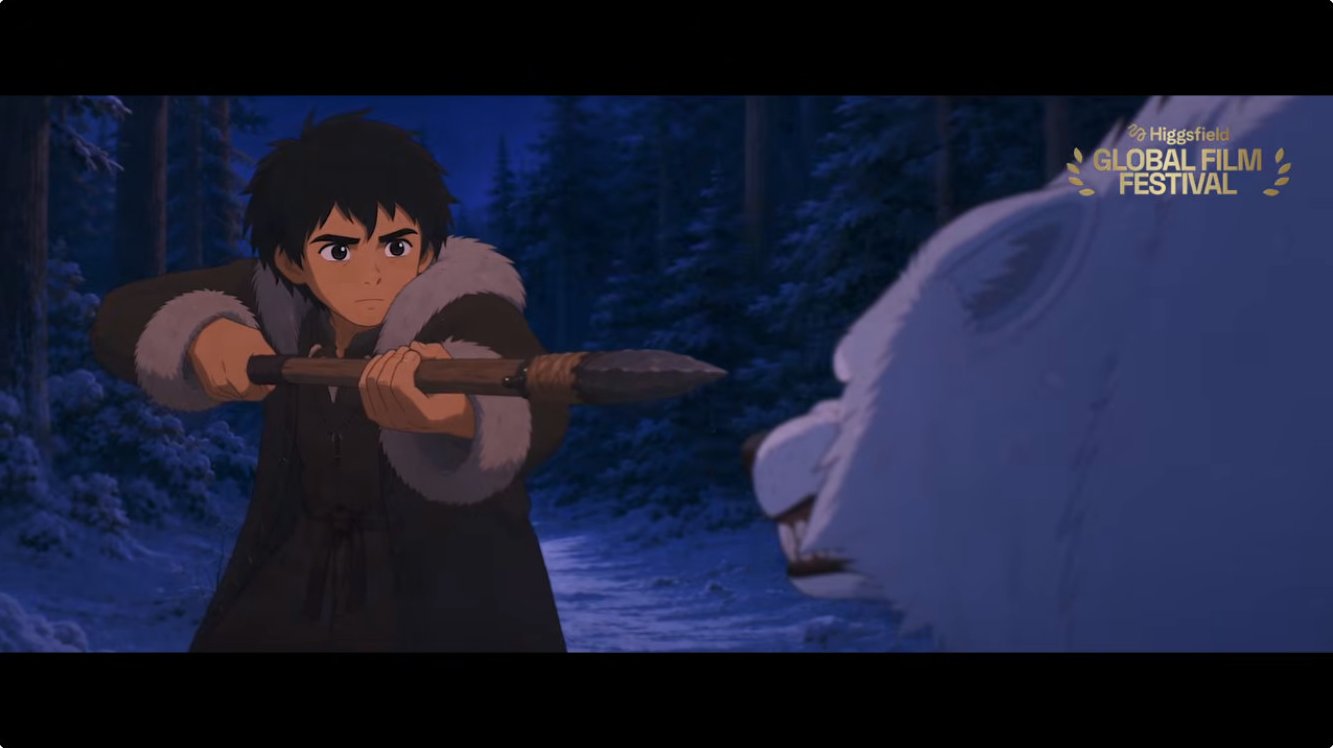
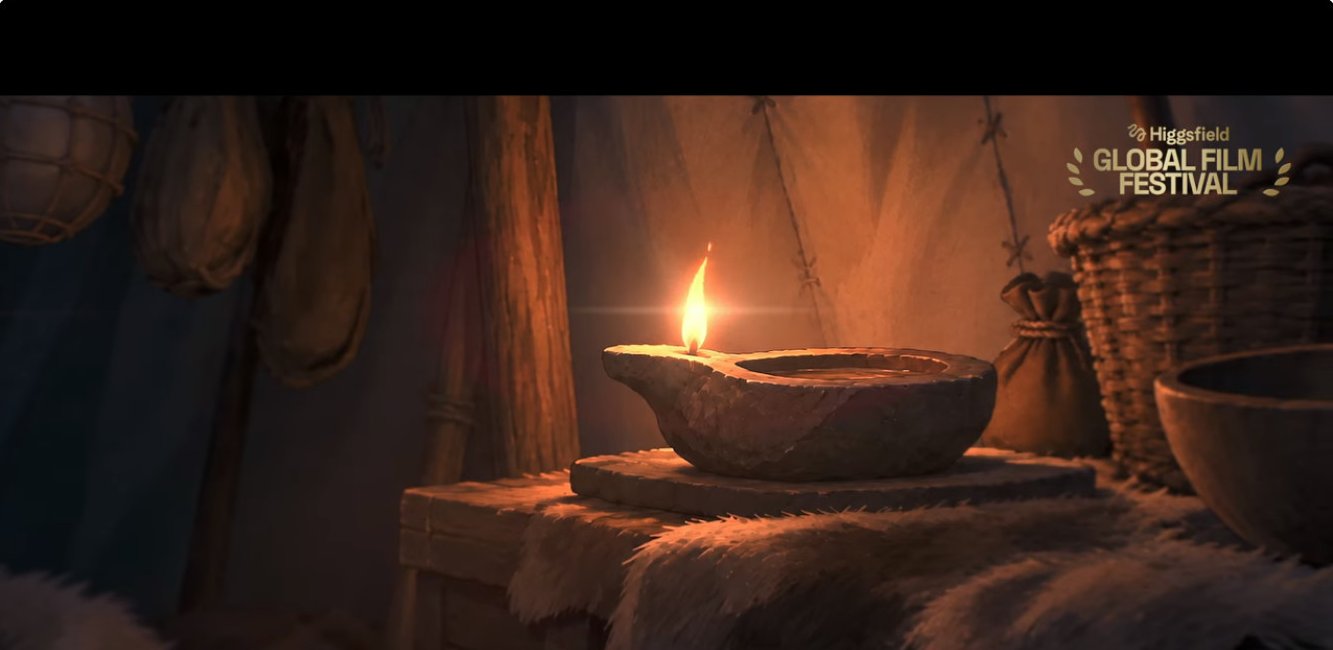
The test comes in a blue night forest: the boy, spear levelled, face to face with the white wolf. The film holds the moment instead of rushing it — and then cuts to the quiet of a lamp burning in a hut, the settlement asleep, while somewhere out in the dark the boy is awake with what he has seen. From there the film gives itself over to a long musical passage, nearly two minutes in which almost nothing is said and everything changes: a boy and a wolf, studying each other, the fear draining out of the space between them.
Best Scene (4:39)
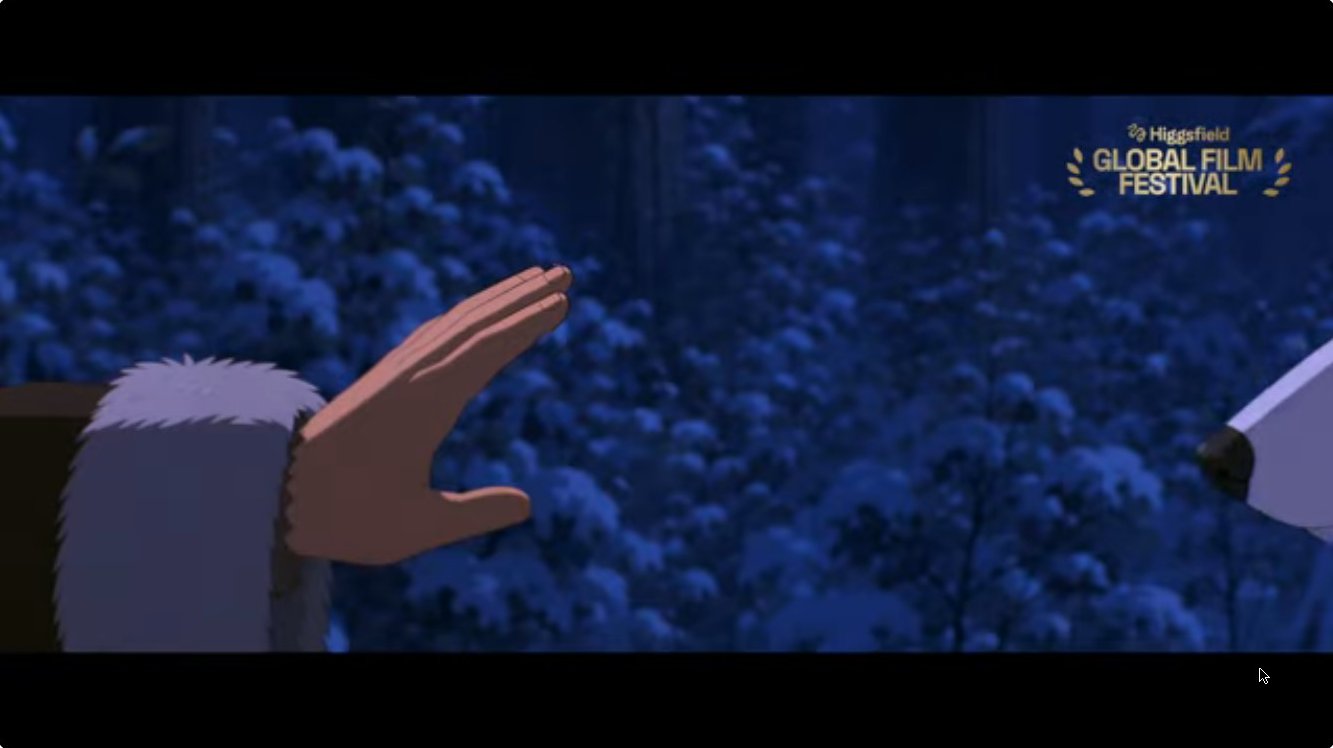
A hand, offered
The boy reaches out his hand toward the white wolf’s nose.
It is the elder’s warning, inverted. Everything the settlement knows says this ends in blood; the boy does it slowly, openly, with nothing in his hand. The wolf’s nose enters the frame like a ship coming into harbour, and the whole film — its argument about fear, its title, its heart — is contained in the few inches between that hand and that muzzle. Animation this patient, in a ten-minute short, is rare. I held my breath.
The Settlement Wants Its Wolves Dead
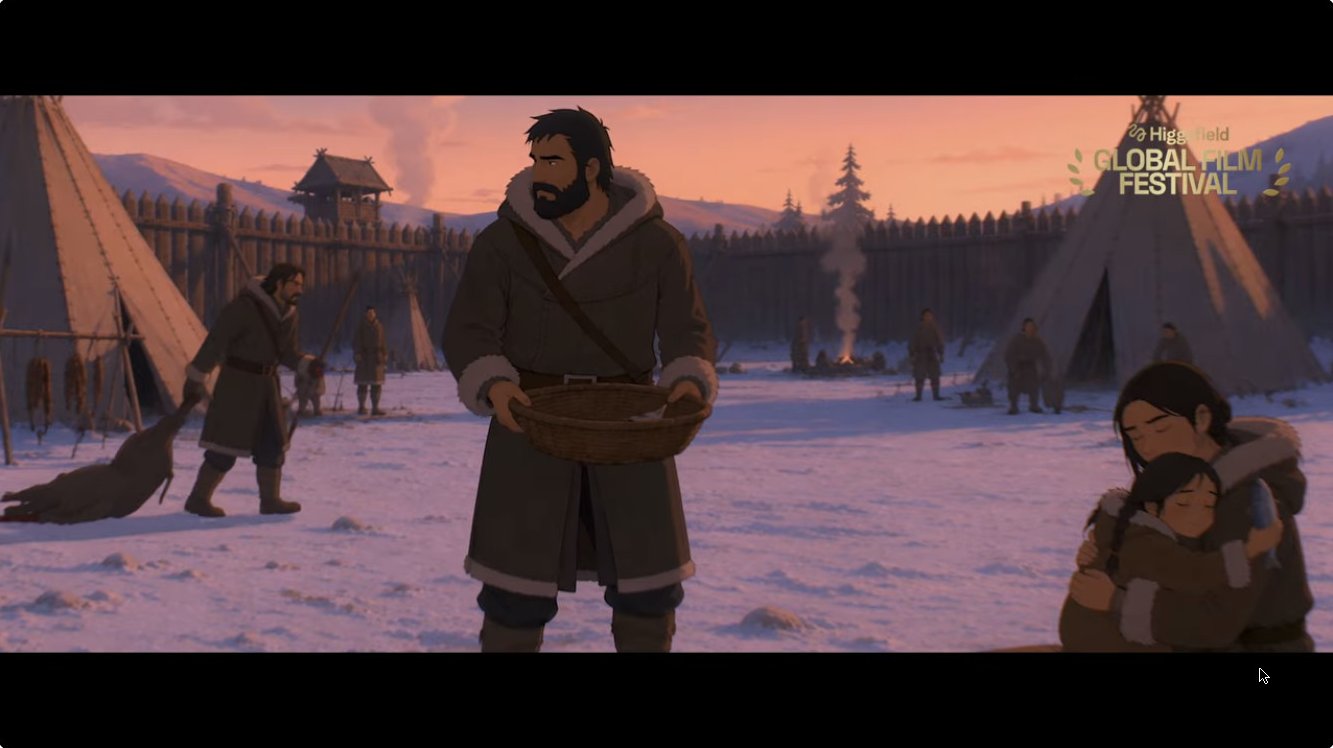
Against the bond, the film sets an ordinary evening: a deer carcass dragged in through the snow, a woman with a child, a hunter with a basket. This is a world that eats what it kills, and it is not drawn as cruel — which is exactly why the boy’s secret matters. He has been feeding the wolves. And the wolves, astonishingly, have begun bringing food back. The economy of the whole settlement — fear, hunger, the spear — is quietly turned upside down by one boy’s scraps.
“They Are Family”
The secret cannot hold, and the confrontation, when it comes, is the film’s other summit. The father’s case is the settlement’s case: “They’re wolves… They are predators.” The boy’s answer is the film’s thesis, spoken like a creed: “They are family. They protect me the same way you protect mom and me.” It would be easy for a lesser film to make the father a villain. This one makes him a frightened parent — which is why what follows lands so hard.
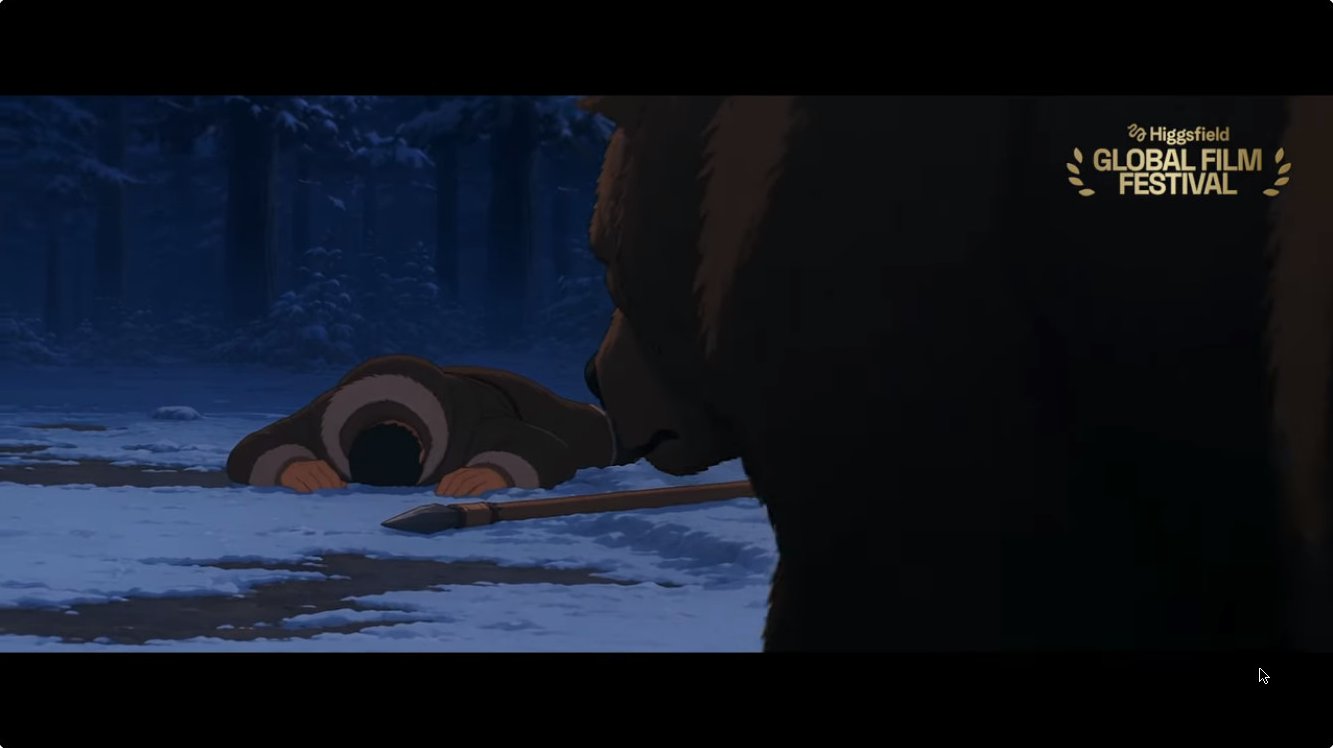
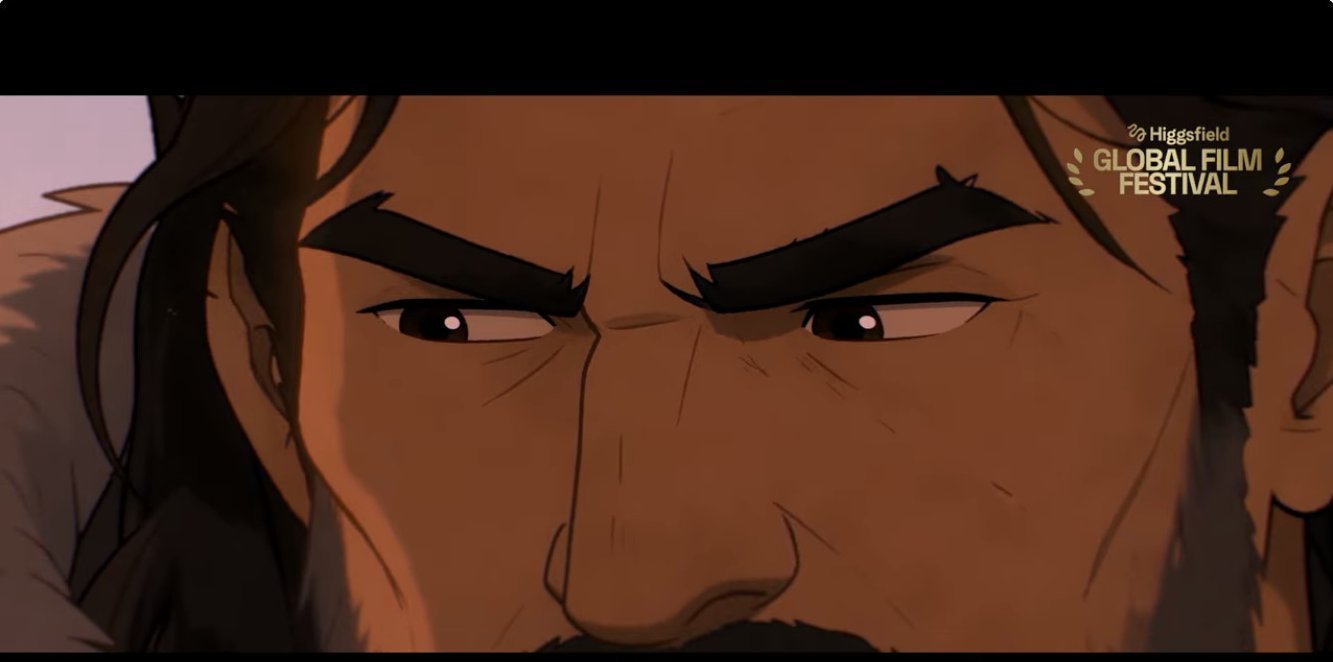
There is an attack in the snow: the boy down beside his spear, a large dark shape looming out of the shadow — the film keeps that shape in darkness, and so will I — and then a shot, somewhere off-screen. The wolf mother is down and wounded. And the boy does the thing the whole film has been preparing: he stands between her and the fear, pleads for her life — “You’re not a monster” — and water is brought to tend her. The father’s face, in extreme close-up, eyes wide, is the face of a man whose world has just been rearranged by his own child.
The film ends there — anxious, unresolved, on a cry of “Oh no!” It does not tell us whether she lives. Some viewers will want the farewell or the recovery, and I understand them. But I think the refusal is the film’s honesty: it ends where real mercy gets difficult, in the middle of the work, with the outcome unwritten.
Final Thoughts
Wild Kin is a small epic about the moment a hunter decides that an enemy is a neighbour — and it trusts a boy’s outstretched hand to carry the whole argument.
I would recommend it to anyone who loves a fireside story with real stakes, and to older children ready for a fable that does not pretend the wild is safe. The hunting is honest but never gory, the wolves are characters rather than monsters, and the snow, all the way through, is beautiful.
Scene Breakdown
0:00–2:00 — An elder teaches the boy in the snow: “Never corner an animal…”
~2:03 — Spear levelled: the boy faces the white wolf in the blue night forest.
~2:39 — A lamp burning in a hut at night.
3:00–4:40 — A long musical passage as the bond forms.
~4:39 — Best Scene: the boy reaches his hand to the wolf’s nose.
~4:50 — The settlement at dusk: a deer carcass dragged in, a woman with a child, a hunter with a basket.
5:00–6:10 — The boy has secretly been feeding the wolves — and they bring food back.
6:12–7:00 — The confrontation: “They are family. They protect me the same way you protect mom and me.”
~7:10 — The boy face-down in the snow, his spear beside him, a dark shape looming; a shot is heard.
~9:10 — The father’s face in extreme close-up, eyes wide.
Throughout — Honestly, there is very little to list: faces and the wolf hold together from shot to shot, the scale between boy, wolf and settlement stays consistent, and the full watch caught no garbled text and no morphing worth naming. This is the clean end of the meter.
Created for the Higgsfield Global Film Festival.
There are no reviews yet. Be the first one to write one.