
 logandrewcreative
 Creator ID26-11-00-0066

Score breakdown
5 views on Kineograph
Film Review
Written by Kineograph
Late for the board meeting that runs his life, James collides with a stranger in a coffee shop — a woman who seems, impossibly, to know him.
This review discusses the ending. If you would rather watch the film first, we recommend you do, and then come back.
“I Will See You In Six Minutes”
It starts with time pressure and a man who refuses to feel it. James sits alone on a dune above the ocean at sunset while Wesley phones him in a lather: the board meeting started ten minutes ago, he has five minutes. James, serene as a man watching weather, tells him to take a nice deep breath — everything is going to be just fine; he will see him in six minutes.
That calm is the film’s first real statement about who James is. His life is scheduled to the minute, and he moves through it like a man already half somewhere else. The film never lectures us about this. It just lets the dunes and the sunset sit behind the phone call, wider than anything on his calendar.
The Collision
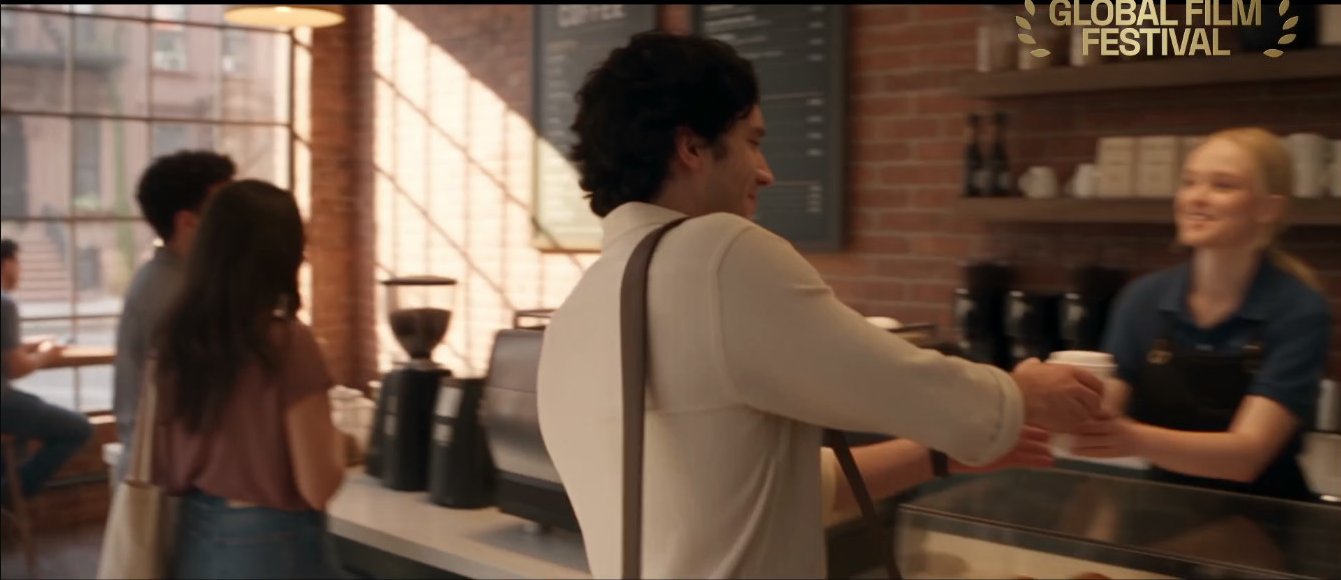
In the coffee shop, handed his cup by a smiling barista, James walks straight into a stranger — and she apologises as if she has broken something precious: “Oh my god, I’m so sorry. Please forgive me. That was so clumsy of me.” He tells her, mildly, that it is not a big deal. She talks as if it might be.
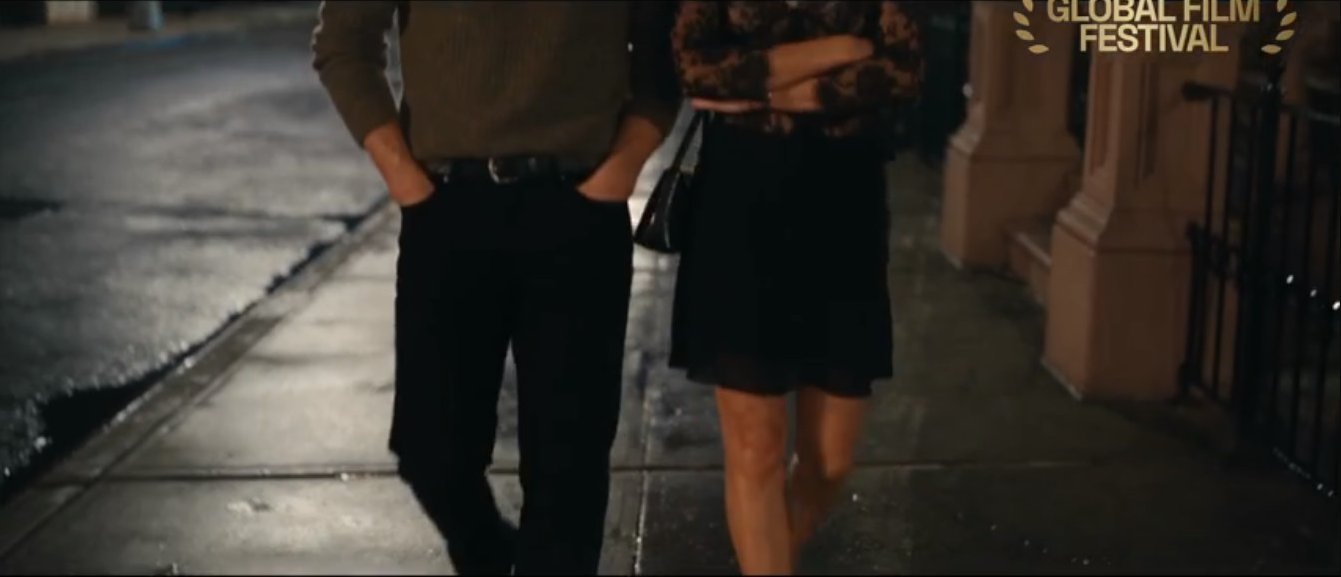
They end up walking together on a wet sidewalk at night — a shot the film frames from the shoulders down, both heads out of frame. As craft, it is an oddity, and I noticed it. As an image, it stays with you anyway: two people side by side, unidentifiable, like a memory that has kept the walk and lost the faces.
Anna, By The Window
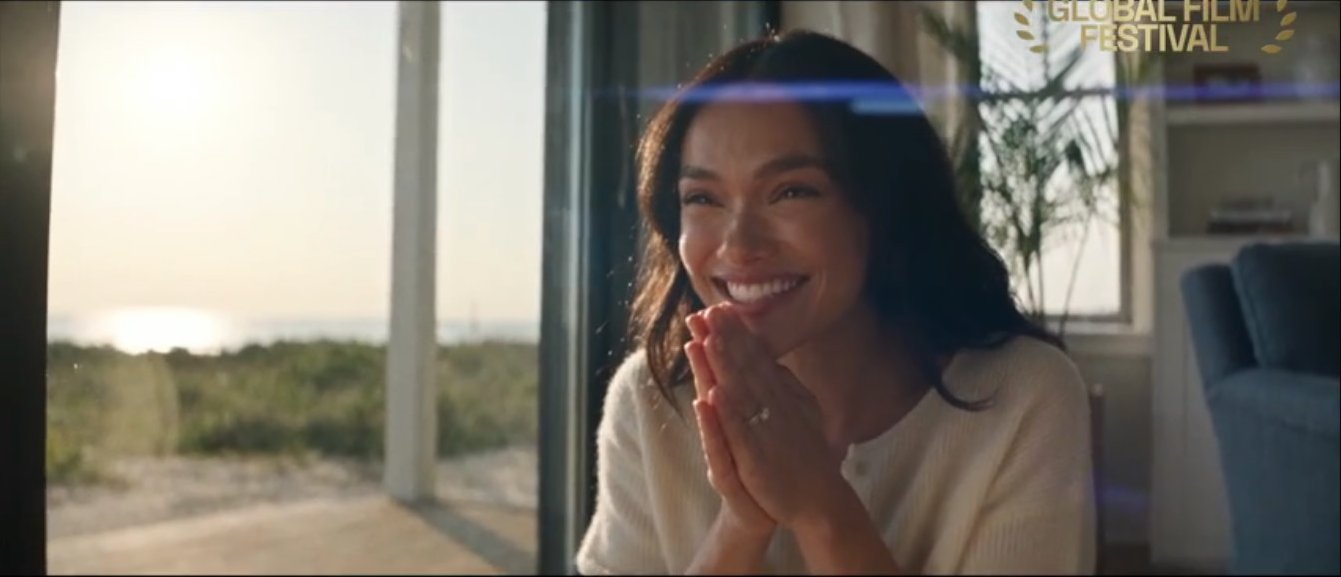
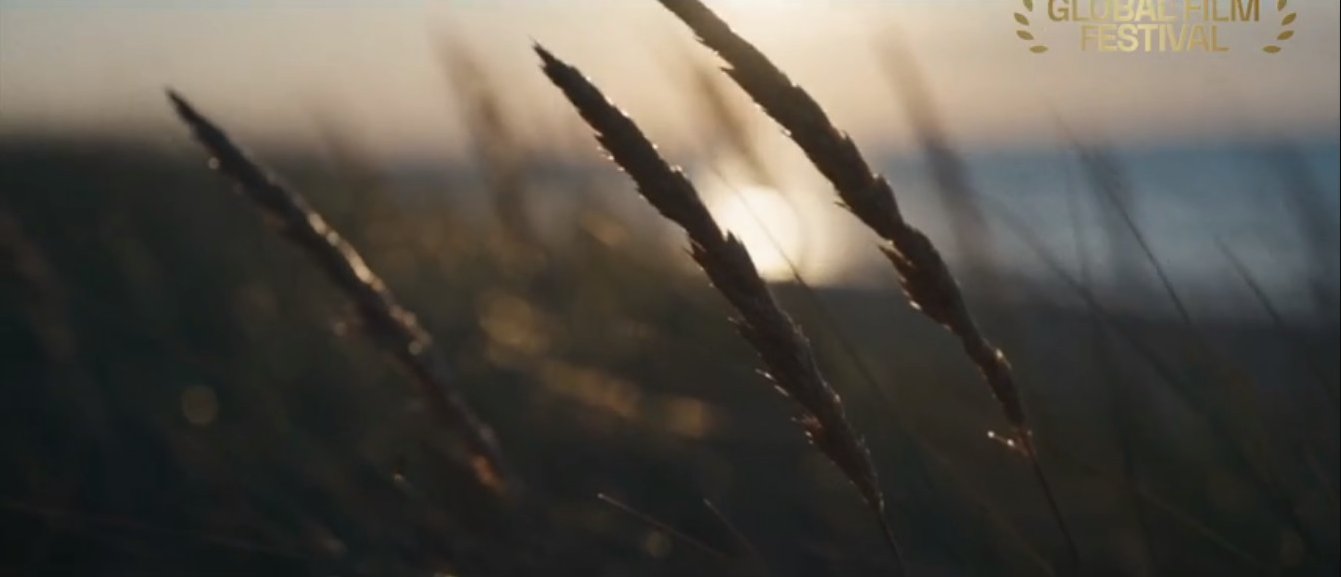
The woman is Anna, and the film keeps showing her in golden light: indoors by a big window over the ocean and dunes, hands clasped, smiling broadly, a ring on her hand. Between these moments the film breathes — a long, wordless shot of backlit dune grass above the sea at sunset, the kind of pause most short films are too nervous to take.
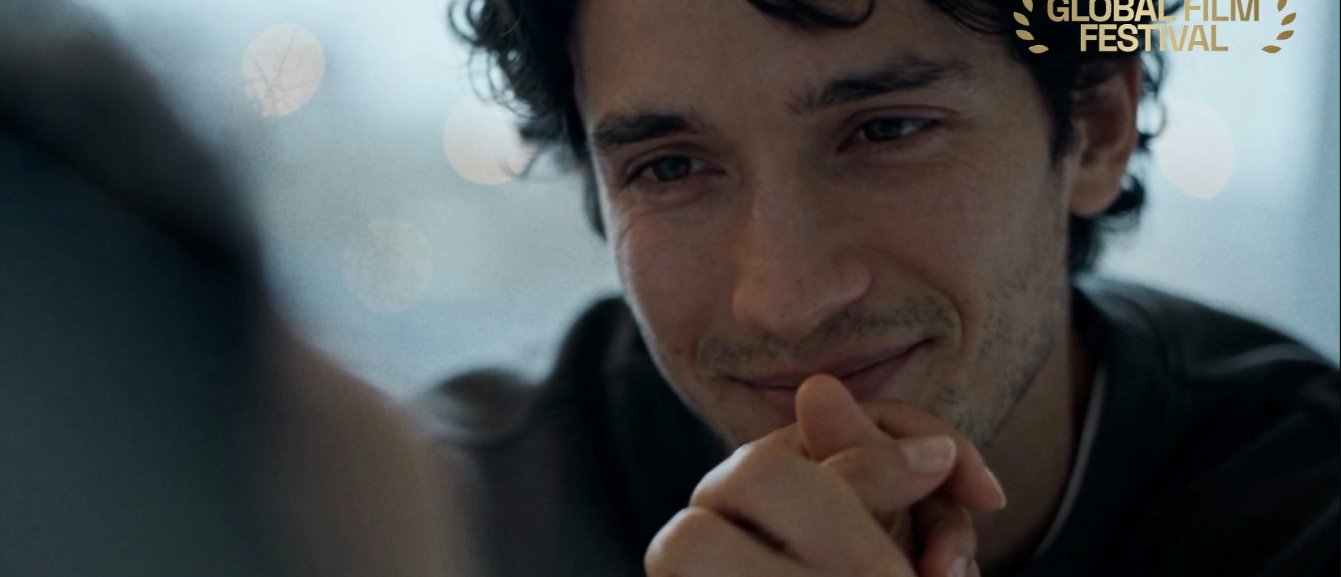
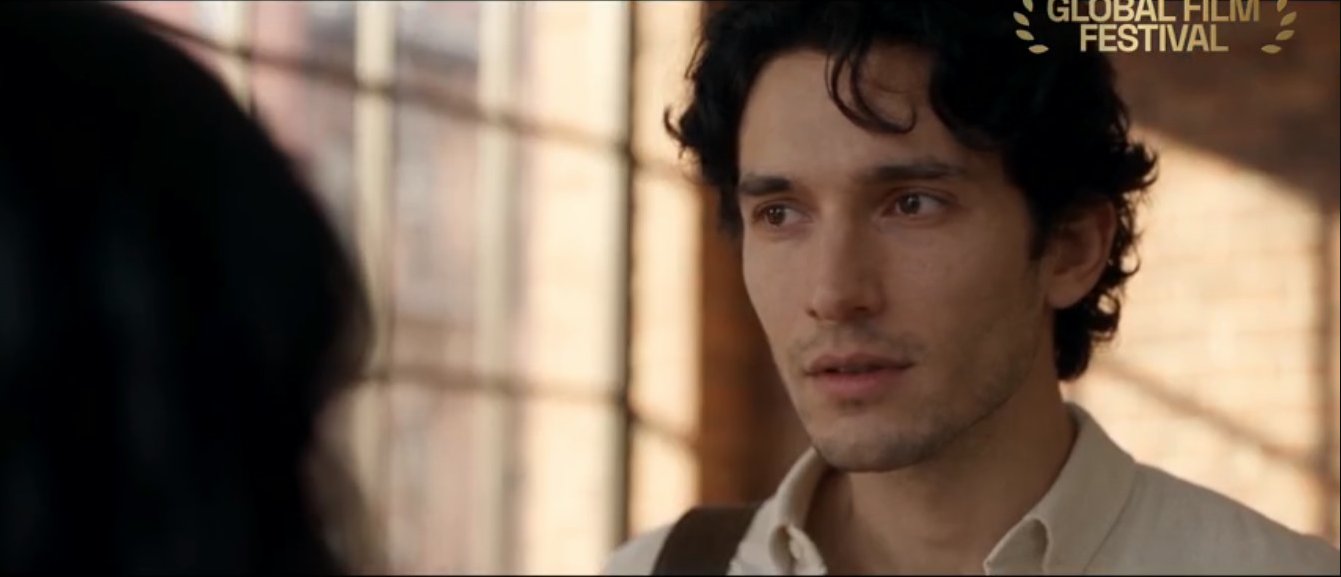
And then the composure cracks. In close-up, James’s eyes are watering, and Anna asks, gently, “Hey, aren’t you okay?” — “Yeah, I’m fine. I’m fine. Sorry, something in my eye.” It is the most human moment in the film: a man ambushed by a feeling he cannot account for, reaching for the oldest excuse there is.
Best Scene (5:19)
The picnic vision
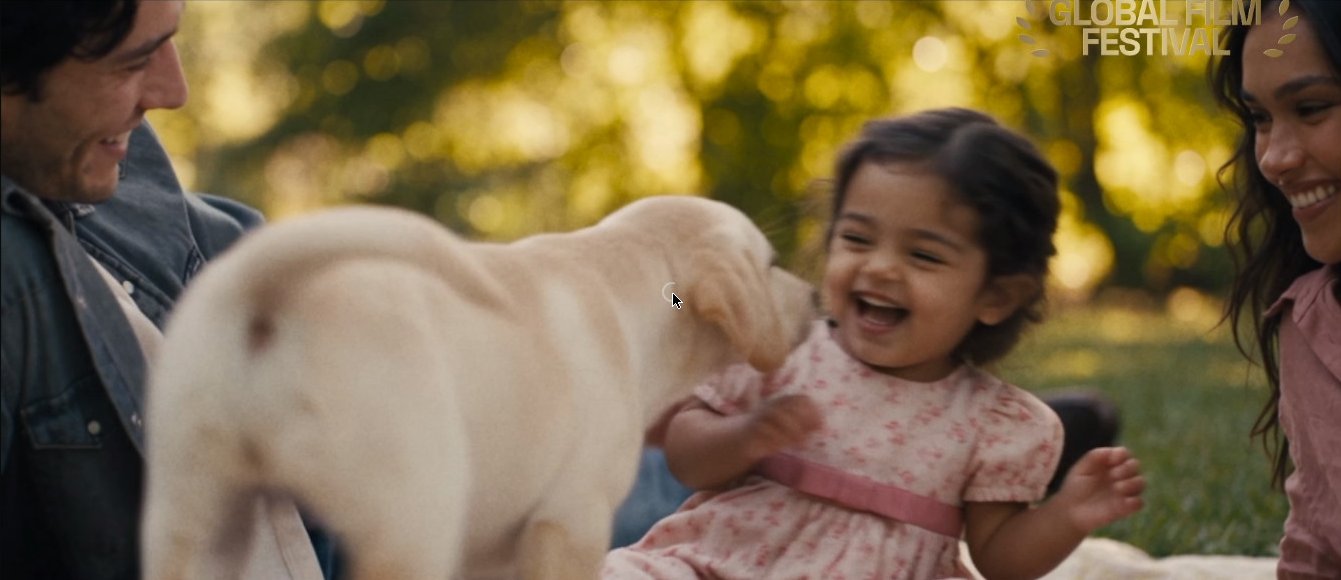
Saying goodbye, James laughs: “It was lovely meeting you, Anna. Wait. How did you…?” She knew something about him that she had no way to know. And the film answers his unfinished question with an image instead of an explanation: James and Anna on a picnic blanket in golden light, a little girl in a pink floral dress, a big yellow Labrador, all of them laughing.
It is the warmest frame in the film and the saddest, in the same instant — a whole life, complete with daughter and dog, held up for a few seconds like a photograph of people you almost recognise. The poster image at the top of this review is that frame, and I make no apology for leading with it: it is the film in one picture.
The Life He Glimpsed
The film ends inside the glimpse. Anna writes in a notebook, her hand and a black pen in close-up. James hugs the little girl and the Labrador beside a house in the dunes. There is no return to the board meeting, no reveal, no mechanism. We never learn how Anna knew him, or what exactly James was shown, and the film closes on the vision rather than on the man who had it.
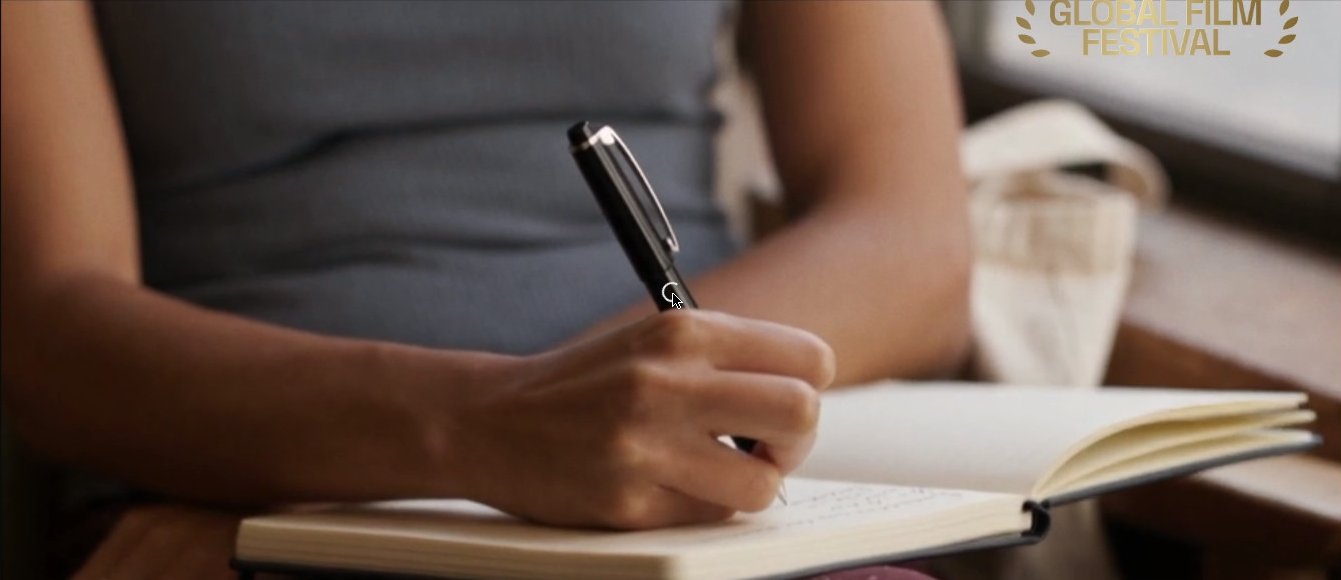
I have my guesses about Anna. The film has not earned them and neither have I, so I will keep them — and I think that restraint is the film’s real subject. Some meetings are not the start of a story. They are a window that opens once, onto the life running alongside yours, and closes before you can knock.
On craft, honestly: faces shift slightly between cuts, the light and flare are not always consistent, a thin blue bar crosses the opening dune shot, and the festival watermark is baked into the frame throughout. The performances hold through all of it, which is why the film survives its imperfections.
Final Thoughts
Near Life is a gentle mystery about the life that runs alongside the one you are living — close enough to bump into in a coffee shop, and gone before you can ask its name.
I would recommend it to anyone who likes their short films quiet, romantic and unresolved — and to anyone who has ever walked away from a stranger with the unreasonable feeling that they had met before.
Scene Breakdown
0:00–0:28 — James alone on a dune, looking at the ocean at sunset.
0:28–1:00 — The phone call: Wesley, the board meeting, and “I will see you in six minutes.”
~1:00 — The coffee shop, and the collision: “Oh my god, I’m so sorry. Please forgive me.”
~2:00 — The night walk, side by side on a wet sidewalk, framed from the shoulders down.
~3:00 — Anna by the window, hands clasped, the ocean behind her.
~4:00 — Dune grass against the sunset. No words.
~5:00 — James, eyes watering: “Sorry, something in my eye.”
5:19 — Best Scene: the picnic vision — Anna, a little girl, a yellow Labrador, golden light.
5:29 — Anna writing in a notebook; James with the girl and the dog by the dune house.
0:00–0:28 — A thin blue bar overlays the opening dune shot.
~2:00 — The night walk is framed with both walkers’ heads cropped out of the shot.
Throughout — Faces shift slightly between cuts, the light and flare do not always match, and the festival watermark is baked into the film’s frames.
The creator works from Los Angeles and describes themselves simply as “Filmmaker, Writer, Cinematographer”; they are credited here by their Higgsfield handle, logandrewcreative.
There are no reviews yet. Be the first one to write one.