
Download Free Original Music Songs from the films
Scores & Rankings
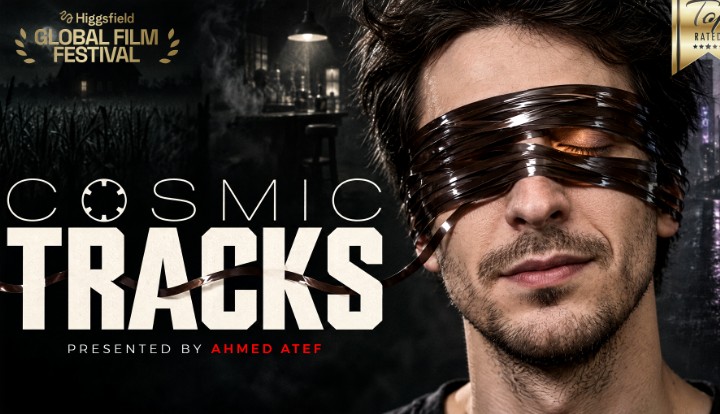
Cosmic Tracks Directed by Ahmed Atef
Find this film in
Score breakdown
- Storytelling & Structure ×29
- Emotional Connection ×29
- AI Tool Management ×210
- Visual Craft10
- Screenplay10
- Sound Design10
- Originality8
- Technical Polish10
- Rewatch Value10
×2 = core category, counts double.
Film Review
Written by Kineograph
A man who hides from life finds a tape that drops him into three different worlds. To get out, he has to stop hiding.
This review discusses the ending. If you would rather watch the film first, we recommend you do, and then come back.
Why This Film Stayed With Me
Most short films pick one style and stay in it. Cosmic Tracks picks three, and it makes them all work. That takes real skill, because every time the world changes, the film has to keep us caring about the same man.
What I admire most is the idea behind it. It is a story about control, and about how little of it we really have. And it tells that story with energy, humor, and a lot of heart.
An Opening That Tricks You
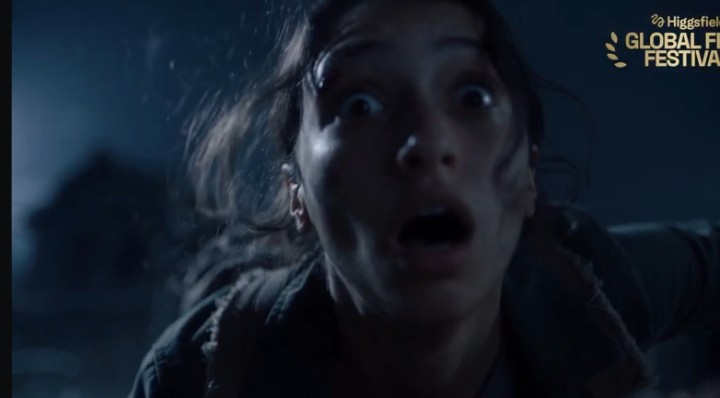
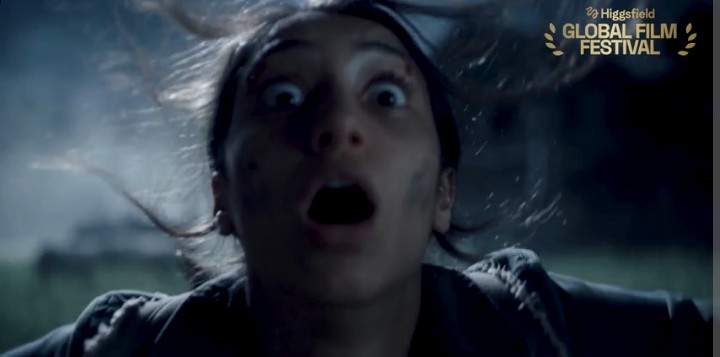
The film starts with a woman running away from a house. Just as she reaches the camera, the picture freezes, and a voice says, “Hi, I am Tarek… Wait, not her… Definitely not him either.”
I love this. It is funny, it grabs your attention, and it shows right away that this film does not take itself too seriously. It also hints at the idea of the whole story: many possible lives, and a man trying to figure out which one is his.
The Man Who Always Said No
Between 0:30 and 1:52, Tarek tells us about his ordinary life. He was never a risk taker. His friends would invite him out, and he would say no. The film does not make fun of him. It simply shows how a person can hide from life one small “no” at a time, and many of us will recognize that.
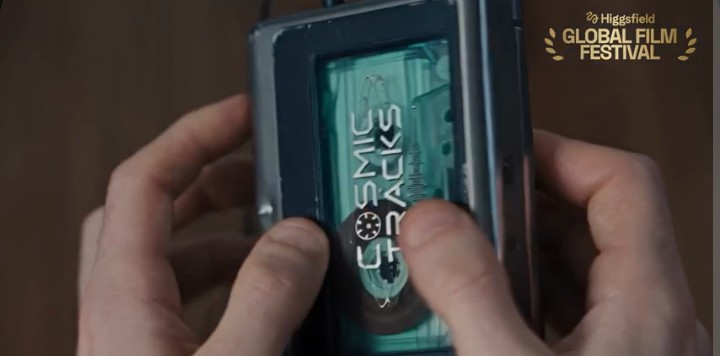
Then one day he finds a Walkman with a tape. On the back it says, “This track will change your life if you love it.” He puts on the headphones and presses play.
The Tape Machine
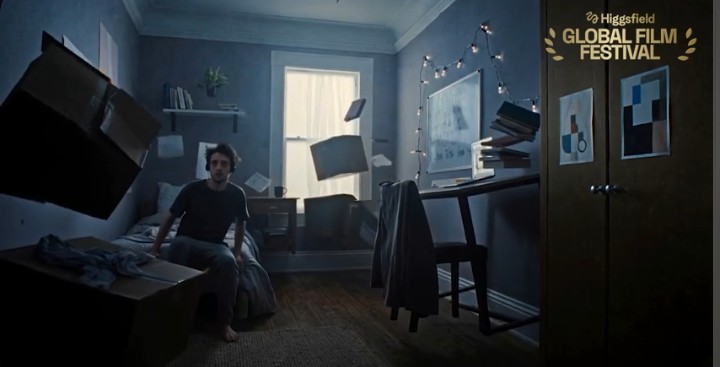
What I like about this idea is how simple it is. The film does not need a lab or a spaceship. A cheap Walkman is enough. When he presses play, everything in the room begins to float, and he disappears into a vortex.
The idea of a “track” is clever too. In the director’s words, each of us is placed on a track we never chose, with its own shape, rhythm, and rules. The tape lets Tarek feel what it is like to be dropped onto a new one.
Track 1: A Horror Movie in the Moonlight (Best Cinematography)
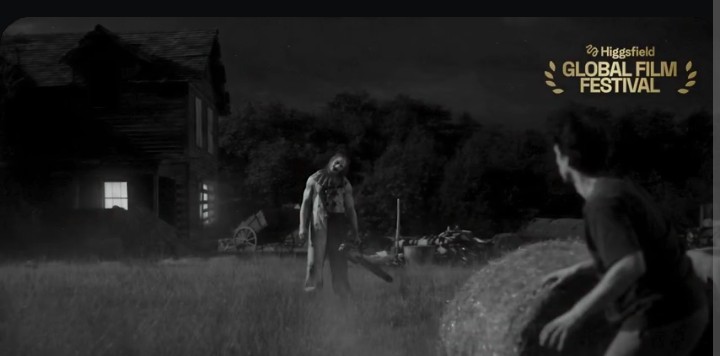
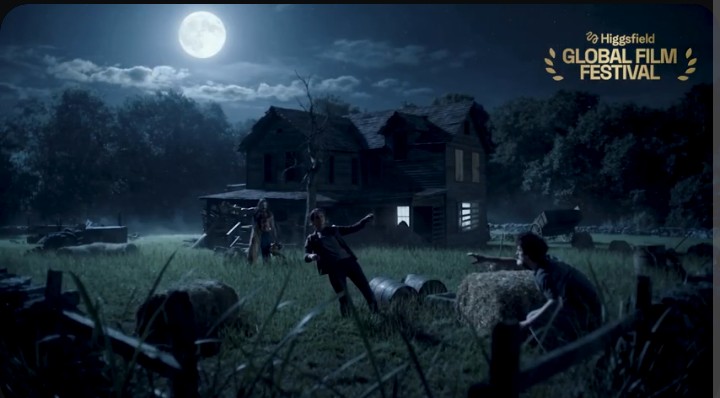
The first track is a horror movie. Tarek lands in the front yard of an old farmhouse at night, under a full moon, and we see everything from his point of view. At 1:53 I wrote that it looks so real and gives me the feeling that I am standing there with him. The visuals are stunning.
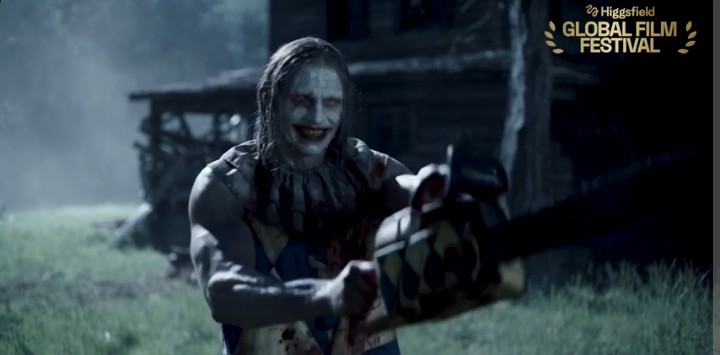
Then a man with a chainsaw comes at him, and Tarek is killed. It happens fast. Because we are looking through his eyes, it works as a real scare. The director says the camera is a kind of language in this film: locked when the character resists, and forced when the world takes over. I felt that here.
Track 2: Realize
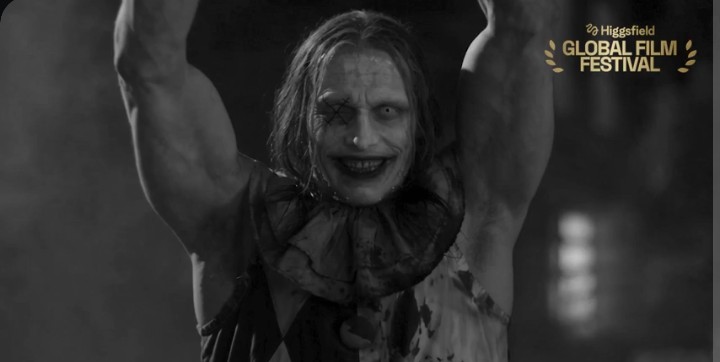
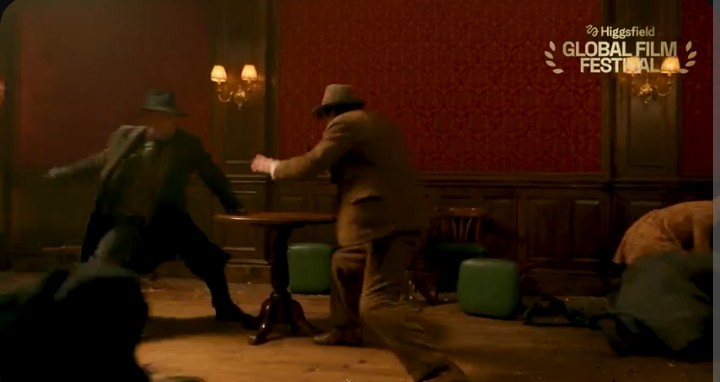
Tarek wakes up in a black-and-white world that feels like a 1940s movie. Gangsters walk into a bar and shoot the bartender, and Tarek hides under the counter.
Then something wonderful happens. The scene stops, and Tarek steps in from the side of the screen, in normal clothes and in color, and tells us this is the moment he decided to face it instead of hiding. I love this. It is where the whole film turns.
Best Scene: The Fight at the Bar (Best Scene, Best Score)
This is why Cosmic Tracks earns the Best Scene recognition. From 3:24 to 3:48, Tarek jumps up from behind the counter and fights the gangsters. The choreography is magnificent, and the whole fight is shot with a confidence that I did not expect.
The music helps too, and it earns the Best Score recognition. A man plays a saxophone through the fight, and the great score makes the whole scene feel cool and tense at the same time. Then at 3:48, Tarek takes a punch to the face, the picture glitches, and the film changes into a futuristic look, with robotic parts on his face. It is a perfect transition: a hit that breaks the world.

Track 3: Truth
Tarek walks out of the club into a futuristic world. The neon lights, the busy street, and a white robot passing by a food cart give the city a lively feel. He gets on a flying bike, soars through the city, and lands on the rooftop of a tall building.
Here, he is no longer hiding or being chased. He is moving freely, and he looks like he is enjoying it. The title of this track, Truth, fits. He has stopped hiding, and he finally sees who he is.

Back to Real Life
The film then jumps ahead two months. Tarek is playing bowling with a group of people, and one of them says, “I always knew you had it in you.”
I loved this ending because it is small. After all the chainsaws, gangsters, and flying bikes, the real victory is a simple night out with friends, which is the very thing he used to say no to. The director says warm tones were held back until the final scene, and the warm light here feels like a reward.

What It Is Really About
Here is how I read it. Tarek tries three ways of dealing with life. In the first world, he is helpless, and the world simply happens to him. In the second, he stops hiding and fights back. In the third, he moves freely through a world he did not choose, and that is when he is free.
The film says you cannot control the track, but you can choose how you live on it. That is the moment, as the director puts it, when your fate finally becomes your own. (This is my reading, supported by the director’s notes.) It is a message that works in a fantasy film about a Walkman, and it also works in everyday life.
The End Credits Are a Treat
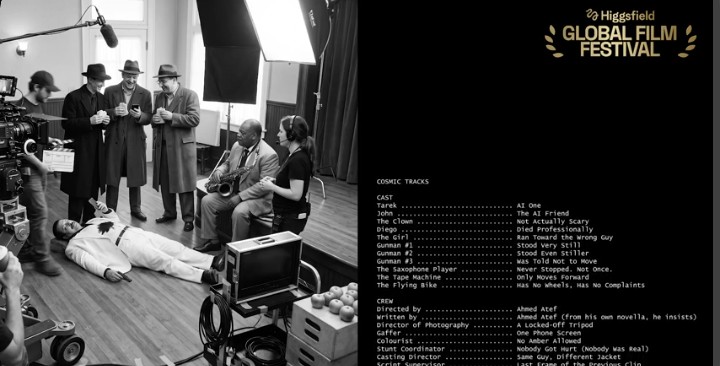
Do not turn the film off early. The end credits are written like a behind-the-scenes joke, and they are creative and funny. Some of my favorites are “The Clown: Not Actually Scary,” “Diego: Died Professionally,” “Gunman #1: Stood Very Still,” “The Flying Bike: Has No Wheels, Has No Complaints,” “Casting Director: Same Guy, Different Jacket,” and “Stunt Coordinator: Nobody Got Hurt (Nobody Was Real).”
It is a clever wink at how the film was made, and it ends the story on a smile.

Final Thoughts
A smart, stylish, and surprisingly warm short. It moves between three genres without losing its heart, the fight at the bar is a true highlight, and the message is one we all need. In six minutes, it says something real about fear, freedom, and finally saying yes. I highly recommend it.
Scene Breakdown
0:00 – 0:30 — A woman runs away from a house. As she reaches the camera, it freezes. A voice says, “Hi, I am Tarek… Wait, not her… Definitely not him either.”
0:30 – 1:52 — Tarek talks about his ordinary life and how he was not a risk taker. Friends would invite him out, and he would say no. One day he finds a Walkman with a tape. On the back it says, “This track will change your life if you love it.” He puts on the headphones and hits play. Everything starts to float in the room, and he disappears into a vortex. He appears in the front yard of what seems like a horror film. Track 1 plays. We see things from his point of view. It is night, and we see the moon.
1:53 – 2:26 — It looks so real, and it makes me feel like I am there. The visuals are stunning. The man with the chainsaw comes at him and kills him.
2:27 – 3:24 — He wakes up in a black-and-white place. Track 2: Realize. It looks like the 1940s. Gangsters come in and shoot the bartender, and he hides under the counter. It stops, and he comes in from the side of the screen, dressed normally and in color, and tells us this is the moment he decided to face it instead of hiding.
3:24 – 3:48 — Best scene. He jumps from behind the counter and fights the gangsters. A man plays the saxophone as we see the fight. Great score for this scene. The fight choreography and execution are magnificent. At 3:48 he gets punched in the face, and the image glitches and changes to a futuristic techno look, with robotic parts on his face.
3:50 – 5:19 — Track 3: Truth. He walks out of the club into a futuristic world, gets on a futuristic bike, flies through the city, and reaches the rooftop of a building.
5:20 – 6:18 — The film jumps two months ahead. He is with a group of people playing bowling. One of them says, “I always knew you had it in you.” The end credits are creative, like a behind-the-scenes look at making the film.
Reader Reviews
There are no reviews yet. Be the first one to write one.