
Download Free Original Music Songs from the films
Scores & Rankings
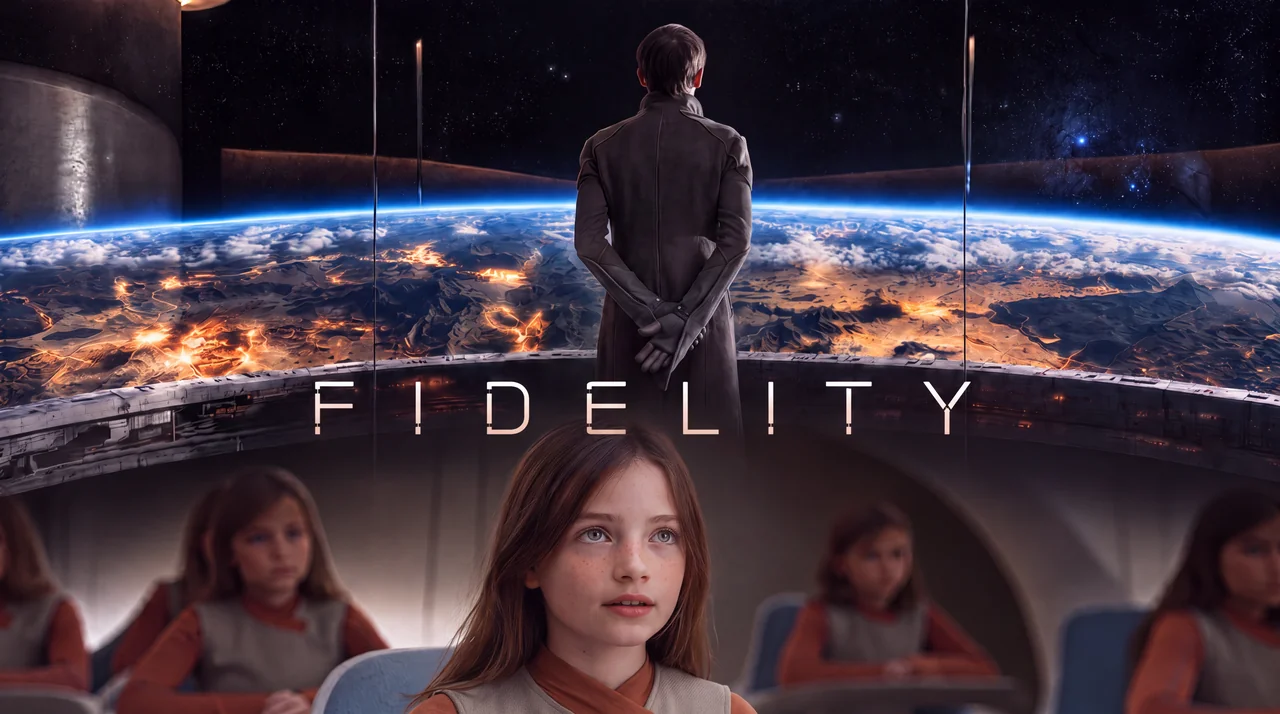
Fidelity Directed by Eray Günan
Find this film in
Score breakdown
- Storytelling & Structure ×210
- Emotional Connection ×29
- AI Tool Management ×210
- Visual Craft10
- Screenplay10
- Sound Design10
- Originality10
- Technical Polish10
- Rewatch Value10
×2 = core category, counts double.
Film Review
Written by Kineograph
In a future where a person can always be restored, one mother wants her daughter to have something the system cannot give: a real body, a real memory, and a life that leaves its mark.
This review discusses the ending in full. If you would rather watch the film first, we recommend you do, and then come back.
Why This Film Stayed With Me
Some films shout their ideas. Fidelity whispers them, and I think that is why it stuck with me. It is calm, elegant, and quiet on the surface, and underneath it is about love, loss, control, and what it really means to be alive.
I love how much it trusts the viewer. It does not stop to explain its world with long speeches. We learn the rules of this future through small details: a number on a screen, a short chat in a hallway, a mother who spent forty-three seconds on the feeling of rain.
A Future Where Nothing Has to End
The film takes place in a far future where people live on in synthetic bodies. A system called Persistence saves each person’s mind, memories, and relationships. If a body is destroyed, the person is simply restored at a Revision Center. Death, as we know it, has become an inconvenience.
What I find clever is that these people are not cold robots. They still love, grieve, and miss each other. The director says the calm, restrained acting is deliberate, because these are people raised in a civilization that keeps life controlled and safe. Once I understood that, their quiet faces felt sad instead of flat.
Fidelity, Not Reality
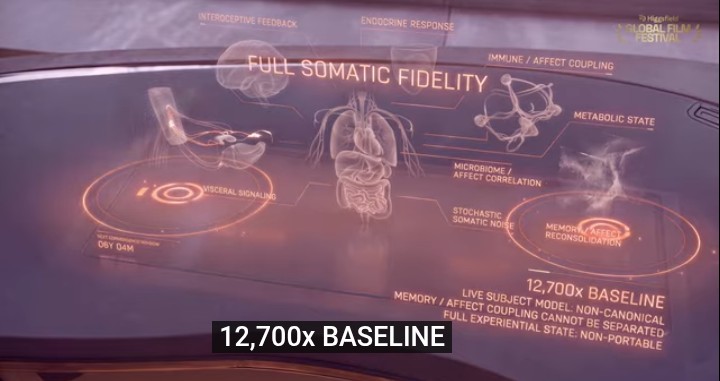
The title comes from a technology called Fidelity. Inside a Fidelity Bay, a person can feel touch, smell, taste, and temperature for a short time. But the feeling cannot be kept. As one character says at 1:04, “That’s why they call it Fidelity, not reality.”
This is the heart of the film’s big idea. A person can remember that something happened, and even remember what it meant, but the body itself cannot hold on to the feeling. In a living body, every touch, every cut, and every taste changes you. These people have given that up without quite realizing what they lost.

Lennie: A Mother Who Wants More
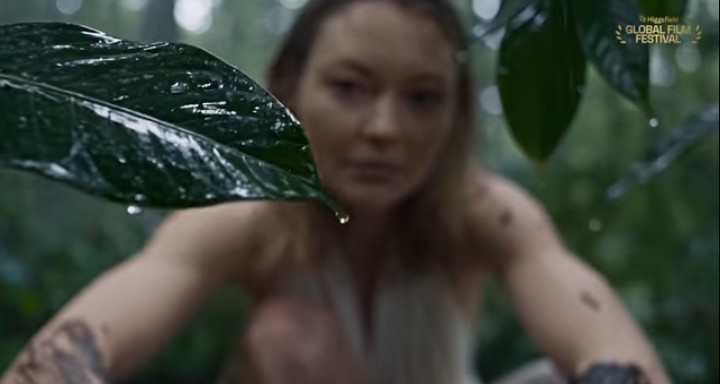
Lennie is a scientist at the Ancestral Fidelity Center, and she is the heart of the story. She is quietly haunted by what her world is missing. In one small scene, she tells a friend she used Fidelity for forty-three seconds, just to feel rain. “I wanted to remember it,” she says. “You can’t keep it, Lennie.”
That scene broke my heart a little. It shows how hungry she is for real experience, and how little the system allows. Later she is checked by a care system that reads her “metrics,” and she tells it that she remembers the smell of wet soil and cold air. Her numbers are fine, but she is not.

The Bargain
When Lennie and her husband Noah are told they must wait eighty-seven more years before they can apply for a child again, the problem becomes personal. She asks her friend and colleague Simone for an unauthorized override. In return, she offers Simone something priceless: an early run of Convergence, an experimental technology that lets two people share the same simulated world.
For Simone, it means a chance to feel her lost spouse near her again. In that moment, we see her wake up in a warm kitchen where the one she lost says, “Food’s ready.” It is tender, and it is also a trade that costs Simone more than she knows. While she is lost in that dream, Lennie uses her access to enter the archive.
Creating a Human Being (Best Concept)
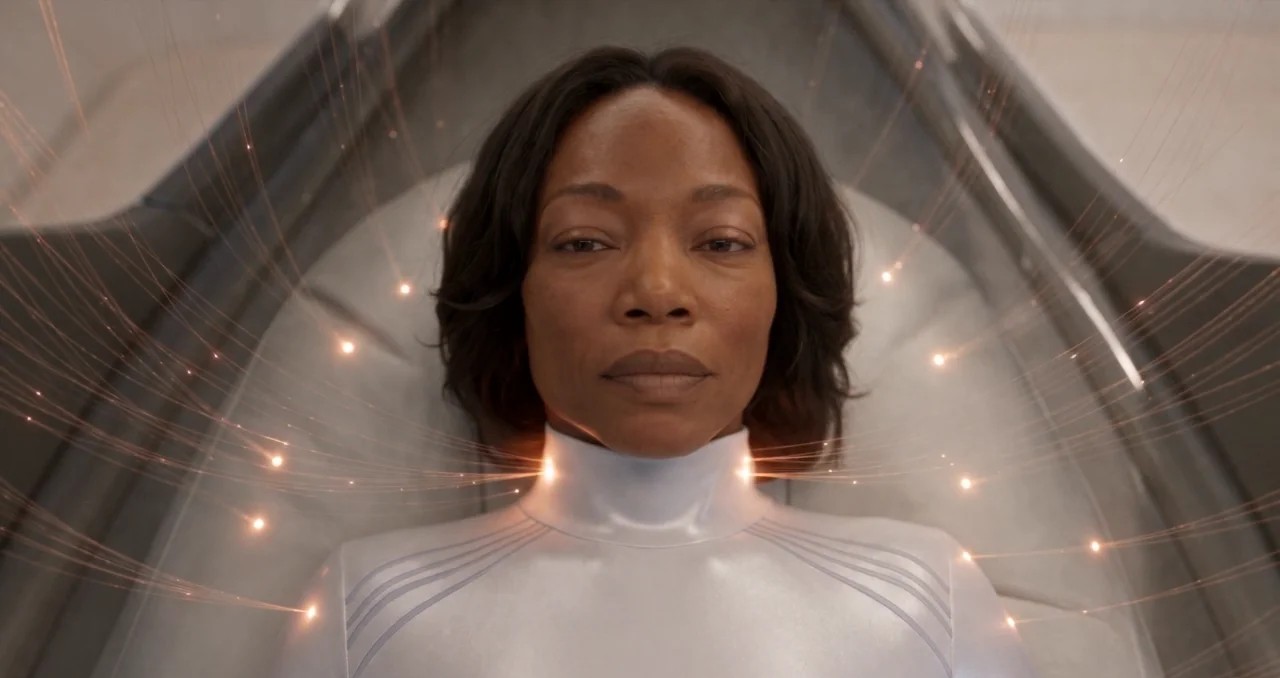
This is the part of the film I love most, and it earns the Best Concept recognition. Lennie does not want a child in another synthetic body. She wants a biological human being, someone who can grow, heal, age, and carry what happens to her. Using ancient biological material from the Origin-Level Archive, she creates Iris.
In a way, Lennie brings humanity back. I love how simple and powerful this idea is: in a world that has spent centuries removing the body, one mother quietly puts it back. And she does it for the oldest reason there is, love.
Mara Venn and the Idea That Survived
The film also gives us a piece of history. Mara Venn was a great scientist who lived about fourteen centuries earlier and helped build Fidelity. She believed we should not undo every change, because some changes should stay. Over time, people called her ideas “Bioromantic,” a word meant to make her sound foolish.
I think Venn is the film’s quiet conscience. She asks if a perfect system that can undo everything is truly better than a human life with scars. We also learn that she was lost when the state ended her, and that story comes back to haunt Lennie.
Sweeter Than Strawberries
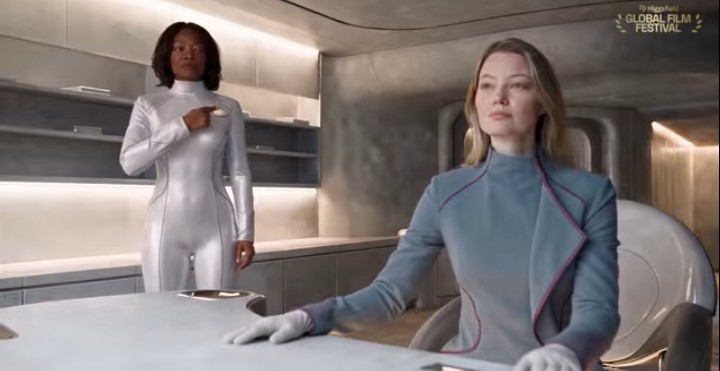
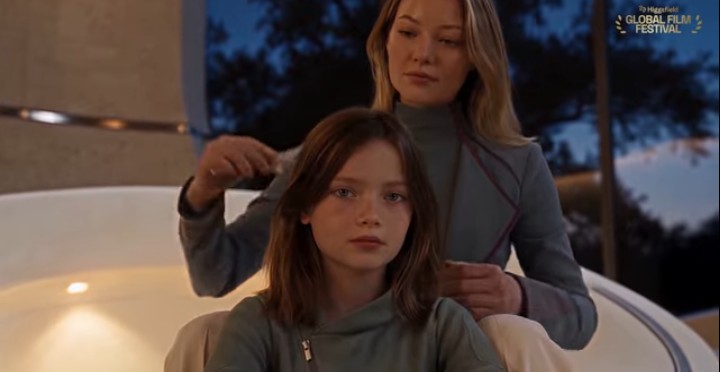
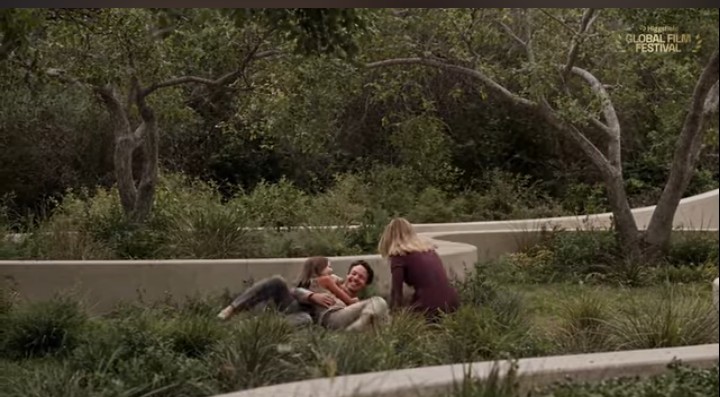
Seven years later, Iris is a little girl in a botanical garden with her parents. Her father tells her that this strawberry is sweeter than last summer’s, and she can tell the difference. It is only a few seconds, but it is the most beautiful moment in the film, because it shows what the whole story is about.
Iris does not need a machine to feel a taste, a scratch, or a memory. When she gets a small cut in the garden, the care system asks for a diagnosis, and Lennie says no. That refusal is what starts the trouble.
The Costumes Are Beautiful (Best Costume)
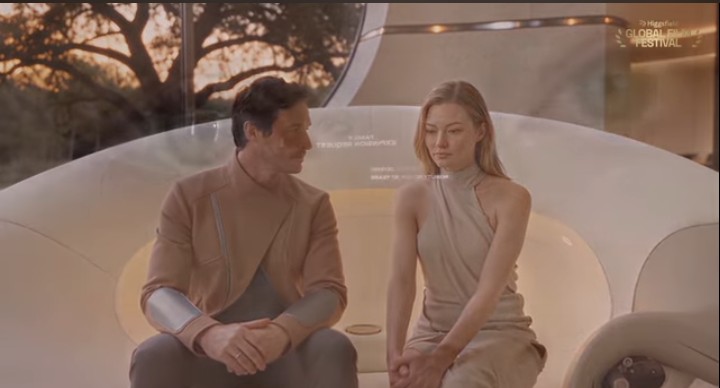
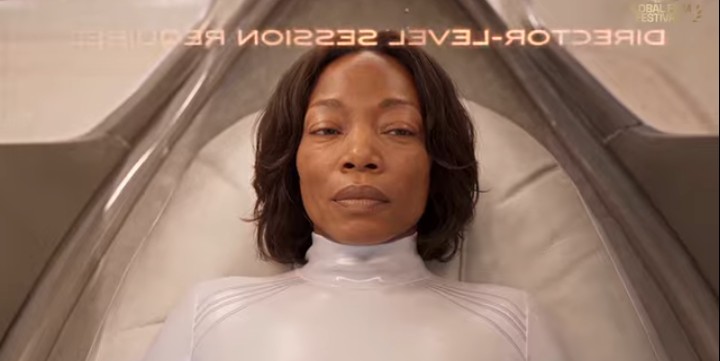
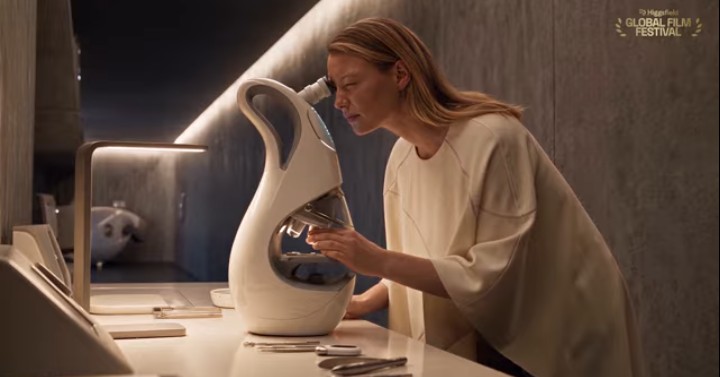
I have to talk about the costumes, because they earn the Best Costume recognition. Everyone in this world wears clean, quiet, elegant clothes: soft cream tunics, layered robes, and smooth white suits in the pods. Nothing is loud, and nothing is messy.
That simplicity is smart. The clothes make the world feel calm, controlled, and perfect, so that Iris and Lennie stand out even more as people who feel too much. The costumes are not just pretty. They help tell the story.
A Calm and Stunning Look (Best Cinematography)
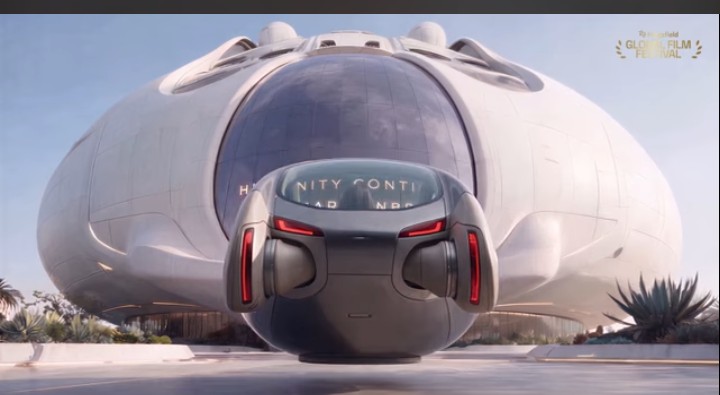
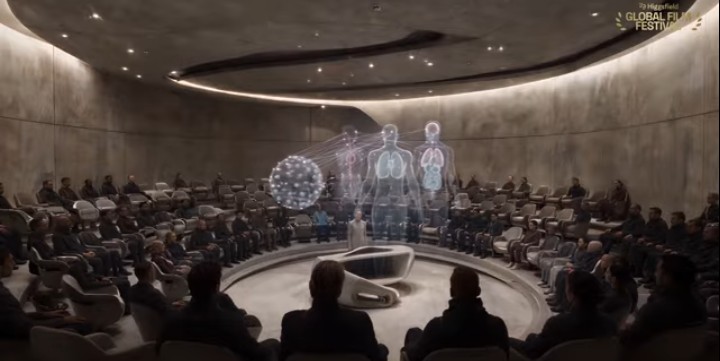
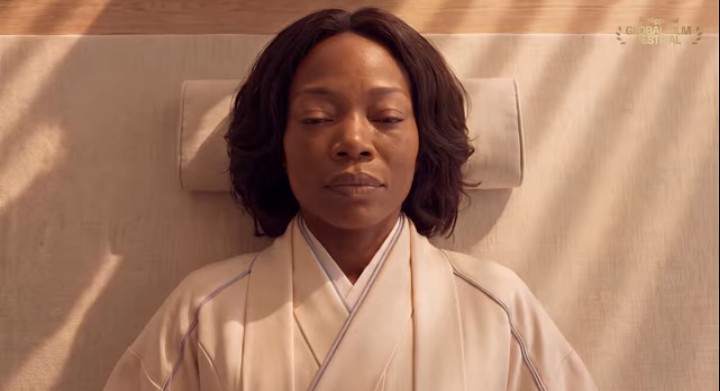
The film looks beautiful, and it earns the Best Cinematography recognition. Warm light glows from the curved walls, the buildings feel like stone and sand, and the rooms are shaped like gentle curves. The big lecture hall, with its glowing body projections, is one of the most striking rooms I have seen in an AI film.
What I admire is how it all matches the theme. The world is lovely to look at, but it is also cold and controlled. Then the botanical garden appears, full of color and life, and it feels like a different planet.
The Quiet Hunt
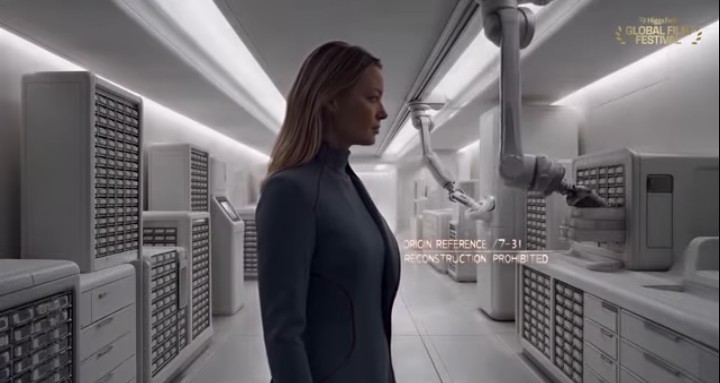
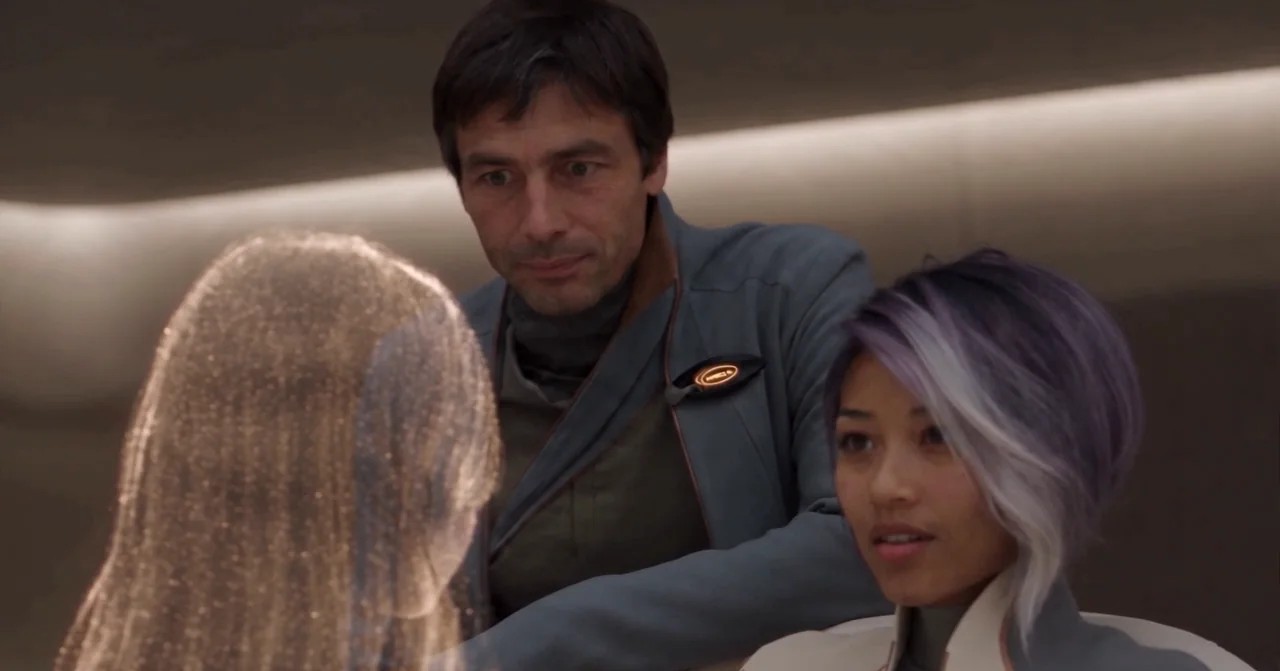
The danger begins in a very ordinary way. After the garden accident, two officials at the Civic System Review Center, Rei and Patrick, look at Iris’s record. Her identity looks clean, but she is seven years old and has never completed a full diagnostic. Then a forensic sweep finds an unidentified sample.
The line that gave me chills comes at 15:13: “According to Origin, she never entered a cradle. Whatever’s standing there didn’t come through the registered process.” Nobody raises a voice, and that is what makes it frightening.
Finality
Soon armed officers arrive at the family’s home. Noah, who did not know the full truth, helps his wife and daughter escape and loses his synthetic body. The film shows what Persistence ordinarily promises: a body can be destroyed and the person restored. But when Lennie and Iris are captured, a scan confirms that Iris has a living, organic body. Confronted with what she has made, Lennie answers with a single word: “Us.”
Then the state authorizes the Finality Protocol against Lennie. It is a secret that most citizens do not know exists, a way to seal off restoration and erase a person for good. When someone asks, “But she’ll restore, right?” the answer is: “No. There’ll be nothing left to restore.”

“Salty… I Remember”
In Lennie’s last moments, Iris’s tear reaches her lips. Lennie says, “Salty.” Then she says, “I remember.” I will not forget that moment for a long time.
The director has explained what is really happening here. Lennie does not get her sense of taste back in a physical way. It is closer to what he calls Residual Somatic Recall, a term for traces of old bodily sensations that can briefly come back to a person even outside Fidelity. So the moment is less about tasting a tear and more about remembering what that taste feels like.
I think that makes the ending even more fitting. The film is called Fidelity, and it is about the gap between a feeling and the memory of it. At the very end, with her daughter in front of her, that gap closes for a second. The director also says he had to fit a layered story into 22 minutes, so some ideas did not get as much room as he wanted, and he explains more on his Fidelity website.

Who Gets to Decide?
This is the question I could not put down, and I think it is the question the film wants us to ask. Who is making the calls now about who can live and who can be erased? And why won’t they let us be human and have real bodies?
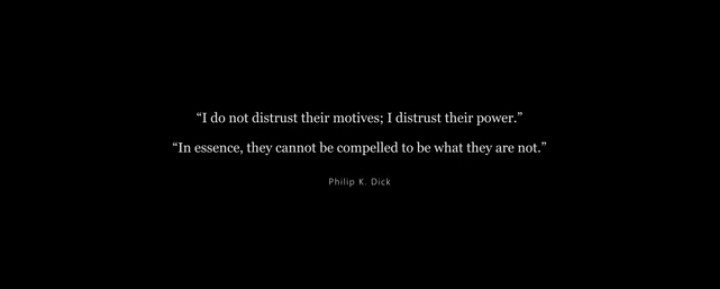
The film’s answer is the state. It alone holds the power to restore or end a person, and it hides that power from the people it controls. Humanity first moved into synthetic bodies to survive a real disaster, but over time that survival plan became a way to control people. A person who depends on the state for their body and their memory is a person who can be managed. (This is my reading. The creator closes his notes with a quote from Philip K. Dick: “I do not distrust their motives; I distrust their power.”)

The World Beyond
The last moments zoom out. We learn that this whole civilization lives inside an artificial world in space. The Executioner, in a tower, gives two cold orders: “Bring the girl” and “Find her father too.” The camera then moves out into space, where we see a bare planet and another world being built beside a Sun by machines.
According to the director’s notes, the frozen Earth, the broken Moon, and the Sun wrapped inside a giant sphere show what humanity escaped, and what it gave up to do so. It is an enormous reveal, and it recasts the quiet story as one small human act against a very large machine.

Final Thoughts
A beautiful, quiet, and powerful film that will stay with you. The costumes and visuals are stunning, the idea of a mother bringing humanity back is unforgettable, and the ending is moving. I came away asking who decides who lives, who is erased, and why we are not allowed to be human, and I think that is exactly what the film wanted. I highly recommend it.
Scene Breakdown
0:14 — Lennie tells a friend that the Family Expansion results came in. It is not a rejection, but they must wait eighty-seven years before they can apply again.
0:46 — Title cards: “Humanity continues. 2041 years unbroken.” We arrive at the Ancestral Fidelity Center.
1:01 — Lennie asks for a Convergence run, but it would use half the quarter’s allocation, and the next scheduled window is six years away. “That’s why they call it Fidelity, not reality.”
2:25 — A lecture explains that it took fourteen centuries to produce the first Fidelity-grade reconstruction of a body. Mara Venn is mentioned and called Bioromantic. The lecturer says, “We chose the stars.”
4:15 — Lennie used forty-three seconds of Fidelity on rain. “I wanted to remember it.” “You can’t keep it, Lennie.”
4:48 — A care system checks on her. She says she remembers the smell of wet soil and cold air. Her metrics are within range, but that is not what she was asked.
6:05 — Lennie asks Simone for the override, and Simone refuses. Then Lennie offers her the Convergence run, and Simone agrees.
7:26 — Authorization. Lennie and Simone prepare for the run.
8:39 — Inside Convergence, Simone sees her lost spouse and wakes to “Food’s ready.”
9:25 — Noah finds Lennie in a hidden lab with an experimental pod. “I want our child to remember.” “I wanted a child, Lennie. Not an experiment.”
11:07 — The story of Mara Venn: she believed we should not undo every change, chose to live that way, and was lost three years later.
11:40 — Seven years later, in the botanical garden, Iris tastes a sweeter strawberry than last summer’s. “You’re sweeter than strawberries.”
12:28 — Iris is cut by a plant. The care system recommends help, and Lennie declines. “Decline recorded.”
13:18 — Rei and Patrick review Iris’s record. She is seven and has never completed a full diagnostic.
13:52 — A regional sample acquisition is authorized. The sample profile is unresolved, and the origin correlation fails.
15:09 — “She never entered a cradle.” The case is escalated to the Fidelity Center.
15:44 — Noah and Lennie argue about how careful she is with Iris. “You’re making the past sacred.”
16:11 — Armed officers arrive for identity verification. Lennie tells Noah, “I made our daughter.” Noah tells them to leave through the trees.
17:21 — Noah is destroyed protecting them. “Mom!” “Don’t be afraid.”
18:19 — Simone demands that Iris be released, pointing to her authorization on the Origin chain.
18:54 — The scan confirms it: autonomous metabolic activity, organic cellular replication, no synthetic substrate. Species: Homo sapiens. “What did you make?” “Us.”
19:22 — Finality Protocol authorized. “There’ll be nothing left to restore.”
20:02 — “Iris. Let her go.” Memories come back: “You’re sweeter than strawberries.” “I want our child to remember.”
20:30 — “Salty… I remember.”
21:31 — “Bring the girl. And find her father too.” At the end, we see a bare planet and another one being built beside a Sun by machines.
Reader Reviews
There are no reviews yet. Be the first one to write one.