
Download Free Original Music Songs from the films
Scores & Rankings
The Seventh Loop Directed by Mohammad Owais
Find this film in
Score breakdown
- Storytelling & Structure ×29
- Emotional Connection ×28
- AI Tool Management ×210
- Visual Craft10
- Screenplay9
- Sound Design10
- Originality10
- Technical Polish10
- Rewatch Value10
×2 = core category, counts double.
Film Review
Written by Kineograph
Trapped in a loop, Alma confronts time, regret, and the choices that shaped her life.
This review discusses the ending. If you would rather watch the film first, we recommend you do, and then come back.
Why This Film Stayed With Me
I was drawn in by the colors and the setup, and I stayed for the message. The Seventh Loop follows Alma, who wakes in an unfamiliar place with no idea how she got there. A corridor, a butterfly, a dragon in chains and a mysterious purple figure all stand between her and one question: are you living this moment, or only repeating it?
What moved me most is that the film never frames Alma’s struggle as a battle against an outside enemy. Again and again it suggests that what she meets belongs to her. That is a bold idea for a five-minute film, and the director commits to it completely.
A Palette That Tells the Story
The colors do half of the storytelling. The world is built from cold blue-grey stone, arched corridors and shafts of pale light, and the warm tones appear only in a few places: the glowing marks on the wall, the gold on the dragon, the dome Alma raises at the end. Visually, it is a beautiful film, and the look is never decoration. It carries the argument.
Here is how I read it. The purple figure tells Alma that oblivion is warmth and that she chose ice. Yet the warm light we actually see comes from Alma and her dragon, and her final line is that even in the dark, we burn. The film seems to say that the comfort of forgetting is borrowed warmth, while the heat you generate by facing your pain is the real thing. That is my interpretation, but the color design makes it easy to see.

A Corridor That Only Pretends to Move Forward
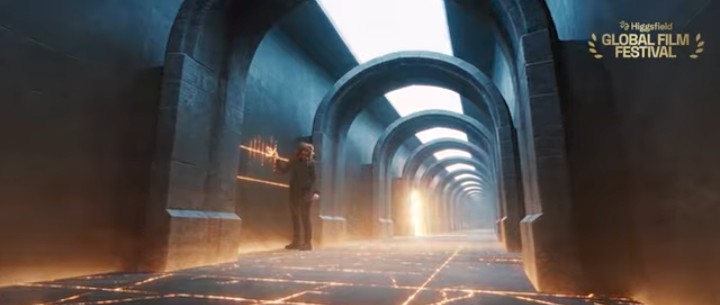
The corridor has no doors and no windows, and Alma runs through it like she is certain she is getting somewhere. She is not. Seven marks glow on the wall, and when she touches the last one she remembers that she has been here before. That is the moment the film’s logic clicks into place, and it is handled with real restraint.
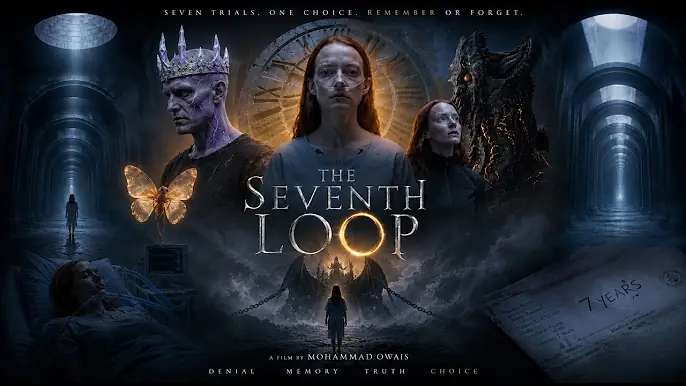
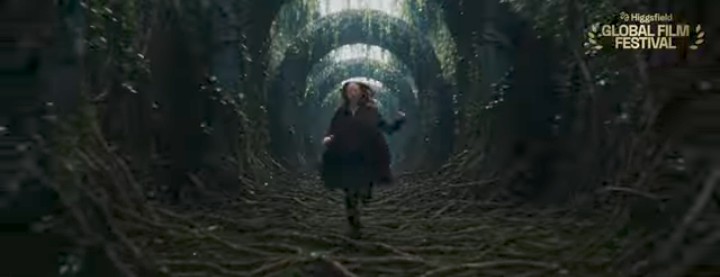
My favorite touch is that the corridor changes every time she runs it. The surroundings are different, but the destination is the same. The director’s notes describe these changing passages as the paths we believe we are choosing, which all lead back to the same point, and I find that painfully true: changing the road is not the same as changing the outcome. The poster even names four stages for the journey, Denial, Memory, Truth and Choice, which gives the loops a clear emotional shape.
Hope Arrives as a Butterfly
Hope introduces herself plainly, and she says she has been here before. In a weaker film this could feel sentimental. Here it works because Hope does not rescue Alma. When Alma asks whether she knows this place, the answer is that she knows pieces, enough to walk beside her.
That line says something true about hope. It does not always know the way out. Sometimes it simply keeps you company until you can find it yourself. The director’s brief reads the butterfly as hope, transformation and the start of a new life, and it is fitting that it is the butterfly that lands on Alma’s forehead when she finally wakes.
The Dragon Is Not the Enemy
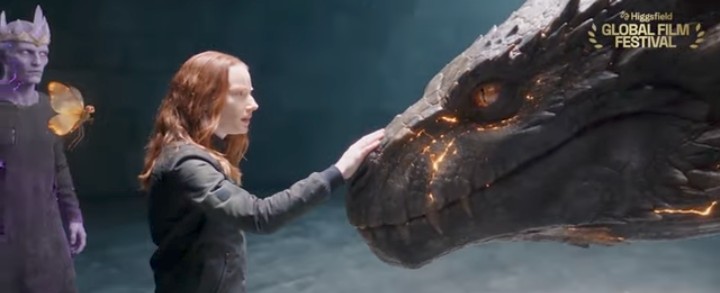
Alma finds a dragon in chains, and the butterfly tells her it is part of her. That single idea changes the whole film. The director’s brief describes the dragon as memory itself, a powerful force that keeps everything and cannot be erased.
My reading goes one step further. I see the dragon as her pain and her will to survive, chained up because she has been avoiding both. Breaking the chains is her first brave act, and only then does the real confrontation begin. The creature design deserves praise too: ancient, gold-lit and formidable, and still unmistakably hers.

The King Offers the Easier Choice
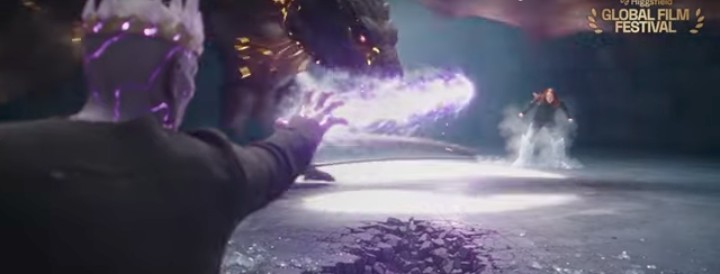
Then the purple figure appears, and he is the most interesting character in the film because he does not simply threaten Alma. He tempts her. He tells her he is not the place she is fighting, he is the easier choice. He says that pain fades faster than she thinks, and that she chose wrong.
The director’s brief calls him the King, the guardian of memory and time, and the truth Alma tries to escape. Together with his words, I read him as the voice that says it would be easier to forget. His sharpest question is this: how many times must you make the same choice before it becomes fate? It is the thesis of the film in one sentence, and it speaks to anyone who has ever repeated a mistake and wondered whether they could stop.

Best Scene (3:26–3:33)
The dragon, the king and the ice
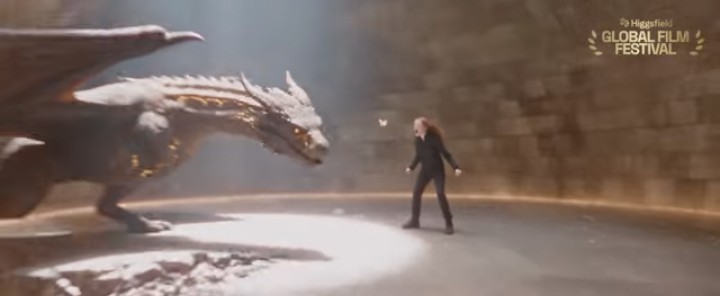
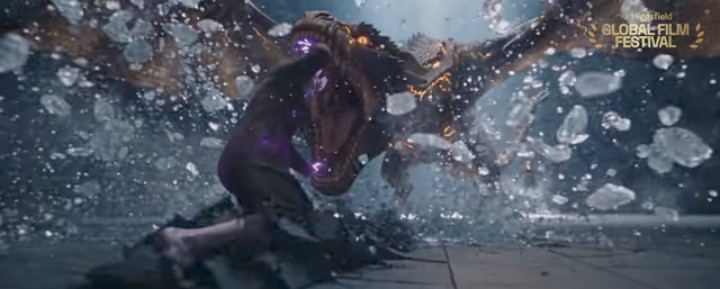
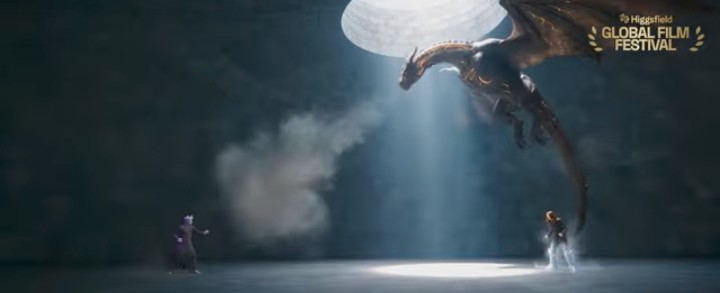
At 3:26 the dragon attacks. The purple figure grabs its mouth, and ice explodes in every direction in slow motion. It lasts only seven seconds, and it is the most spectacular moment in the film. This is my Best Scene.
The slow motion turns shattering ice into a frame you could hang on a wall, with every fragment catching the light. Giving an impact this much weight and physical presence is hard to achieve with AI, and the shot sells it. It also carries meaning. This is the ice she was told she chose, breaking apart as the dragon she freed turns on the man who wanted her to forget. That connection is my reading, but the image earns it.


“Even in the Dark, We Burn”
The King then tries to pull Alma into a void. She refuses, and a golden dome rises around them. “Even in the dark, we burn. This is what living is.” It is the emotional peak of the film, and the line earns its place because it answers every offer he has made. He promised warmth in oblivion. She shows that the warmth worth having comes from within, and that it lives in the same place as the pain.

The Clipboard That Reframes Everything
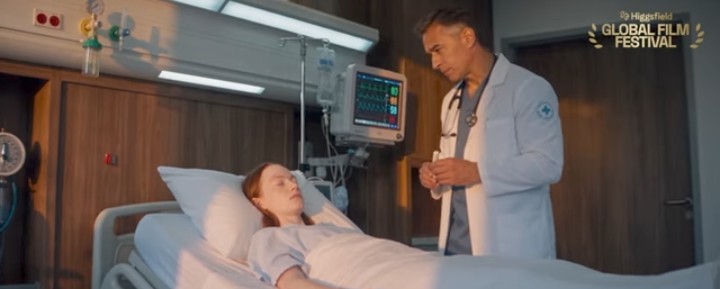
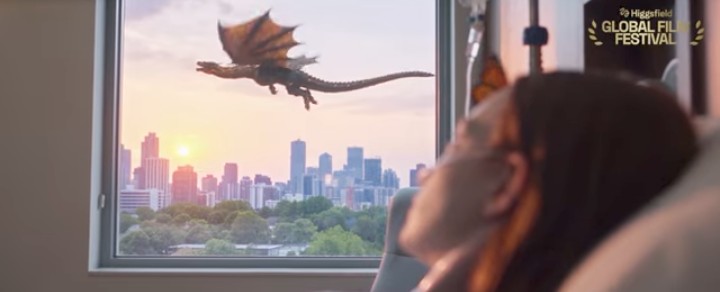
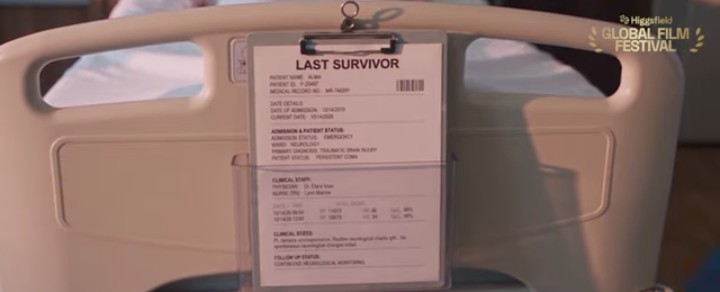
Alma wakes in a hospital. A butterfly lands on her forehead, a dragon flies past the window, and a nurse hangs a clipboard on her bed that reads “Last Survivor.” It is a quietly devastating reveal. The chart lists a traumatic brain injury and a persistent coma, and its dates appear to be seven years apart. Everything we watched happened inside her mind while years passed in the real world.
Here is how I read “Last Survivor.” On the surface it names someone who survived an accident. It also describes the one who refused to surrender. The film does not say what Alma survived, and I am happy to leave that open, because the question the film asks is not what happened to her but what she chooses to carry forward.


Final Thoughts
A beautifully designed five-minute journey through regret, memory and the choice to keep living. I loved the look and I loved the message. The film reminds us how easily repeated choices can start to feel like fate, and how powerful it is to choose differently. Watch it, and then watch it again for the marks on the wall, the clock and the clipboard.
Scene Breakdown
0:06–1:05 — Alma wakes in an unfamiliar place, asks where she is, and finds the corridor with seven marks on the wall.
1:09–1:49 — A butterfly introduces herself as Hope, says she has been here before, and offers to walk beside Alma.
1:51–2:07 — Alma touches the last mark and remembers she has been here before. She runs the changing corridors, walks through a door, and finds the dragon in chains.
2:07–2:30 — The purple figure appears and asks whether she is living this moment or only repeating it.
2:33–3:25 — The chains break. He tells her she chose wrong, and offers oblivion as the easier path.
3:26–3:33 — Best Scene: the dragon attacks, he grabs its mouth, and ice splashes everywhere in slow motion.
3:45–4:11 — He tries to pull her into a void. She refuses, a golden dome forms, and she says, “Even in the dark, we burn.”
4:27–5:22 — Alma wakes in a hospital. A butterfly lands on her forehead, a dragon flies past the window, and the clipboard reads “Last Survivor.”
Reader Reviews
There are no reviews yet. Be the first one to write one.