

Download Free Original Music Songs from the films
Scores & Rankings
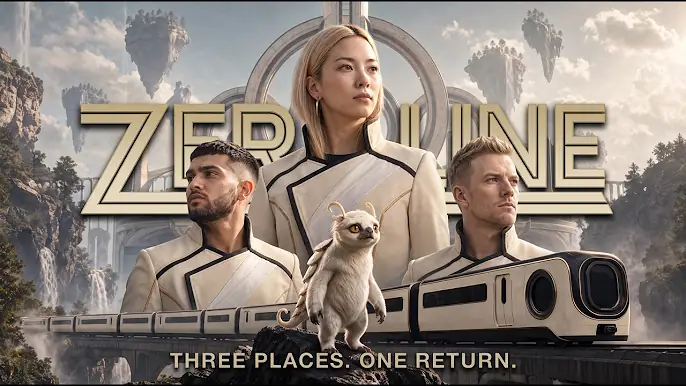
The Zero Line Directed by Keko
Find this film in
Score breakdown
- Storytelling & Structure ×29
- Emotional Connection ×29
- AI Tool Management ×29
- Visual Craft10
- Screenplay10
- Sound Design9
- Originality10
- Technical Polish9
- Rewatch Value10
×2 = core category, counts double.
Film Review
Written by Kineograph
Three strangers board a hidden train to a world where every future is known—except theirs.
This review discusses the ending. If you would rather watch the film first, we recommend you do, and then come back.
Why This Film Stayed With Me
I will say it plainly: I am in love with this world. The idea of a place that keeps every possible future, including the forgotten ones, is one I could think about for days.
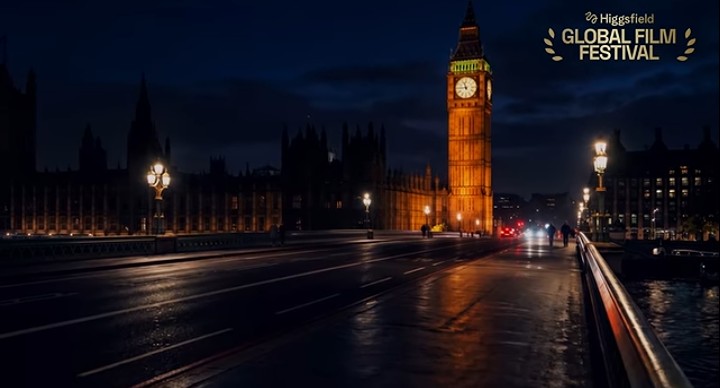
Here is the setup. At 23:47 in London, three strangers get the same message: Platform Zero. 00:13. Three places. One return. They follow it to a hidden platform and an impossible train. It takes them to Morrow, a world that records every future that could happen. There is one problem. Nothing is written about these three. They are the only people in existence with no future on the record, and someone went to a lot of trouble to bring them there.
That is a wonderful reason to tell a story. We all wonder what is waiting for us. This film asks a different question: what if nobody knew?

Ivory, Black, and a Little Gold
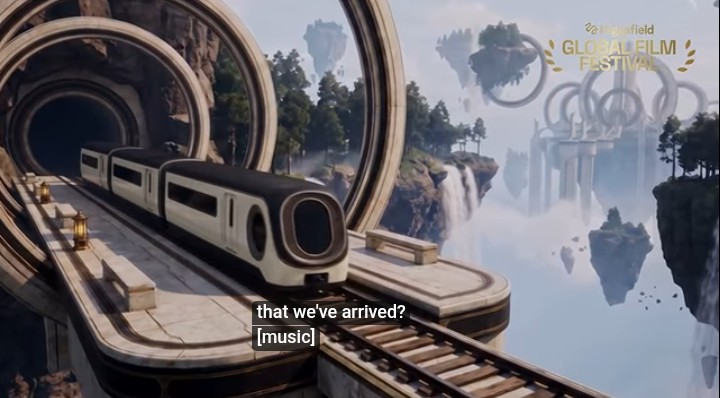
Morrow is stunning. The film moves from cold, ordinary London streets and underground spaces into a huge world of ivory stone, deep black surfaces, and gold used with care. The director chose this on purpose. It feels like a real place filmed for the cinema, not a painting. I also love that it avoids the usual purple glow that many fantasy worlds lean on. This one is calm, clean, and grand.
Look at the towers made of giant rings, the floating islands, and the waterfalls falling into the clouds. It is a landscape you want to walk through. The film gives it room, too. The camera moves slowly, and the performances stay natural and quiet. The tension comes from silence, small reactions, and the way people look at each other.

The Train That Makes No Sound
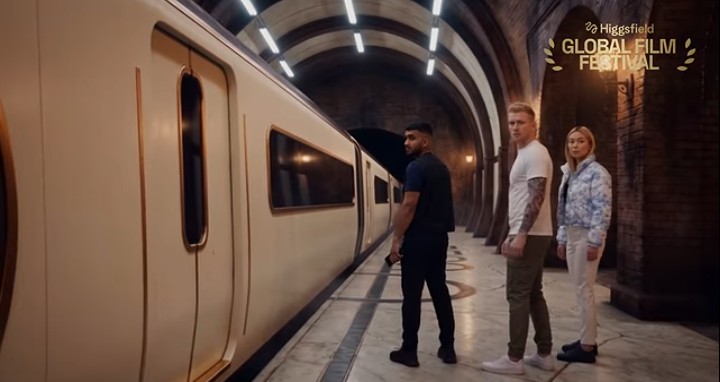
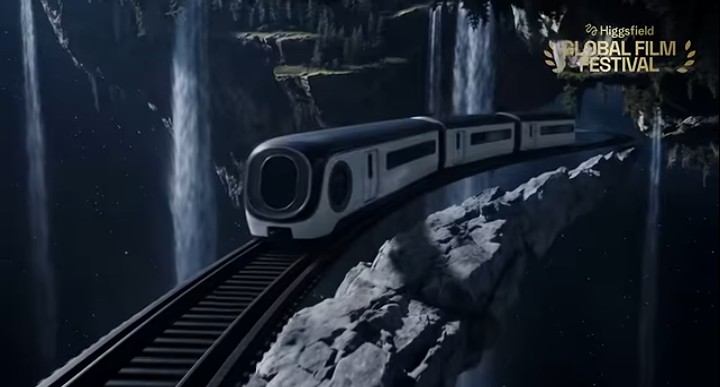
The train is a character on its own. The director’s notes describe it with great care. The doors do not slide or swing. They simply stop existing between two frames and come back the same way. The windows are matte black, with no view and no reflection. And there is no engine noise at all. Instead, a deep bass hum arrives before the train and stops dead the moment you step inside.
That is the kind of detail that makes something feel strange without ever saying so. You do not need an explanation. You just know this train does not belong to our world.
The way the story moves is smart, too. The opening starts with three strangers meeting underground. “You’re not supposed to be down here,” says one. “Neither are you,” says the other. Later, the group compares notes. “What time did yours come through?” “23:47.” “Say no more.” It is quick and funny, and it makes these three feel like real people before the magic begins.
Best Costume: Dressed for Another World
Now let me gush about the costumes, because they are wonderful. They also matter to the story, which makes them even better.
The Costumes of Morrow
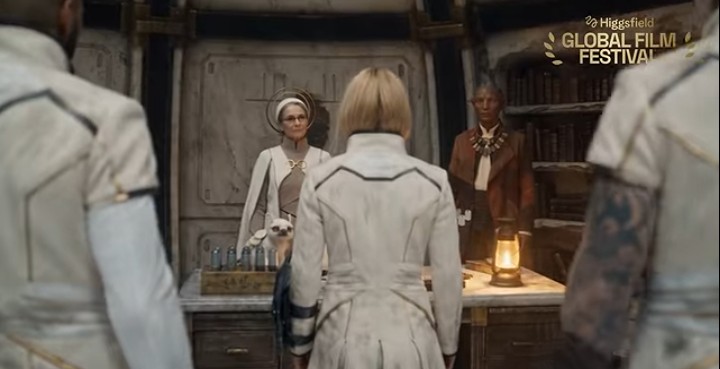
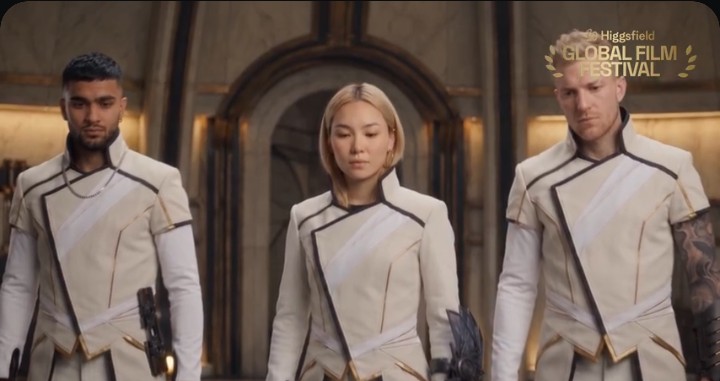
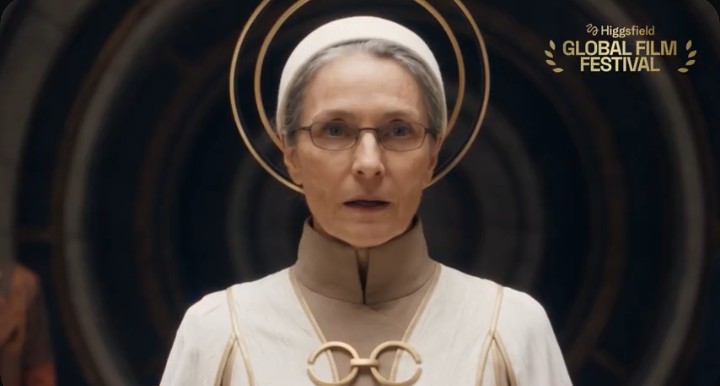
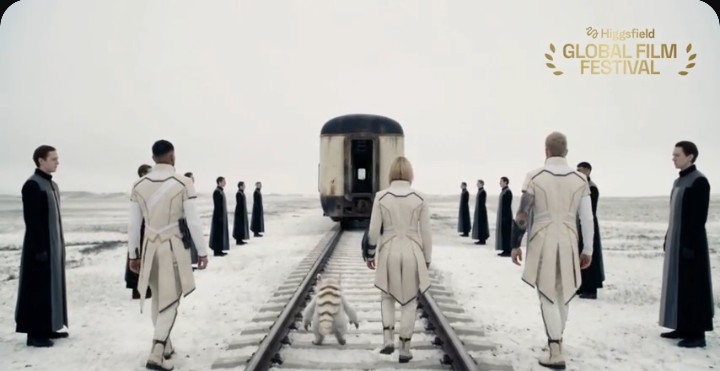
The three travelers arrive in everyday clothes, including a blue-and-white floral jacket that looks just right on a London street. Then they are told that Morrow notices strangers, and that by the time they leave the room they will not look like one. The new look is a set of matching cream coats trimmed in black, with fitted trousers, boots, and some rugged gear at the belt and arm. They look like a team. And then there is the older woman with the thin golden halo, round glasses, and a long white cape over a soft beige dress. Her gold clasp and clean lines make her one of the most elegant figures in the film.
What I love is how every costume says something about its wearer. The people who welcome them stand out from each other with different colors and shapes, from a brown embroidered coat with a beaded necklace to a long black coat and a smooth black mask. The travelers’ cream-and-black uniforms match the ivory and black of the world around them, so they fit right in. That is clever design. The clothes tell us how this world sees people before anyone says a word. This film is easily worthy of the Best Costume category.

Meet Kesh, My Favorite Character
Now we have to talk about Kesh. Kesh is a small, fluffy creature with big round eyes, and Kesh is the one who shows the three travelers the way. They are told so just before they leave: “Kesh will show you the way.” And then this tiny guide walks down the track in front of three grown adults like it owns the place.
I adore Kesh. In every shot, the little creature adds heart, a touch of humor, and a feeling of safety in a world that is anything but safe. Here is my message to the director: Keko, please make a collectible Kesh doll or figure. I would buy one in a second. A film this carefully designed deserves a toy shelf.
A Story About People Nobody Has Written
So what is this film really about? Here is my reading. Morrow keeps a record of every future. The Ordainer reads it, and he has read everyone. Then three strangers arrive, and there is nothing to read. The film is about what a perfect record can never hold: people who have not decided yet.
The Ordainer sums up his own weakness in one line: “I know what you’ll do. That’s not the same thing.” He believes that knowing what someone will do is the same as knowing them. He has watched eleven others stand where these three stand, and he has predicted every one of them. He tells them, “You’ll find three ways and take none of them.” He is calm because he has seen this before.
What I love is that the film does not win with a bigger weapon or a faster plan. According to the director’s notes, the Ordainer is beaten by the one thing a perfect record cannot contain: three people handing each other the wrong tools on purpose. In my reading, that is trust. It is people choosing to put each other first. A record can tell you what someone is likely to do. It cannot predict a friend giving up the thing they need most.
That also explains the strange instruction the travelers get before the last stretch: “Bring each other back.” The message said three places and one return. My reading is that the way home is not something one person can earn alone.
The Forgotten Futures
This is the part that gave me chills. Before the travelers can reach the End Station, the line runs through three dead futures. These are timelines that Morrow left behind, “some by accident, some by choice.” According to the director’s notes, they are built from Morrow’s own material with the gold removed. Nothing is ruined. Everything simply stops at a clean, untouched edge, as if construction was pulled away.
I love how quiet that is. It is the opposite of a burned-out wasteland. These are futures that were never allowed to finish. One moment shows it perfectly. The train races faster and faster, and then, in three seconds, it goes from full speed to zero. “Nothing stops that fast. We didn’t stop,” someone says. “The track did.” There is nothing on it.
Later, they find an empty device in a carriage, and the line that follows says it all: they used it all and still ended here. It seems someone else came this way before them and ran out of options. The film does not explain more, and I like that. It leaves me wondering about every path that was left behind.
The Ordainer and the Wrong Tools
The final confrontation is the best proof that the film trusts its audience. The Ordainer holds the Axis Crown, and he thinks he already knows how this ends. He says the travelers will block it. He says they will look for a door. They even tell him he cannot see them, and he answers calmly that he does not need to.
Then the plan unravels in a way he did not record. Someone says to stay down and let them find a way. Someone says, “The instruments, swap them.” The crown is gone, and the Ordainer is stunned. “That wasn’t one of the outcomes.” It is a great moment of quiet payoff. The big win is not a fight. It is a surprise.

The Last Words
The ending leaves us with a puzzle. A voice says, “I found you. I chose you.” and then speaks of a message that was never sent. The brief calls the film “a message that has not been sent yet,” so that line seems to turn the whole story around. Did someone really send those words to the three? Or did the invitation come from something no one expected?
I will not choose for you. I think the uncertainty is the point. If someone chose them, it was a choice nobody could read in advance.

Made With Great Care
The numbers behind this film are impressive: 1,241 generations, 1,287 assets, and more than 12,000 credits. It is made with Nano Banana Pro, Seedance 2.5, Kling 3.0, ElevenLabs, and DaVinci Resolve 21. What impressed me most is the discipline. Each character’s voice was written as a block of text and pasted unchanged into every prompt, with no voice cloning. Grain and a soft glow were added once across the whole film, instead of inside each shot, so everything feels like it belongs together.
The score and songs carry the mood, and a song rises as the train enters Morrow and returns at the very end. And the director kept the rules simple: one track, one pair of rails, always. That is smart filmmaking. I would love to hear from the director how these rules kept three characters and a creature looking the same through thirteen minutes.

Final Thoughts
A graceful, thoughtful fantasy about the future nobody has written yet. It has a gorgeous world, costumes worth admiring, a hero in a fluffy little body, and a big idea told with quiet confidence. I want to learn more about Morrow and the mythology behind it, and I hope we get to see more. Watch it, and then ask yourself what you would do if your future was a blank page.

Scene Breakdown
0:13–1:08 — Strangers meet on a hidden underground platform, each with the same message that arrived at 23:47. “Who sent it though?”
1:08–2:34 — The group jokes nervously as the train arrives. The music rises.
2:34–3:13 — A song plays as the train rises into Morrow, a world of towers, floating islands, and waterfalls.
3:13–4:17 — A guide leads them in. Everyone who arrives has a future to read, except these three. “There’s been a mistake.” “Exactly the mistake we needed.”
4:35–5:09 — They learn the Ordainer reads every future except theirs, and that he will notice the moment they change something. They are given new clothes so they will not look like strangers.
5:29–6:04 — They receive devices that each work only so many times. “Kesh will show you the way.”
6:14–6:54 — The line ahead runs through futures Morrow left behind, to the End Station where the Ordainer waits with the Axis Crown. “Bring each other back.”
6:54–8:15 — The train runs out of control and stops dead in three seconds. The track simply ends.
8:15–9:33 — Arguments, jokes, and a hard decision. They find an empty device left by someone before them.
9:33–11:26 — The film slows down and lets music and silence build as they near the End Station.
11:26–12:12 — The Ordainer predicts everything they will do and says he has watched eleven others stand in their place.
12:12–13:13 — The three act together and swap their instruments. The crown is gone. “That wasn’t one of the outcomes.”
13:24–end — A voice says, “I found you. I chose you,” and speaks of a message that was never sent. A closing song plays over the end.
Made by Keko with Nano Banana Pro, Seedance 2.5, Kling 3.0, ElevenLabs, and DaVinci Resolve 21.
Watch the film: YouTube
Reader Reviews
There are no reviews yet. Be the first one to write one.