
 Zohrab Melkonyan
 Creator ID26-11-01-0237

Score breakdown
42 views Kineograph’ta
Film Review
This review discusses the ending. If you would rather watch the film first, we recommend you do, and then come back.
Synopsis
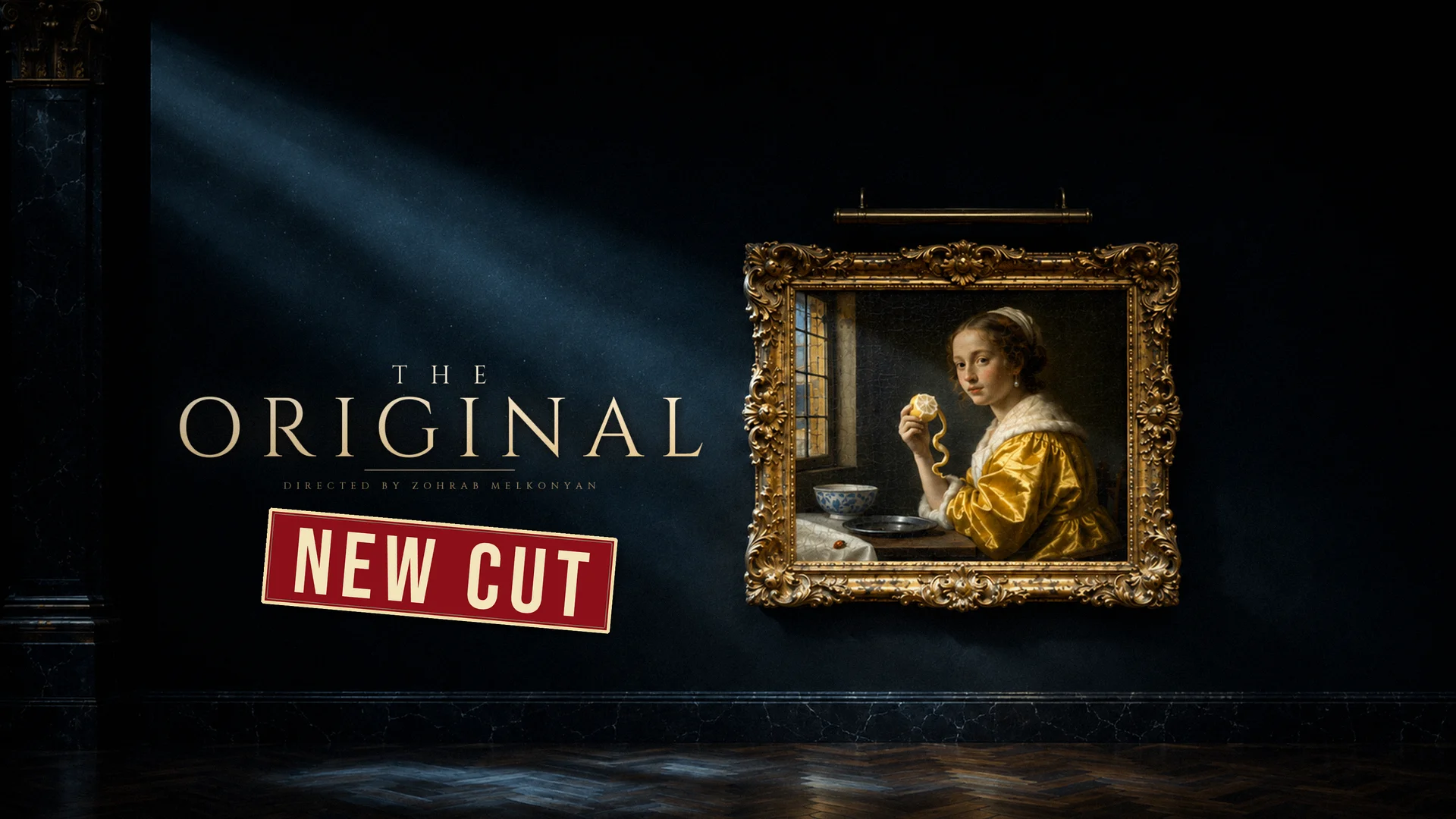
Old Arno tells the story himself, over a café chess table: “45 years I guarded one painting, never caught a single thief. Well, almost never…” The painting is “Girl with a Lemon,” and the thief is Leo. Forty-five years ago, Leo swapped the original for a copy of his own — the copy signed, in the corner, with a small ladybug — and Arno, then a young guard of 24, saw him do it and turned around. He has guarded the copy ever since, and taken tea with the painting he let go.
Now it is Arno’s last shift, and Leo is coming back to undo it. The plan, as Leo lays it out, has three steps: the overalls, the service door at 2 a.m., and not getting caught by the guard — “That’s me,” as Arno dryly notes. Arno does his two rounds and watches on the CCTV as Leo takes the copy down and hangs the original in its place: “Clean.” Then the film’s decisive moment: instead of calling it in, Arno turns the gallery’s lasers off and lets him finish. The original goes into the back of Arno’s own hatchback, and Arno drives him home. The gallery opens the next morning and nobody notices anything. Back at the chess table, Arno closes the story the way he closes the game: “Check.” “I let a man pay his debt.”
A Confession Framed as a Chess Game
The structure is the film’s great strength. Opening on a chess game in a café is a quiet statement of intent — this is a story about two old players who know each other’s moves — and Arno’s voice-over carries the night with exactly the right understated tone. “45 years I guarded one painting, never caught a single thief. Well, almost never…” is a perfect first line for a confession: it gives you the whole film, the pride and the exception, in one breath.
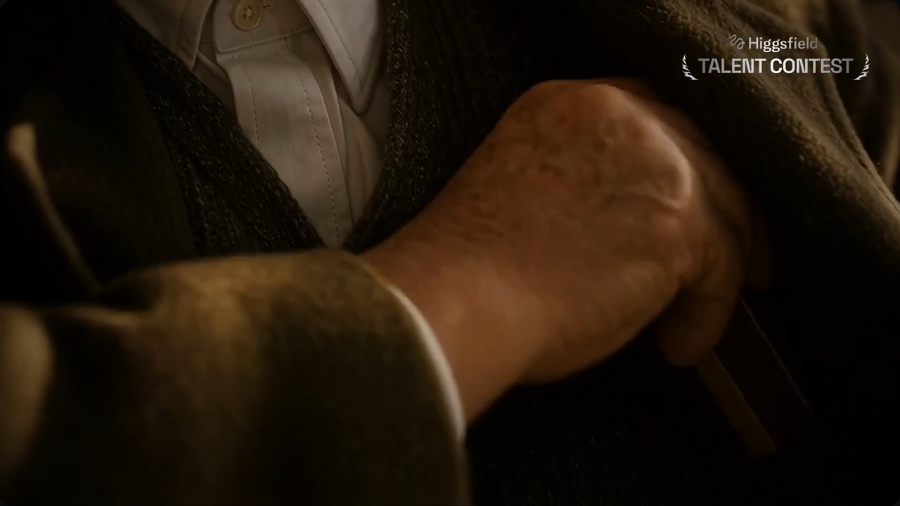
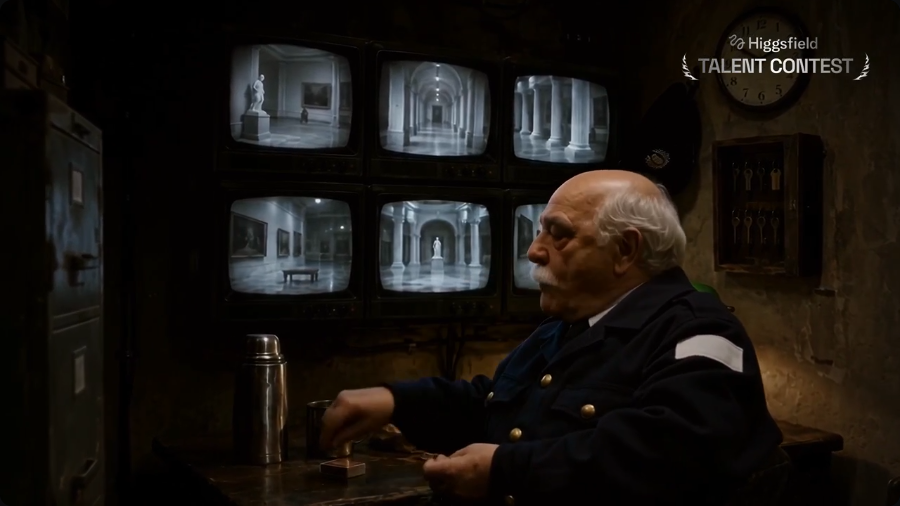
The heist itself is planned the way the film is built — plainly, in three steps, with the joke folded inside it. Leo wraps the painting and lays out the method: overalls, the service door at 2 a.m., and don’t get caught by the guard. The cut to Arno at the CCTV monitors — “That’s me” — is the film’s wryest beat, and it tells you this was never going to be a story about alarms.
The Night of the Swap
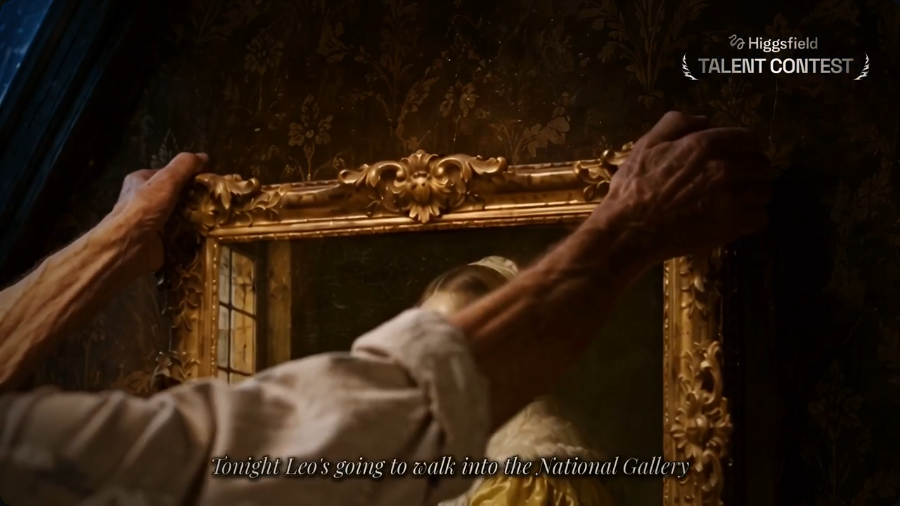
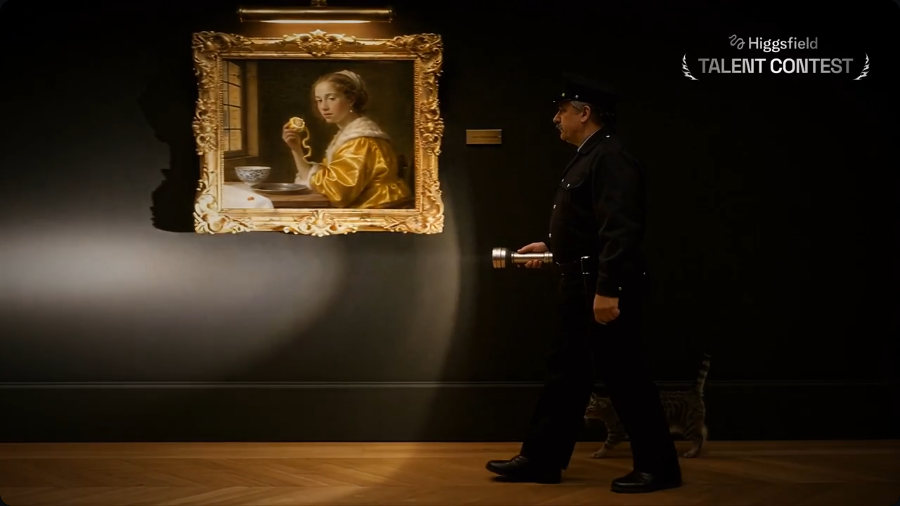
The middle of the film is its best sustained stretch. Arno does his rounds on his last shift, torch in hand, and at one point the beam finds Leo’s shoe at four meters — the whole heist balanced on whether an old man decides to see what he is looking at. Then come the lasers, and the film’s most playful complication: a cat, unplanned, walking through the gallery past Arno’s legs, exactly the kind of small living chaos that laser grids and careful plans cannot account for. Through it all, Leo works — the copy comes down, the original goes up — and his verdict on his own night’s work is one satisfied word: “Clean.”
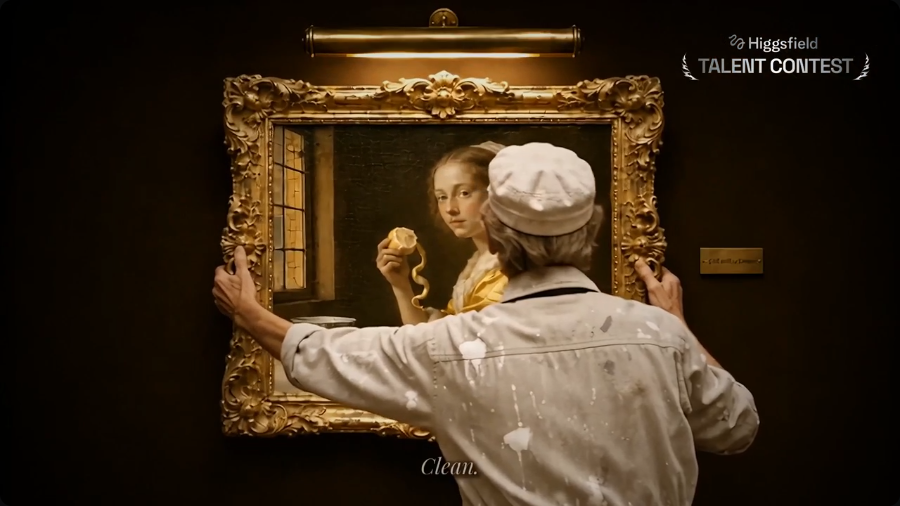
What the film is really doing in this stretch is delaying its question. We know Arno can stop this at any moment. The tension is not whether Leo will be caught; it is whether Arno will catch him — and that is a much better kind of tension, because it is moral rather than mechanical.
The Man Who Turned Around
The answer, when it comes, is the film’s thesis. At around 2:10, Arno turns the lasers off instead of calling it in — and the film cuts back to 1979 to show us that this is the second time. Young Arno, 24 years old, watched young Leo make the original swap and turned around then, too. The flashback earns its place: it turns the guard from a plot device into a man carrying his own share of the debt. Everyone in this film owes something. Leo owes a painting. Arno owes the truth about the night he looked away. The years since have their own quiet image for it — Arno taking tea with “her,” the original, hanging in Leo’s room, while the copy with its ladybug signature hung in the gallery under his guard.
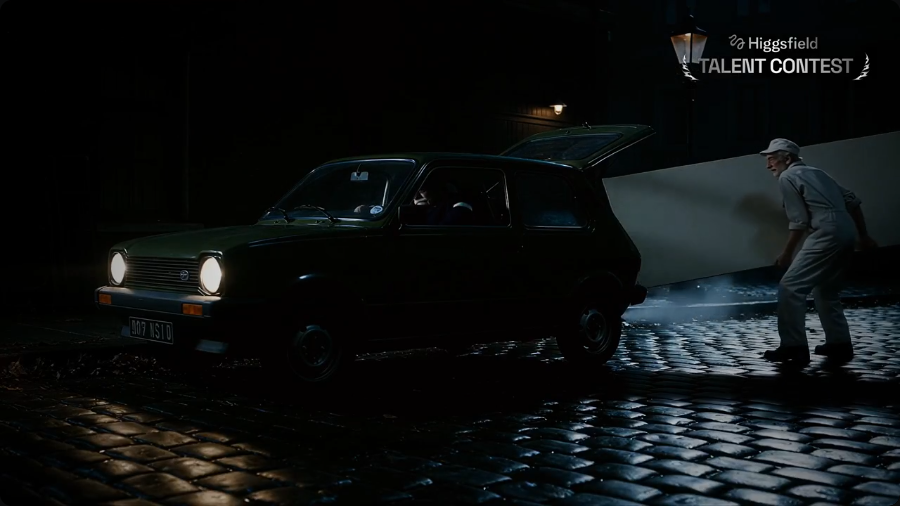
The ending is the correct ending for this story, and the film trusts it. No arrest, no confrontation: the wrapped painting loaded into Arno’s own hatchback, the guard driving the thief home, and the gallery opening the next morning to a world that notices nothing. “I let a man pay his debt” is a line that understands its own film — the crime and the restitution were always between these two men, and the museum was only ever the excuse.
Where the Film Fumbles Its Own Facts
What keeps the score where it is, rather than higher, is a frustrating carelessness with the film’s own details. The numbers contradict each other — the swap is placed at 45 years ago, then 41, then 25 — and in a film whose entire mechanism is a timeline and a secret kept across decades, those are not small slips; they are the load-bearing facts. The lapses are of the same order — hands that elongate and merge, a guard’s clasped hands closing the film as a single flesh mass, a car plate lettered “007 NS10,” CCTV views that do not agree with each other. None of it is broken, and the meter’s Mostly clean 6 is fair; but this is a film about a man who guarded one thing carefully for 45 years, and it needed to guard its own details the same way.
Best Scene (2:10–3:10)
“The Lasers Go Off”
Arno, on his last shift, stands before the painting with his torch — the cat slipping past his legs — and makes the decision the whole film has been walking toward: he turns the gallery’s lasers off instead of calling in the thief he can plainly see. It is the best scene because it is the film’s moral turn performed as a single quiet action, with no speech to explain it. Everything before it — the confession at the chess table, the rounds, the torch finding Leo’s shoe at four meters — is this moment being set up, and the flashback it opens into, young Arno turning around in 1979, reveals that the old man is not making a new choice at all. He is making the same choice for the second time, knowing exactly what it costs. A heist film whose climax is a guard deciding not to guard: that is the most original thing in The Original.
Final Thoughts
A heist run in reverse, a guard who helps the thief, and a debt finally settled after 45 years — this is warm, clever, adult storytelling, let down only by the details it should have guarded as carefully as its own painting. The two old men stay with you: the one who stole an original and spent a lifetime becoming the kind of man who would bring it back, and the one who let him, twice. The rare break-in that leaves the museum richer than it found it.
★★★½ — A thief returns what he stole, and a guard lets him, twice
Scene Breakdown
0:00–0:20 — The confession. At a café chess table, old Arno begins his story: “45 years I guarded one painting, never caught a single thief. Well, almost never…”
0:20–0:55 — The plan. Leo wraps the painting and lays out the three-step plan: the overalls, the service door at 2 a.m., and don’t get caught by the guard — “That’s me.”
0:55–1:30 — The last shift. Arno does his two rounds; at one point his torch finds Leo’s shoe at four meters.
1:30–2:10 — The swap. The lasers; the unplanned cat; Leo takes the copy down and hangs the original in its place. “Clean.”
2:10–2:50 — The decision. Arno turns the lasers off instead of calling it in — and the film flashes back to 1979, when he was 24.
2:50–3:40 — 1979. Young Arno sees young Leo make the original swap, and turns around. The years since: tea taken with “her,” the original in Leo’s room.
3:40–4:25 — The drive home. The original has hung in Leo’s room for 45 years; the copy, with its ladybug signature, hung in the gallery. Arno drives Leo home.
4:25–5:35 — Check. Back at the café: “Check.” The gallery opened the next morning and nobody noticed. “I let a man pay his debt.”
5:35–5:49 — The closing move. The final chess move, and the title card.
There are no reviews yet. Be the first one to write one.