
 natalkatsybulska
 Creator ID26-11-01-0255

Score breakdown
46 views на Kineograph
Film Review
This review discusses the ending. If you would rather watch the film first, we recommend you do, and then come back.
Synopsis
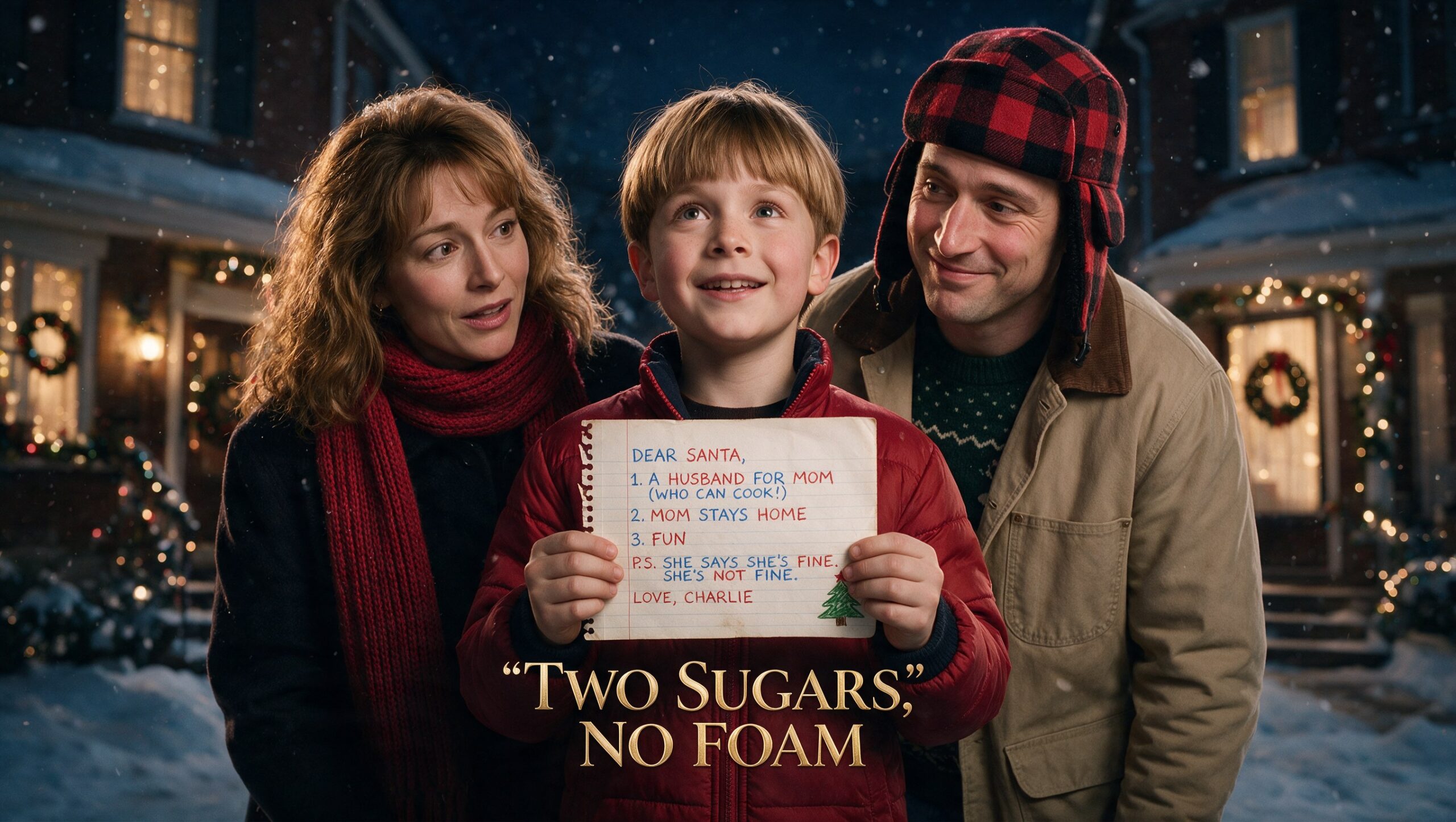
The film opens on a child’s hand drawing by flashlight, and on Meg in bed beside a man in a green reindeer sweater, the two of them screaming at something the morning has brought. It is Christmas Eve, and Meg works in a coffee shop full of ugly sweaters — “It’s on every cup. Merry Christmas!” — where, running on empty, she is prompted to wish: “Rough night, Meg. Make a wish. Somebody’s listening.” Out in the snow she meets Santa. At home, her son Charlie, seven, is alone and negotiating his age upward: “She had a date. She said I’m basically 11.” — “You’re seven.” Charlie’s grievance is the film’s heart: “You missed my school play. I was a treat. A really good treat.” — “But I have to work.” At a candlelit dinner, Charlie makes his wish for his mother. And it works: Nick arrives, announcing himself with the film’s best joke — “Nick, Charlie ordered me. Says so right here.” — “Charlie ordered you?” — “Over night delivery.” Santa greets the boy by name (“Charlie Carter, you are so much.” — “How?” — “Santa.”), and in the morning there are pancakes, and the title line: “Step one, Pancakes. Two sugars, no foam. You make everybody’s — figured somebody should make yours.” Meg phones her boss: “I’m staying home with Charlie today. Merry Christmas Mr. Grady.” The film closes in the snow, on lit branches and a wreath, with a “Merry Christmas” card in a child’s handwriting, a red heart drawn beside it.
A Wish With No Toy in It
The premise is doing the heavy lifting, and it can bear the weight. A child’s-eye economy of care — the wish is not for yourself, but for the person who never stops — gives every scene a clear emotional job, and the film does each job in order. That coherence is rarer in this medium than it should be: plenty of generated films have beautiful frames and no arc. Two Sugars, No Foam has an arc you could draw on a napkin. Meg makes everybody’s coffee. Charlie notices. Charlie wishes. Somebody finally makes hers. The title is the thesis, and the film earns it in dialogue rather than narration, which is why the pancake scene lands the way it does: the most important line in the film is a coffee order, spoken by a man in a Santa suit, in a kitchen, at breakfast.
Meg, Working Christmas
The film is honest about what Meg’s exhaustion costs, and it itemizes the cost through Charlie rather than through speeches. The school play exchange, at around 2:16, is the best writing in the film: “You missed my school play. I was a treat. A really good treat.” — “But I have to work.” A child who was a really good treat is not a line a committee writes; it is observed, specific, and funny in the exact way that makes the sadness underneath it legible. The home-alone scene plays the same trick — “She said I’m basically 11.” “You’re seven.” — a seven-year-old inflating himself into double figures because somebody has to be the grown-up in the house, and it isn’t going to be the shift schedule.
The coffee shop material establishes the other half of the equation: a workplace where Christmas is a slogan printed on cups — “It’s on every cup. Merry Christmas!” — and where the wish is offered almost as a customer-service gesture: “Rough night, Meg. Make a wish. Somebody’s listening.” The film’s warmth is photoreal and worn rather than glossy, which suits it; this is a Christmas film about labor, and it looks like the world it is about.
Santa, Working Stiff
Nick is the film’s best invention. This Santa is not a magical figure descending in glory; he is a fellow laborer who recognizes another one. He arrives by overnight delivery because that is how things arrive in Meg’s life — ordered, shipped, dropped at the door between shifts. “Charlie ordered you?” — “Over night delivery” is a joke, but it is also the film’s logic in one line: in a household run on logistics, even a miracle has to come through the supply chain. And Nick’s gift is proportionate, which is the film’s deepest piece of good judgment. He does not fix Meg’s life. He makes pancakes, he makes her coffee the way she likes it — “You make everybody’s; figured somebody should make yours” — and the day off that follows is one Meg takes herself, phone in hand, in her own kitchen: “I’m staying home with Charlie today.” The wish doesn’t remove her agency; it returns it. Christmas films, AI or otherwise, routinely forget that the gift should match the wish. This one remembers.
Best Scene (3:14–3:44)
“Over Night Delivery”
The wish pays off in a single exchange, and the film knows better than to dress it up. Nick arrives; Meg, incredulous, gets the explanation: “It worked!… Nick, Charlie ordered me. Says so right here.” — “Charlie ordered you?” — “Over night delivery.” It is the best scene because everything the film believes is inside it: the miracle processed through the language of Meg’s working life, the child’s wish treated as a literal order to be fulfilled, and Santa played not as magic but as a colleague who has seen the rota and come to cover a shift. Thirty seconds, three jokes, one thesis. The rest of the film is this scene, unpacked.
Final Thoughts
I keep thinking about the closing card: “Merry Christmas” in a child’s handwriting, with a red heart — the film’s whole budget of sentiment spent on one handmade image, which is exactly the right exchange rate. Two Sugars, No Foam understands that the gift in a Christmas story should be proportionate to the wish, and that care, properly seen, is a hot drink made the way she likes it by somebody else’s hands, for once. Its heart never does. A Christmas keeper — a small wish, granted exactly right.
★★★★ — A coffee made right, and a day given back
Scene Breakdown
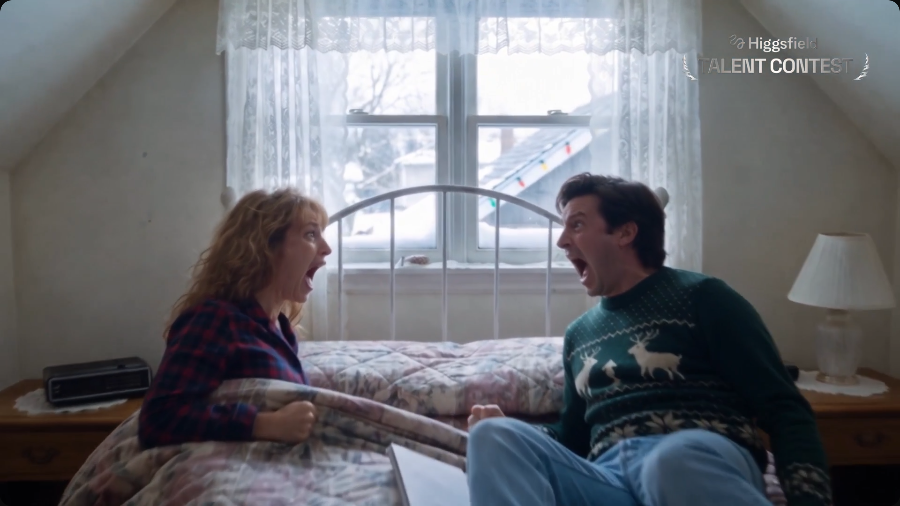
0:00–0:25 — Flashlight and screaming. A child’s hand draws by flashlight; Meg and a man in a green reindeer sweater scream in bed, snowy window behind them. The dialogue is mostly inaudible.
0:25–0:51 — Christmas Eve at the coffee shop. Ugly sweaters, seasonal slogans: “It’s on every cup. Merry Christmas!”
0:51–1:16 — Make a wish. “Merry Christmas!” repeats in quick succession; then the prompt that starts the plot: “Rough night, Meg. Make a wish. Somebody’s listening.”
1:16–1:46 — Santa in the snow. Meg meets Santa outside; he stands with his eyes closed while the woman in the foreground blurs heavily.
1:46–2:16 — Home alone. Charlie, seven, holds the fort and negotiates: “She had a date. She said I’m basically 11.” / “You’re seven.”
2:16–2:45 — The school play. The grievance, plainly put: “You missed my school play. I was a treat. A really good treat.” / “But I have to work.”
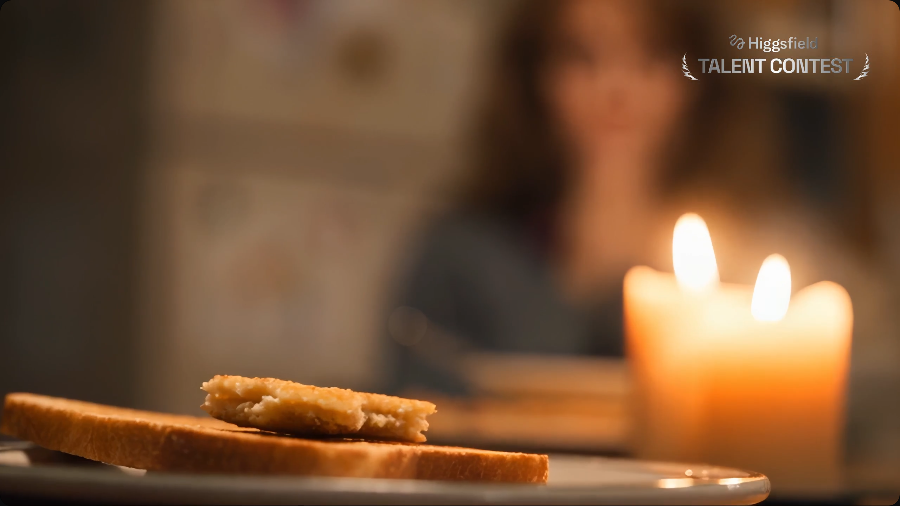
2:45–3:14 — The wish. A candlelit dinner; Charlie wishes for his mother. The frame is very soft, the woman’s face blurred beyond recognition, and the wish itself comes through garbled.
3:14–3:44 — Nick arrives. “It worked!… Nick, Charlie ordered me. Says so right here. Charlie ordered you? Over night delivery.” The bed composition from 0:15 recurs at around 3:30.
3:44–4:11 — Charlie and Santa. “Charlie Carter, you are so much.” / “How?” / “Santa.”
4:11–4:40 — Pancakes. The title line, earned: “Step one, Pancakes. Two sugars, no foam. You make everybody’s — figured somebody should make yours.”
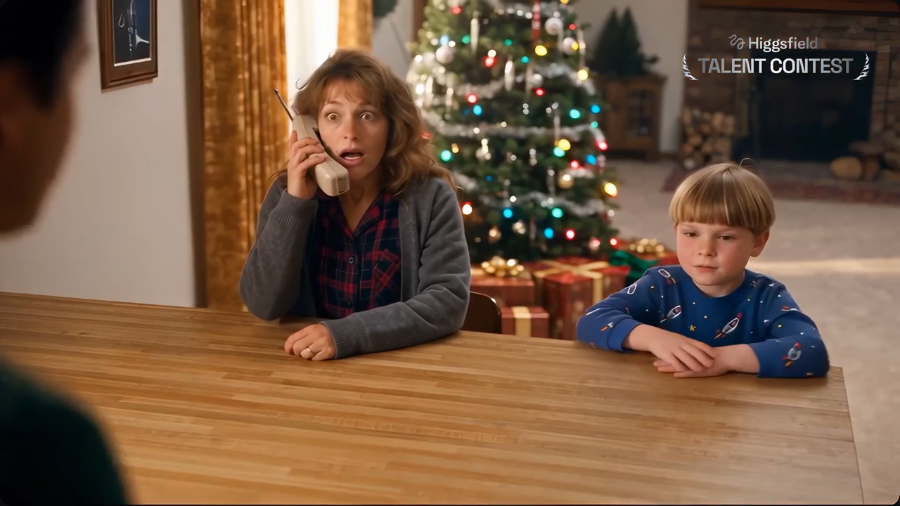
4:40–5:08 — The phone call. Meg calls work from the kitchen table, Charlie in rocket pajamas beside the tree: “I’m staying home with Charlie today. Merry Christmas Mr. Grady.”
5:08–5:36 — Out in the snow. Meg outside, calling for Charlie.
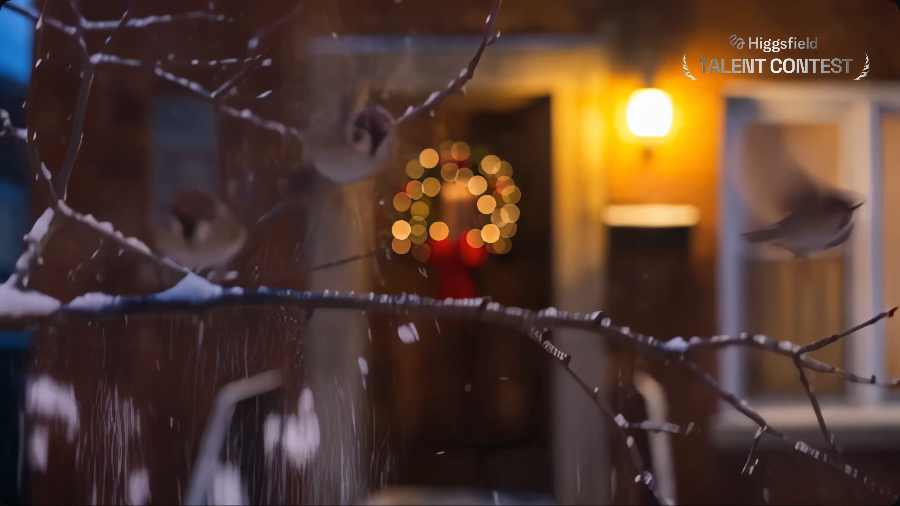
5:36–5:59 — Closing. Snowy branches and a lit wreath in soft focus; the credit “Written & Directed by Natalka Tsybulska” (at around 5:57), and a “Merry Christmas” card in child handwriting with a red heart.
There are no reviews yet. Be the first one to write one.