

 Honey Badger Movies
 Creator ID26-11-01-0241

Score breakdown
30 views на Kineograph
Film Review
This review discusses the ending. If you would rather watch the film first, we recommend you do, and then come back.
Synopsis
A postman in an Indian village begins his day the way he always has: on a bench at the station, drinking tea, a train passing behind him. But the letters that once defined his working life have dwindled to nothing. “Everything has gone online now,” the film tells us — and so the Village Post Office stands empty around him, its India Post signs, rotary phone and pigeonholes presiding over a morning with almost nothing to sort. He says his good mornings, rests back at his desk with his hands behind his head, and takes his tea at the village stall.
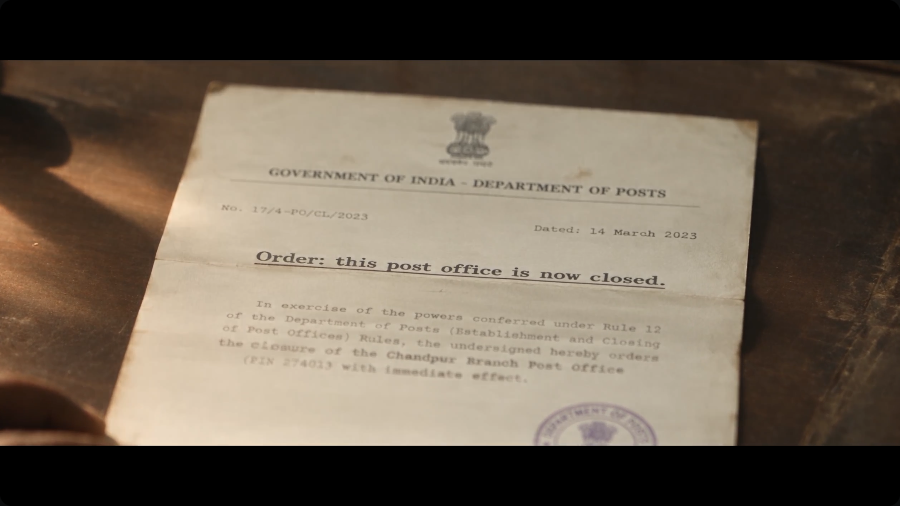
What remains of the job, he still does properly. There are last deliveries to make, and the film follows his bicycle — a close-up of the wheel on a dusty road, then the long ride out beside green paddy fields in the late light. Then he is back at the office, and the film gives him its final task: the brass postmark stamp, brought down on the document that ends it all — the Government of India closure order for the Chandpur Branch Post Office, effective immediately. The last official act of the last postman is to stamp his own office out of existence.
A Man Waiting for Letters
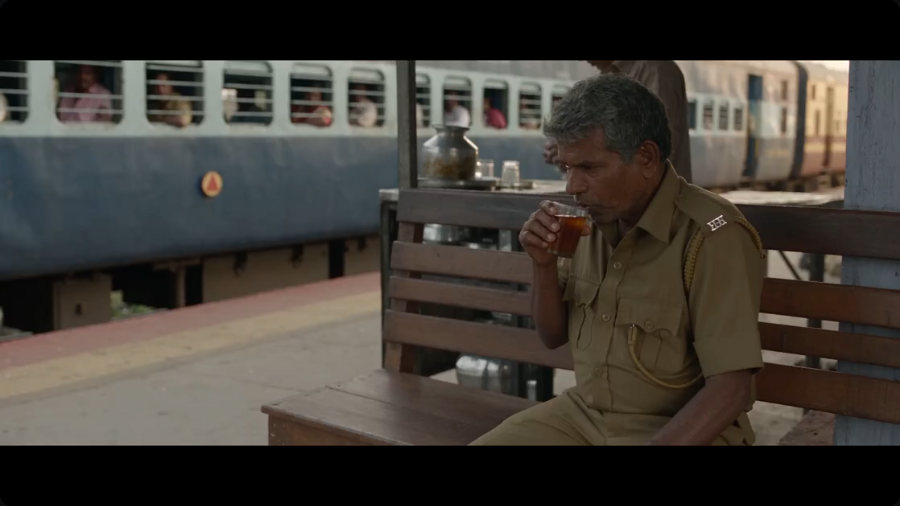
The premise is the film’s strength, and it is a genuinely humane one. Obsolescence is usually played for comedy or bitterness; here it is played for dignity. The postman is not a joke about a man left behind by technology — he is a sympathetic lead whose daily routine reads as loyalty rather than foolishness, and the film’s patience with him becomes the viewer’s patience too. The opening stretch makes the point without underlining it: a man on a station bench with his tea (0:00), watching a train go by, in a world where the mail no longer comes with it.
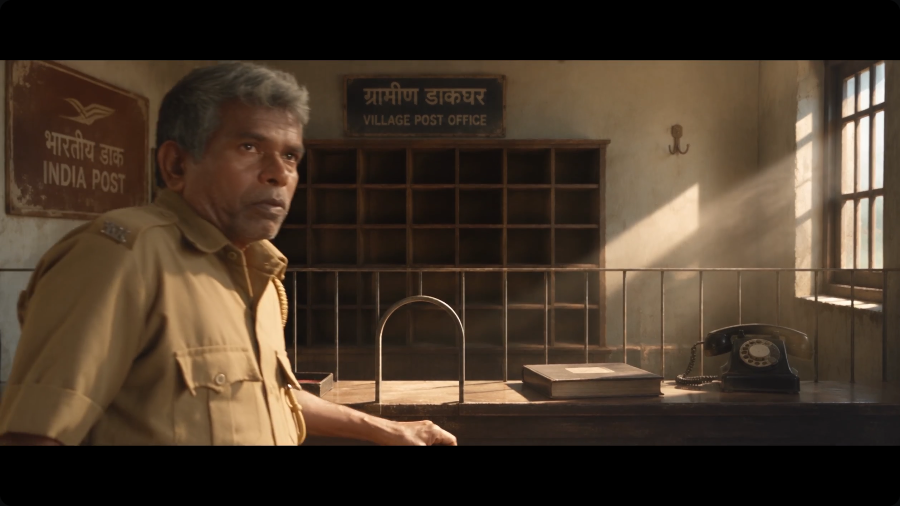
Inside the Village Post Office at 1:11, the film finds its central image of dignified uselessness: the pigeonholes, the rotary phone, the India Post signage — a whole apparatus of communication, lovingly maintained, with nothing to communicate. When he leans back at his desk around 1:44, hands behind his head, the weariness is not laziness. It is the tiredness of a man whose work has evaporated out from under his habits, and who keeps the habits anyway because they are what a working life is made of.
A World That Holds Together
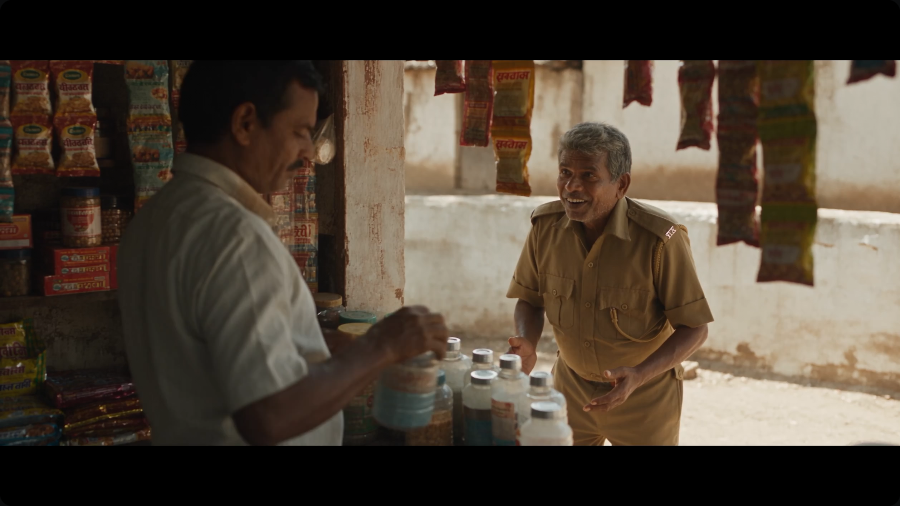
Visually, this is a beautifully sustained photoreal daylight world, and that matters more than it might sound. Daylight exteriors in a lived-in village are exactly where generated footage tends to wobble — faces soften, signage garbles, light goes strange — and The Last Postman holds its world together from the station bench to the tea stall at 2:12 to the paddy fields at 3:09. The light, the place, and the man in it stay consistent enough that you stop watching the technique and start watching the story. For a film whose entire effect depends on believing in its world, that consistency is the craft achievement, and it is why the film’s Mostly clean 7 on the Slop Meter is earned rather than generous.
Carried by the Images
An honest note about how this film reaches an English-speaking audience: the dialogue is mostly Hindi, and the story is carried visually. That is not a complaint so much as a description of the viewing experience. The film’s meaning lives in its images — the empty pigeonholes, the bicycle wheel turning on a dusty road at around 2:40, the green fields at sunset — and those images are legible in any language. The few clear English lines do the framing (“Everything has gone online now”; the closure order’s “with immediate effect”), and everything between them is routine, weather and light. A viewer who comes to this film for dialogue will feel the distance; a viewer who comes for a portrait will not miss the words. If anything, the visual storytelling is the film’s argument: a man’s whole era can end without anyone needing to make a speech about it.
What holds the film back from a higher score is the slightness of its middle. The routine is the subject, but the film observes it at one temperature throughout: station, office, street, stall, road. Nothing is risked and nothing escalates, so the four minutes pass pleasantly rather than cumulatively — until the ending, which retroactively gives the routine its weight. It is a fair trade, but it is the trade that keeps a lovely film from being a great one.
Best Scene (3:09–3:50)
“The Stamp”
The film saves everything for its last movement. At 3:09 the postman is cycling beside a green paddy field in the late light — the job at its most beautiful, a man alone in a landscape that still looks the way his whole life has looked. Then the film cuts to the office, and to the brass postmark stamp held over the closure order: Chandpur Branch Post Office, closed with immediate effect. The stamp comes down. It is the best scene because it is the only one where the film’s tenderness and its subject collide head-on: the instrument of his trade, used one final time, to end his trade. Every quiet minute before it — the tea, the empty pigeonholes, the rounds — becomes the run-up to that single downward press. No speech could do what that stamp does.
Final Thoughts
The Last Postman earns its score on sympathy and consistency: a humane premise, a lead you root for without being pushed, and one of the most believable sunlit worlds I have seen. I have thought about that final stamp more since watching than about flashier films with twice the machinery — about how the film understands that the end of a working life rarely arrives as a drama; it arrives as paperwork, and somebody still has to process it. Verdict: a quiet, kind-hearted portrait of a man the future forgot, closed with a stamp that says everything.
★★★½ — He kept turning up; the film makes sure you know why it mattered
Scene Breakdown
0:00–0:30 — The station bench. The postman drinks tea on a bench as a train passes behind him. No letters arrive. “Everything has gone online now.”
0:30–1:11 — The empty office. The Village Post Office, quiet around him; he sorts at the pigeonholes. “Good morning.”
1:11–1:44 — The desk. He rests back at his desk, hands behind his head, weary — the apparatus of the job intact, the job itself gone quiet.
1:44–2:12 — The village street. Boys with a phone; the tea stall, the postman with the shopkeeper. (Hindi.)
2:12–3:09 — Last deliveries. The final rounds; a bicycle wheel in close-up on a dusty road. (Hindi.)
3:09–4:01 — The fields, and the stamp. Cycling through green paddy fields at sunset; back at the office, the brass stamp comes down on the closure order: “Chandpur Branch Post Office… with immediate effect.”
There are no reviews yet. Be the first one to write one.