
 vitamins
 Creator ID26-11-01-0245

Score breakdown
40 views на Kineograph
Film Review
This review discusses the ending. If you would rather watch the film first, we recommend you do, and then come back.
Synopsis
The film opens on an armoured figure, a fist clenched — and then on a promise. A woman is going out beyond her colony to find her brother, missing for years, and her husband Blake is going with her: “I need to go find him, Blake.” “We will. I promise.” In the cockpit, her reason is as plain as it gets: “He’s my brother. I can’t leave him out there.”
They reach the wreck of a ring station: astronauts floating outside the broken hull, silence inside. They search the wreck — and they find him. He is alive, but the years have transformed him, and his first account of the reunion is an accusation: “What happened to me? The colony is what happened. You people abandoned me.” The grievance becomes a fight, fought at close quarters in the wreckage, the brother swinging a metal pipe with a strength that is no longer quite human. In the fight, he kills Blake. The sister who never gave up — “I’ve been looking for you for years… I never gave up” — holds her dying husband, and speaks her love to him as he goes. Then she turns to her brother, and the film ends on the other half of its title’s meaning: “You killed Blake and then you tried to kill me. I hate you!”
A Complete Story, Told in Order
Completeness is the headline. So many films are fragments, trailers, or single scenes with ambitions; KIN is a whole story — a complete arc, clearly told — with a beginning that poses a question, a middle that complicates it, and an end that answers it at terrible cost. The search, the find, the accusation, the fight, the loss: every beat is present and in order, and the film’s 7:07 never feels padded or rushed. The opening vow (0:00–0:54) is doing quiet structural work, too: it establishes, in under a minute, the two relationships the whole film will be about — the brother she owes, and the husband who promises to stand beside her while she pays the debt. When the ending comes, it comes for both of them.
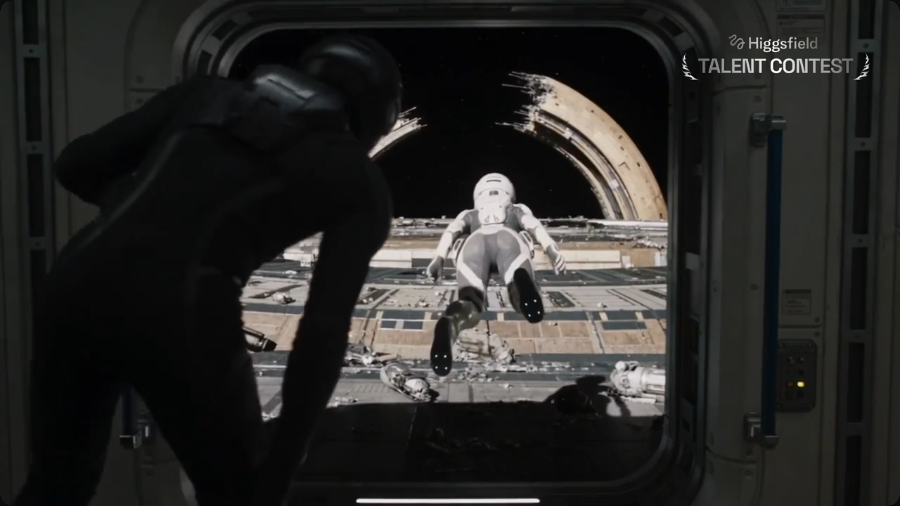
That structural soundness is rarer than any visual trick, and it is the foundation of the score. The film also knows how to let an image carry a transition: the silhouette in the airlock doorway at 2:05, an astronaut floating outside the wrecked ring station, tells you everything about the scale of the disaster and the smallness of the search party in a single frame — no dialogue, no exposition, just the wreck and the dark.
Found, and Lost Anyway
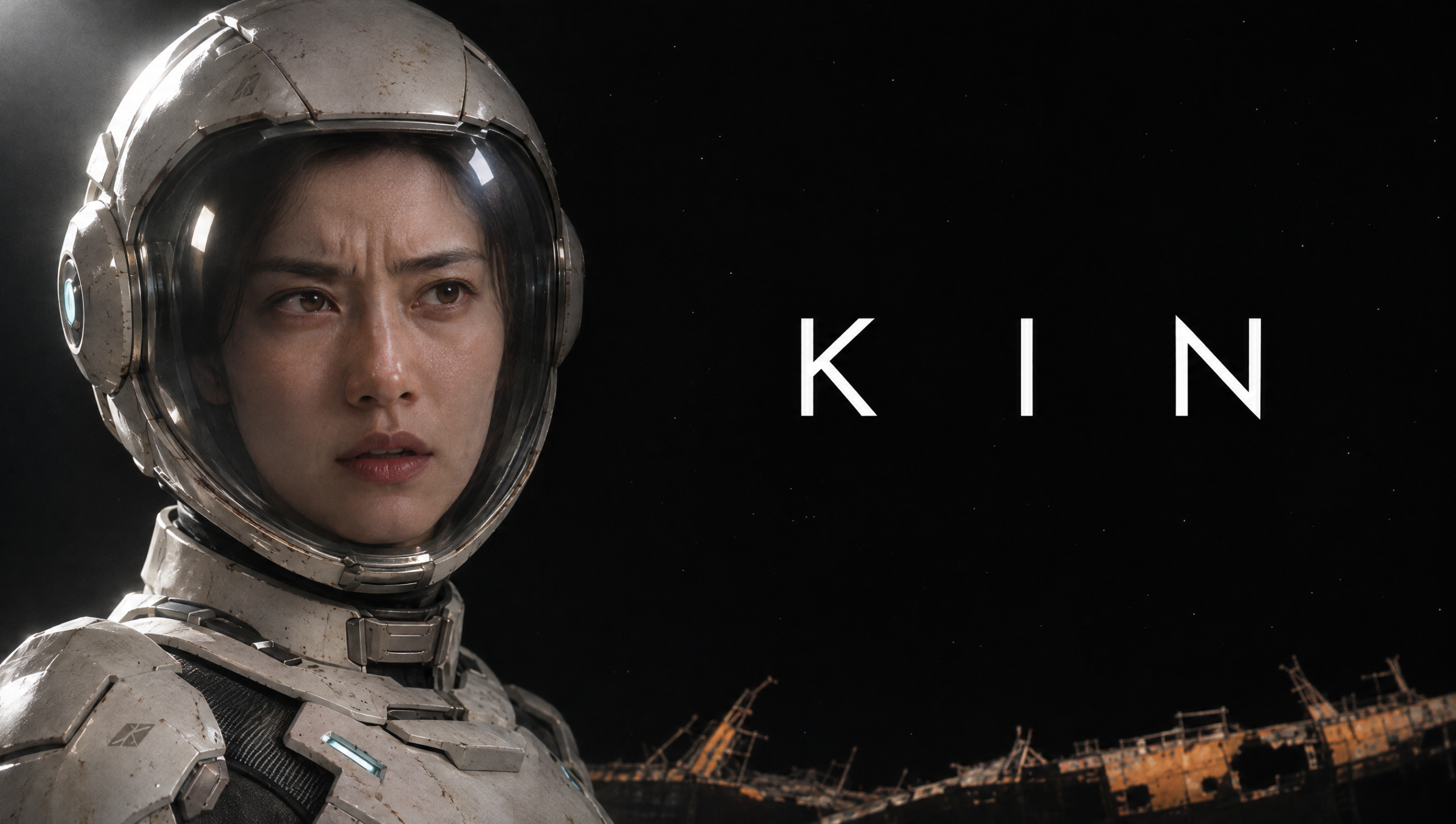
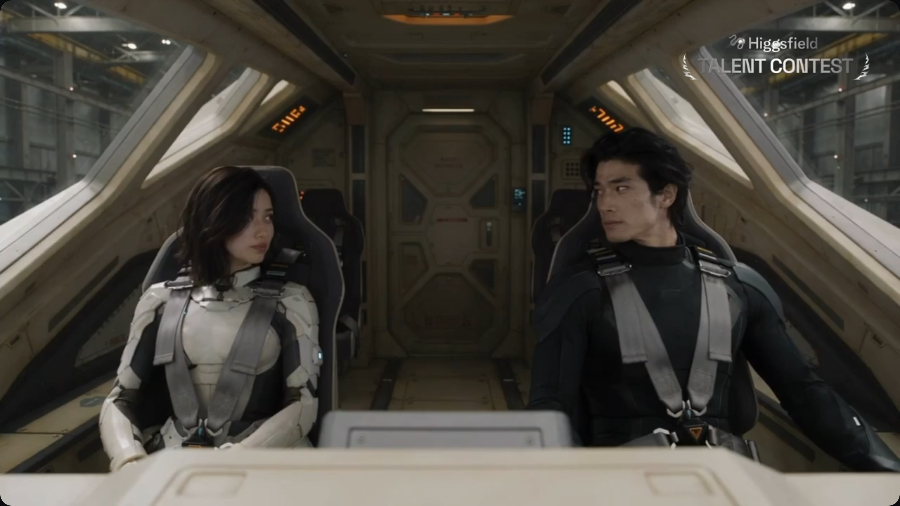
The performances are the second pillar, and they are acted in the faces. The emotional close-ups do the film’s heaviest work: the sister’s determination in the cockpit at 1:24, beside Blake; her hope arriving at the wreck; and the brother’s resentment when he finally speaks. His accusation matters enormously to what this film is. KIN is honest enough to give the “villain” of its reunion a grievance that is true: he was left out there, and the colony — her colony — did it. “You people abandoned me” is not a monster’s line. It is a survivor’s. That moral complication is what turns a rescue plot into a tragedy: there is no version of this reunion that ends well, because both of them are right about what they are owed, and what they are owed cannot coexist.
The brother, when found at 3:32, is transformed and hostile — and the film is careful to let the horror of that be emotional before it is physical. He is not a creature who used to be her brother; he is her brother, changed by exactly the abandonment he names. The fight, when it comes, is therefore not an action scene pasted onto a drama. It is the argument, continued by other means.
The Fight in the Wreck
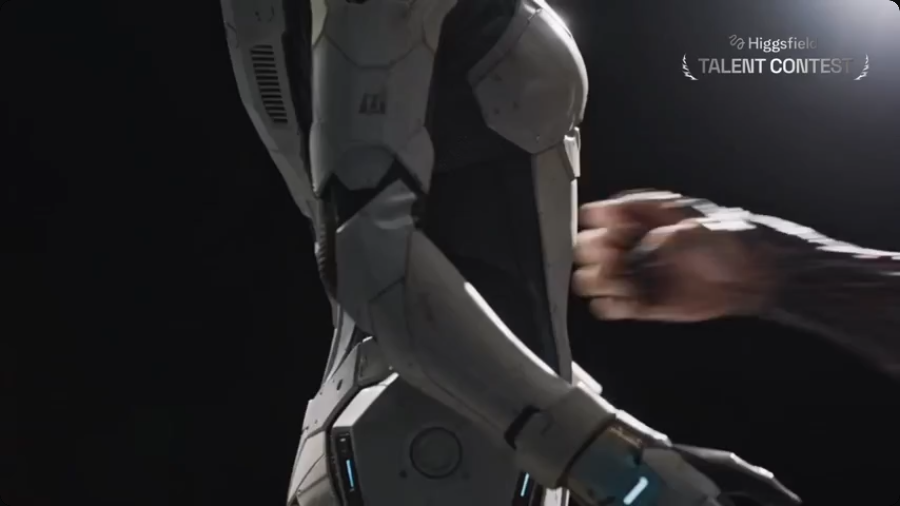
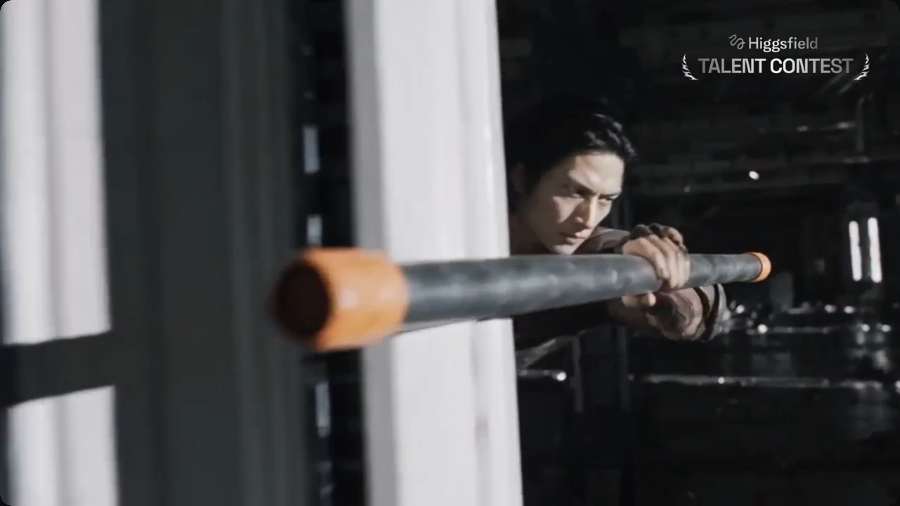
The fight itself (4:13–5:40) is brutal and close: the brother gripping a metal pipe in a fighting stance at 4:13, the confined wreckage, a red beam cutting through the dark. And it is perfection. A fight in space, inside the broken hull of a station, staged this cleanly — it is classic, and incredible to watch. I will say it plainly: vitamins needs to share with us how he made such an incredible fight in space, because filmmakers everywhere are going to want to know. And what the fight contains matters as much as how it is made: in it, the brother kills Blake, and the sister’s years of searching — “I’ve been looking for you for years… I never gave up” — are answered with her husband’s blood on her brother’s hand (5:40).
Best Scene (5:40–6:49)
“I Love You / I Hate You”
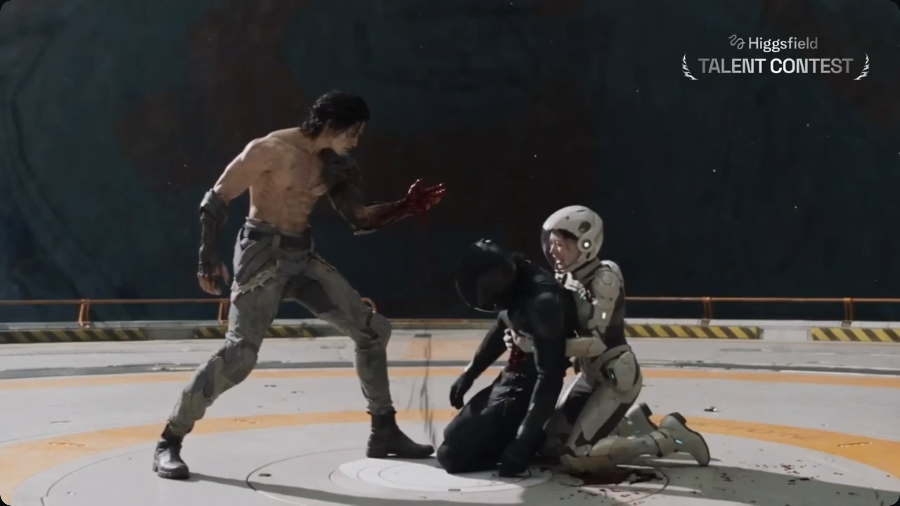
The aftermath is the film’s peak, and its strongest scene. She holds the dying Blake — the man who promised “We will” in the film’s first minute, who came because she could not leave her brother out there — and she gives him the words plainly, twice, like a vow being kept at speed: “I love you, I love you.” Then she turns to the brother she crossed the dark to save, kneeling over the fallen in a pool of blood at 6:49, and delivers the film’s verdict on its own title: “You killed Blake and then you tried to kill me. I hate you!” It is the best scene because it completes the film’s argument in two speeches. Kin is what sent her out there. Kin is what she found. Kin is what it cost. The love and the hatred are the same bond, weighed on the same scale, in the same minute — and the film trusts two faces and two lines to carry what most films would score, cut and underline. It is devastating because everything before it was built to make it so.
Final Thoughts
KIN is the real thing: a complete tragic arc, structured like a film rather than a demo, performed in close-up, and closed with an ending as devastating as it is earned. The title completes its turn — kin is the obligation, kin is the rescue, kin is the loss — and the film is willing to end where the story actually ends, which is a mark of seriousness. If you watch one film this week, watch KIN. Verdict: a complete, devastating science-fiction tragedy — finding someone, it proves, is not the same as getting them back.
★★★★ — She found her brother, and it cost her everything else
Scene Breakdown
0:00–0:54 — The vow. An armoured figure, a fist clenched. The woman resolves to find her brother, and Blake promises to go with her: “I need to go find him, Blake.” “We will. I promise.”
0:54–1:51 — Departure. The cockpit; the journey out beyond the colony. “He’s my brother. I can’t leave him out there.”
1:51–3:32 — The wreck. Arrival at the ruined ring station; astronauts floating outside the broken hull; the search inside.
3:32–4:13 — Found. The brother, alive — transformed, and hostile. “What happened to me? The colony is what happened. You people abandoned me.”
4:13–5:40 — The fight. Close-quarters battle in the wreck; the brother kills Blake. “I’ve been looking for you for years… I never gave up.”
5:40–7:07 — The aftermath. She holds the dying Blake — “I love you, I love you” — then confronts her brother: “You killed Blake and then you tried to kill me. I hate you!”
There are no reviews yet. Be the first one to write one.