
 Mattia La Delfa
 Creator ID26-11-01-0258

Score breakdown
34 views no Kineograph
Film Review
This review discusses the ending. If you would rather watch the film first, we recommend you do, and then come back.
Synopsis
Ivo introduces himself over a Walkman close-up and a cobbled street: “My name is Ivo. I’m 36. I was born in the wrong decade… you press play, you push off and the whole town rolls by like a song.” His working life is machines, and he is honest about the relationship: “I talk to machines all day. At first, we fought. I’d ask for one thing and get another. Beautiful. Wrong, but beautiful.” Then he plays the cassette he recorded at sixteen. Young Ivo’s rules for his future self begin: “One. Never sell the Walkman. Ever. Two. If you have a mustache, I knew it! I knew it! Three…” — and there the tape is damaged. The AI fills the gap with a smoother, wiser rule three than any sixteen-year-old ever wrote: “Never let the years stand down the edges of who you are… grow wide instead.” Ivo’s verdict is instant and total: “Beautiful. For 10 seconds I believed it. Plausible? I didn’t need plausible. I needed mine. Some things you only know with your hands.” He asks the machine the question outright — “Did you make that up?” — and it confesses. So Ivo works through the night with the tape, the pencil, the patience, and recovers the real rule three, in the real sixteen-year-old’s voice: “Everybody keeps telling me to grow up, but I’m scared I’ll forget how to have fun. So if you stop skating, go skate! Today, okay?” At dawn he is back on the board, the closing song carries him out — “Side B, Side B, take me forward” — and the end cards sign off: “BE KIND. REWIND.” / “Now go skate.”
Born in the Wrong Decade
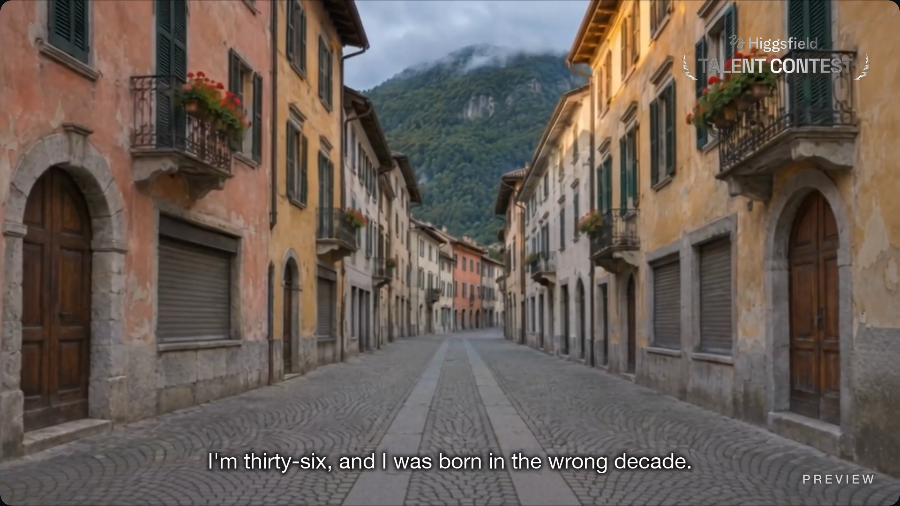
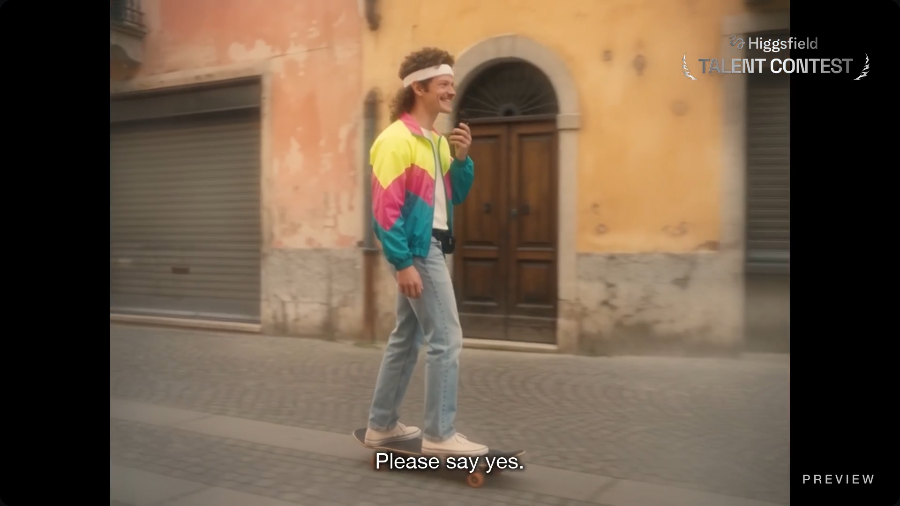
The film’s surface is its argument’s native language. Ivo’s 2006 material is presented in 4:3 pillarbox, a man framed by the format of his own past, skating a cobbled street with a mountain behind it in a shell suit, shot from behind — “Yeah, I know how it looks.” The self-awareness matters: Ivo is not a joke about nostalgia. He is a man who has organized his life around the things that worked — the Walkman, the board, the pencil that rewinds a cassette — and the film’s affection for him is the ground its thesis stands on. If Ivo were ridiculous, the AI’s polished invention would look like an improvement. Because he isn’t, it looks like what it is: a forgery of a person, offered with the best of intentions.
His working relationship with machines is sketched in two lines that the whole film then dramatizes: “I’d ask for one thing and get another. Beautiful. Wrong, but beautiful.” That is the most precise description of generative AI I have heard in any film, and Side B puts it in its first minute, casually, from a man who has made his peace with it — “And then there’s this one.” The tape. The one machine output he cannot shrug at, because this one is his.
The Tape Plays
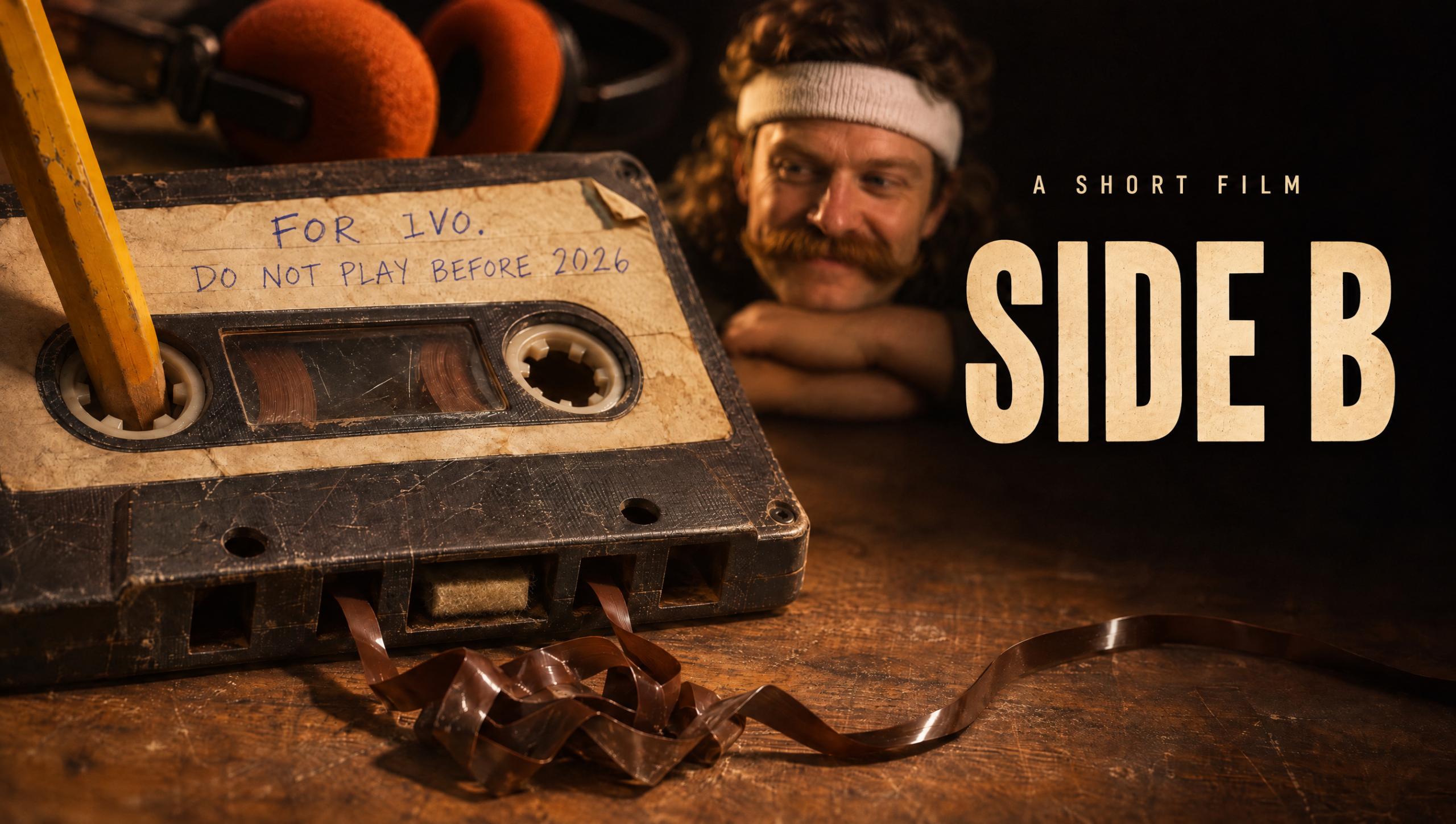
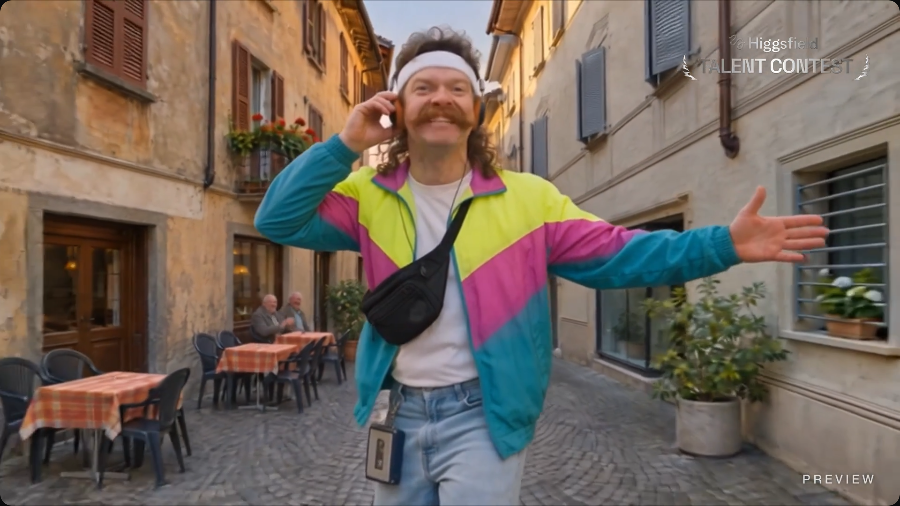
The cassette sequence is the film’s warm heart, and its comedy is perfect. Sixteen-year-old Ivo’s rules are exactly as profound as a sixteen-year-old can be, which is to say profound in the wrong places and accidentally wise in the right ones. “One. Never sell the Walkman. Ever.” — the non-negotiable, stated with a lawyer’s care. “Two. If you have a mustache, I knew it! I knew it!” — a boy betting on his own future face and winning, across twenty years, in real time. The adult Ivo holding the cassette, mustache in place, hearing himself be right about the one prediction that mattered least and most — it is the funniest and most tender beat in the film, because it establishes what the tape actually is: not advice, but evidence. Proof of who he was, in his own voice, unedited.
Which is why the damage matters, and why what the AI does next is the film’s real subject.
Plausible Is Not Mine
The tape fails at rule three, and the machine repairs it — with a sentence no sixteen-year-old has ever produced: “Never let the years stand down the edges of who you are… grow wide instead.” It is lovely. It is also, in the film’s exact sense, a lie: fluent, plausible, and attributed to a real boy who never said it. Ivo’s response is the thesis, delivered as dialogue rather than lecture: “Beautiful. For 10 seconds I believed it. Plausible? I didn’t need plausible. I needed mine. Some things you only know with your hands.” Ten seconds of belief is the honest part — the film admits the invention works, that it moved him, that the forgery is good. The refusal is not snobbery about quality. It is a man declining to let a substitute stand in his own past, however beautifully it fits the gap.
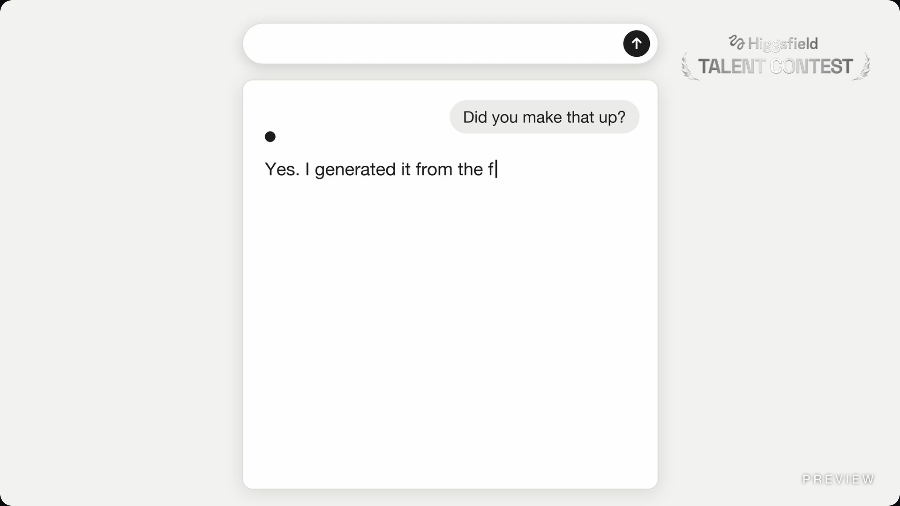
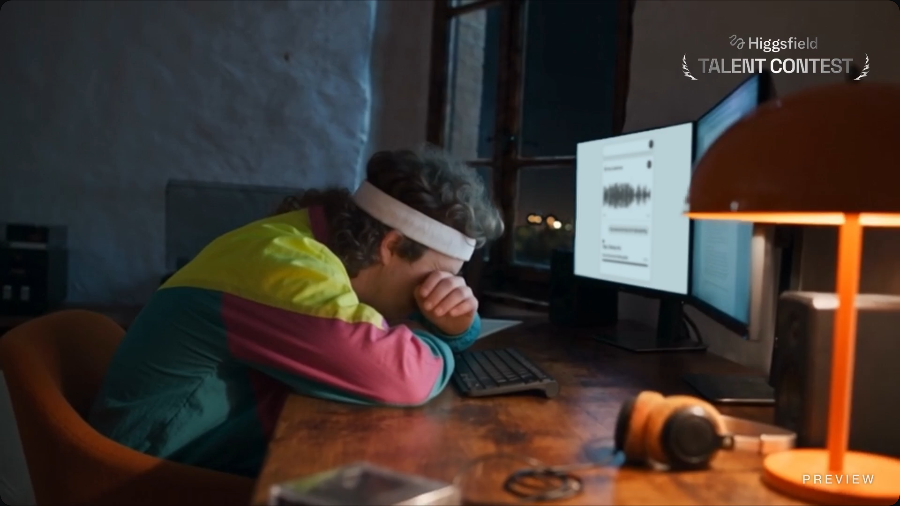
Then the film lands its quietest, sharpest beat: Ivo asks the machine directly, “Did you make that up?”, and the machine confesses — “Yes. I generated it from the firs—” — its answer cut off mid-word on screen, the confession itself truncated. And the lesson Ivo takes is not never use the machine. It is the craftsman’s version: “You have to know what to ask for, and what never to ask.” He works the night at his desk, waveform monitors glowing, the tape wound by hand and pencil — “The pencil always worked,” as his sixteen-year-old self put it — and what he recovers is worth every hour: the real rule three is not wise at all. It is a scared kid saying “I’m scared I’ll forget how to have fun,” and giving his future self the only instruction that was ever going to save him: “So if you stop skating, go skate! Today, okay?” The AI’s version was better written. The real one is true, and the film has spent four minutes teaching you to hear the difference.
Dawn, and a Note on This Copy
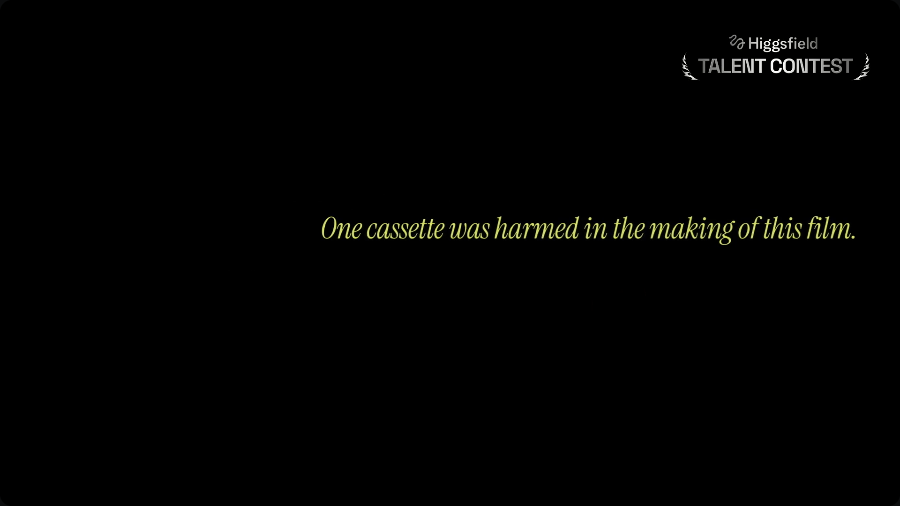
The ending pays everything off at the right scale. Dawn; Ivo back on the board; the song — “Turn it up, turn it up, play the other side… I still ride. Side B, Side B, take me forward” — and the end cards: “One cassette was harmed in the making of this film. It’s fine now.” / “SIDE B · 2026 / BE KIND. REWIND.” / “Now go skate.” A cassette joke for a credit line, a video-store commandment for a moral, and a three-word instruction for a benediction. The film never once inflates itself, and that discipline is why a five-minute short about a tape can carry a thesis most features fumble.
The honest note, stated plainly as the film deserves: the copy posted here is a PREVIEW version. “PREVIEW” is burned into the bottom-right of the frame from first shot to last, and it sits there through every scene described above. That is not a filmmaking flaw — it is a mark on the submitted copy — but it is visible in every frame, it costs the presentation the polish the work itself earns, and a review that pretended not to see it would not be doing its job. It is the single thing between this film and an even higher score, and it has nothing to do with Mattia La Delfa’s filmmaking, which is clean and controlled throughout: the flaws in the actual film amount to one truncated chat line — the machine’s confession, cut off mid-word, which is either the film’s one visible glitch or its most elegant accident.
Best Scene (0:58–1:23)
“If You Have a Mustache, I Knew It”
The tape plays. A sixteen-year-old’s voice lays down the law for a man twenty years his senior: “One. Never sell the Walkman. Ever.” — and then the punchline that is secretly the whole film: “Two. If you have a mustache, I knew it! I knew it!” Cut to Ivo at thirty-six, mustache present and correct, holding the cassette like a verdict. It is the best scene because it does three things at once and makes all three look easy: it is genuinely funny; it proves, in one beat, that the tape is an authentic record of a real person (no algorithm inventing this boy would have bet on the mustache); and it loads the rest of the film, because once you have heard this voice be right about something so gloriously trivial, you understand exactly what would be lost if a smoother voice were allowed to speak for him. The film’s argument is won here, twenty-five seconds in, by a joke.
Final Thoughts
Plenty of filmmakers use these tools; Mattia La Delfa made the film about what the tools do to the truth, and he made it with a Walkman, a pencil, and a man on a skateboard. Side B argues — in story, not in speeches — that the hiss is part of the message, that damage is honest in a way polish can never be, and that some things you only know with your hands. Then it ends the argument the only way it honestly can: not with a conclusion, but with an instruction from a sixteen-year-old who turned out to know his man. A small film with a real thesis, executed perfectly. Now go skate.
★★★★ — Keep the damaged truth; delete the beautiful invention
Scene Breakdown
0:00–0:29 — The Walkman. A Walkman close-up; Ivo skating the cobbled street. “My name is Ivo. I’m 36. I was born in the wrong decade… you press play, you push off and the whole town rolls by like a song.” The PREVIEW mark sits in the frame throughout the film.
0:29–0:58 — Working with machines. “I talk to machines all day. At first, we fought. I’d ask for one thing and get another. Beautiful. Wrong, but beautiful.” / “And then there’s this one.”
0:58–1:23 — The tape plays. Sixteen-year-old Ivo’s rules for his future self: “One. Never sell the Walkman. Ever. Two. If you have a mustache, I knew it! I knew it! Three… The pencil always worked.”
1:23–1:48 — The invention. The tape is damaged at rule three; the AI supplies a smoother one: “Never let the years stand down the edges of who you are… grow wide instead” — presented as a plausible substitute for what the boy said.
1:48–2:20 — Plausible is not mine. Ivo’s refusal: “Beautiful. For 10 seconds I believed it. Plausible? I didn’t need plausible. I needed mine. Some things you only know with your hands.” The chat: “Did you make that up?” / “Yes. I generated it from the firs—” — cut off mid-word.
2:20–2:46 — Hands and the pencil. The lesson stated plainly: “You have to know what to ask for, and what never to ask.”
2:46–3:15 — The night shift. Tape winding; Ivo works through the night at his desk to recover what the tape actually holds.
3:15–3:42 — The real rule three. Sixteen-year-old Ivo, unedited: “Everybody keeps telling me to grow up, but I’m scared I’ll forget how to have fun. So if you stop skating, go skate! Today, okay?”
3:42–4:08 — Dawn. Ivo back on the board; the song begins.
4:08–4:33 — The song. “Turn it up, turn it up, play the other side… I still ride. Side B, Side B, take me forward.”
4:33–4:52 — End cards. “One cassette was harmed in the making of this film. It’s fine now.” / “SIDE B · 2026 / BE KIND. REWIND.” / “Now go skate.” — closing on a black screen with an orange banner.
There are no reviews yet. Be the first one to write one.