
 Queen One Studios
Score breakdown
1.3M views
Film Review
This review discusses the ending. If you would rather watch the film first, we recommend you do, and then come back.
The story your mother never told you
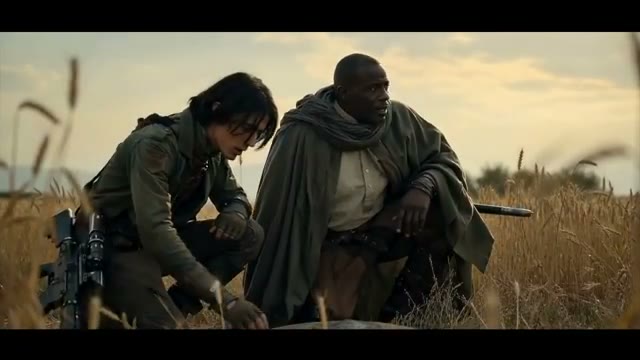
The film’s best decision is its frame. We do not meet Elara first as a legend; we meet her son, tired and crouched in tall grass at 1:55, and a bald, gray-cloaked guardian who tells him, “You really are a lot like your mom. She would have done that, too.” Everything after that is a story being told to a boy who has clearly heard it before and still wants it again — “Tell me her story again” — and that wanting is what makes the film work. I believed this pair. The guardian is weary rather than wise in the fortune-cookie sense, and the boy interrupts, complains (“I don’t like this part”), and wants the exciting version. That is how a child actually listens to a family story, and it gives the film a pulse that a straight heroic retelling would not have.
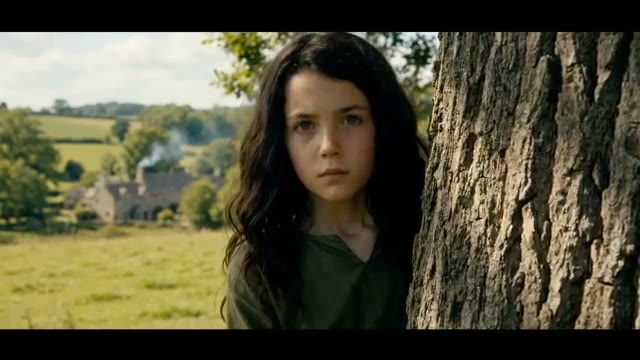
The legend itself is Elara Draycott, born outside Hartfield on 17 October 2330, a girl with a sense of justice who was, in the guardian’s words, “a brat”, who befriended beasts, was called a witch when drought and attacks from a faraway land hit the kingdom, and was demanded as a scapegoat by a frightened king: “Bring me the damn witch.” I liked that the film does not make her a saint. She could have killed the people who came for her, the guardian says at the campfire at 5:39, and did not — “she had a lot more restraint than you” — and that restraint, rather than any power, is presented as the point of her. It is a good idea, and mostly it survives the telling.
Where it holds, and where it wobbles
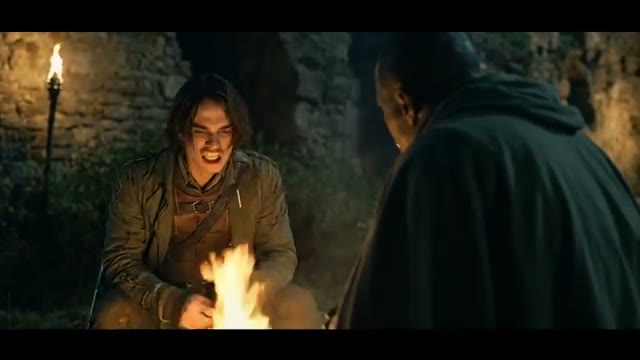
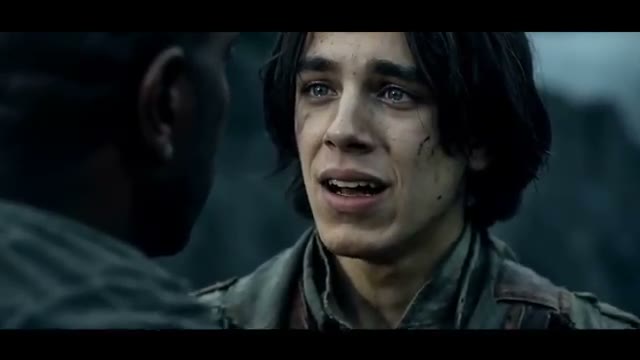
The film holds best in its quiet passages. The campfire at 5:39, the wheat field at sunset at 8:08 where the boy carries a rifle on his back and the guardian says a lot of battles happened in these fields, and above all the ravine at 11:52, where the guardian refuses to go back and the boy begs, “Please. I can’t do this without you.” The answer — “Yes, you can. She wanted you to have this. I love you. Go now!” — is the emotional center of the whole film, and the close-up at 12:10, the boy’s face wet and dirty and disbelieving, is the single best-held shot in it. I felt that one. The letter that follows, read in Elara’s voice from 13:01, is where the film stops being a fantasy adventure and becomes a film about inheritance: a horrible mistake, a dark place she hopes her son never has to go, and a dream of one day fighting alongside him that she knows will not come true.
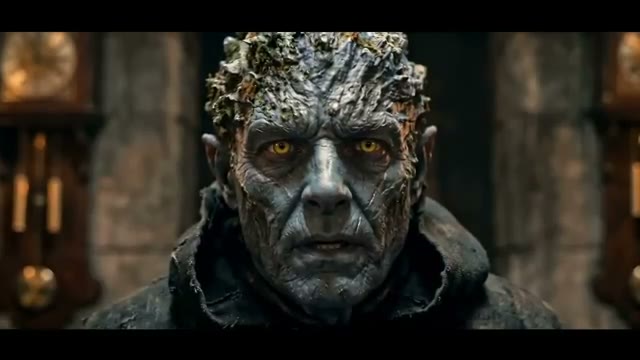
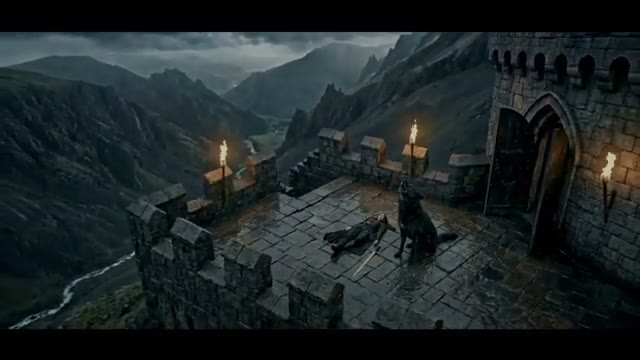
Where it wobbles is the confrontation at 14:50. Elara faces a bark-skinned, yellow-eyed being beside a grandfather clock, and the exchange — a deal made when she was a child, the power to control life, the dead used to kill thousands, “We’ll never be together. So be it.” — is dramatic in the abstract and muddled in the moment. I could not always tell who was accusing whom, and the film cuts away to a silent fall on a torch-lit castle terrace at 16:48 without ever making the terms of the deal plain. The older-sister reveal at 18:04 (“You should know you have an older sister. You should find her… or not. She’s a handful.”) is a lovely hook for Legend II and, in this film, a loose thread: it arrives with 20 seconds of film left and no preparation. I also kept tripping, in close-up, over how alike Elara and her son look — the same dark hair, the same eyes — which is plausible as family resemblance and still confusing when the film cuts between them.
The craft, honestly assessed
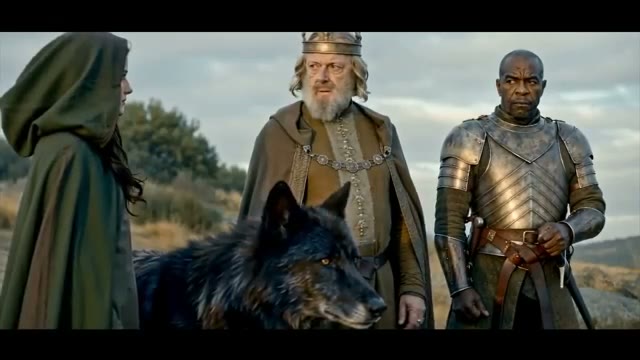
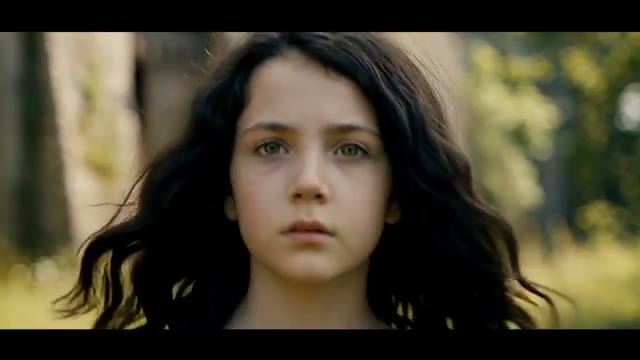
As AI work, this is strong. Elara at 0:27, at 2:33 peeking from behind a tree, and at ≈9:05 facing a king and his knight in a green hooded cloak, a large black wolf at her side, is recognizably the same woman; the boy and the guardian are likewise stable across cuts, costumes and lighting, which is the thing most AI films fail at. The world helps: stone towns, dry fields with wooden crosses, golden wheat, a mountain castle terrace — all graded in the same warm, dusty palette, so the film feels like one place rather than a slideshow of prompts. The wolf is a particular success; it holds its shape and its menace in every shot it is in, and the ≈9:05 shot is the film’s poster image for a reason.
The seams are there if you look, and this is a film that asks you to look closely. Background villagers go soft and indistinct, most noticeably behind the suspicious woman at 3:16 and behind Elara in the ruined street at ≈7:25. The dialogue, too, is uneven: the closing line, “the story people tell about you doesn’t matter more than the one you tell yourself. So make it good”, is genuinely good, while the campfire joke about “the bird’s bit at the end” falls flat and the five-shots-missed banter feels like filler. None of that sinks the film. It is, at its core, a mother writing to a son she will not see grow up, and that is a story that survives a few soft faces.
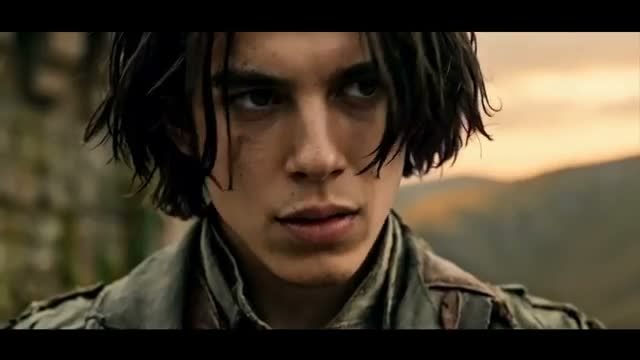
Best Scene (11:52–12:35)
The guardian’s goodbye
The boy wants to go back and fight, the guardian refuses (“There’s a path through the ravine. No.”), the boy pleads “We’re doing this together!”, and the guardian hands him what his mother left for him: “She wanted you to have this. I love you. Go now!” It is the best scene because it is the only one where the film stops telling a legend and lets two people lose each other — the boy’s tearful close-up at 12:10 does more work than any battle in the film, and everything after it, the letter included, is a consequence of this moment.
Final Thoughts
Legend is not a perfect film, and I would not trust a review that called it one, but it is a real one — a story with a mother at its center, a guardian who dies doing his job, and a son left to decide what story he will tell about himself. The craft is good enough that I mostly forgot I was watching AI, and the ending is honest enough that I did not mind being reminded. Make it good, Elara says. This film mostly does.
Scene Breakdown
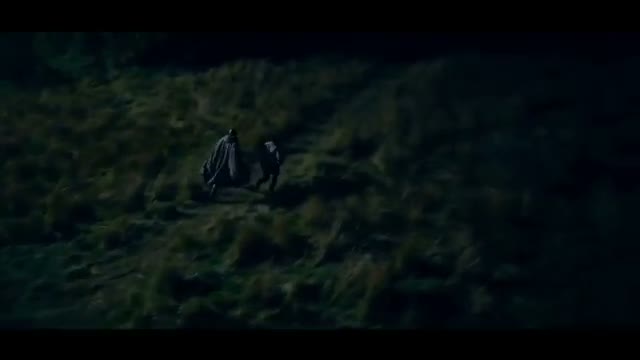
0:00–0:27 — Night, and a cannon. The boy and his guardian stand together; a weathered, ivy-covered cannon is shown; cut to a daylight close-up of young Elara as voices shout, “Stupid girl!”
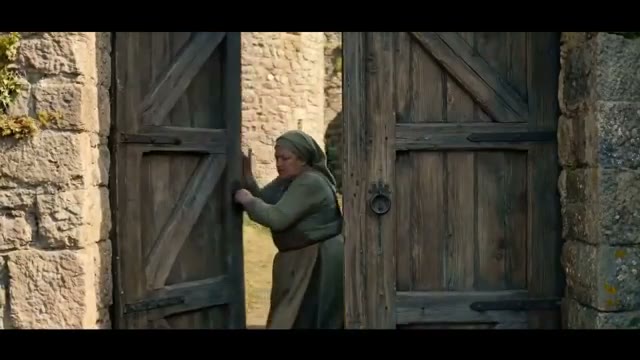
0:27–2:11 — Tell me again. Young Elara peeks through a large wooden gate in a stone wall; in the present day, the boy crouches exhausted in tall grass with the guardian behind him; the guardian says the boy is a lot like his mother, and the boy asks to hear her story again — the creature they met “was in pain”.
2:11–2:33 — Elara Draycott. The guardian begins the legend: Elara Draycott, born in a small town outside Hartfield on 17 October 2330; the boy wants it more exciting.
2:33–3:06 — The brat. Young Elara, a “brat” with a sense of justice, teases a beast in a green valley; townspeople shout at her, “Move! You little witch.” / “You’ll pay for this!”
3:06–3:58 — The outcast. Elara is an outcast with interesting friends who, as she gets older, get bigger; a suspicious older woman watches, and there is a lot of talk.
3:58–4:31 — Drought. A terrible drought hits the kingdom and attacks from a faraway land grow more frequent; a man shouts at a gate in a field of wooden crosses, “Open the gate! We demand entry!”
4:31–5:26 — The scapegoat. The king needs a scapegoat: “Bring me the damn witch.” The boy dislikes this part and asks why Elara did not fight back.
5:26–6:24 — The campfire. By the campfire at night, the guardian says she could have killed them all but had more restraint than the boy; he goes to check something out.
6:24–7:47 — Night travel. Elara and the guardian travel on through the night; a winged silhouette crosses the dusk sky (~6:45), a chained wolf waits in a torch-lit street (~7:05), and Elara stands with the wolf amid rubble (~7:25); the guardian warns that it is better to stay quiet, they will be coming after them now, and her story is far from over.
7:47–8:08 — Banter. Campfire banter: the bird’s bit at the end, Elara was braver and could shoot better; the boy insists he got a couple of hits on the thing back there.
8:08–9:02 — The wheat field. The boy and guardian crouch in a golden wheat field at sunset; a lot of battles happened in these fields; villagers ask for Elara’s help as the attacks get worse.
9:02–10:43 — The wolf. Elara walks a sunlit town street in a green hooded cloak with a large black wolf; the pair cross water and retell the battle — different stories, each adding to the legend, the fight over, and peace; “I’ve got this.”
10:43–11:07 — A check-in. “Does it hurt? No. Let’s keep moving.” — as they press on.
11:07–11:52 — Ten years on. Ten years after the battle, the boy was born and made his mother happy, but she always knew something was not finished.
11:52–12:35 — The ravine. At the ravine the boy wants to go back and fight together; the guardian refuses, gives him what his mother left him, says “I love you”, and sends him on alone.
12:35–13:01 — Alone. The boy, alone, asks, “Should I make it exciting?” — the transition into his mother’s letter.
13:01–14:11 — The letter. The letter, in Elara’s voice: “To my beautiful boy” — a horrible mistake she must fix, a very dark place she hopes he never has to go, a dream of fighting alongside him, and that she is sure she is not coming back.
14:11–15:18 — The confrontation. The confrontation in the dark place: a bark-skinned, yellow-eyed being beside a grandfather clock; a deal made when she was a child, the power to control life, the dead used to kill thousands, “We’ll never be together. So be it.”
15:18–16:47 — The fall. A largely silent fall: Elara lies on a torch-lit mountain castle terrace, a sword beside her, the black wolf standing over her; then a memory of a newborn baby in a straw-lined wooden cradle.
16:47–17:41 — Montage. Final montage after her fall, the boy alone at sunset.
17:41–18:23 — Love always, Mum. The letter concludes over the boy’s face at sunset: she cannot change the world but can make it a little better for those who come after; she will always be fighting alongside him; he has an older sister, “a handful”; the story he tells himself matters more than the one people tell about him; “Love always, Mum.”
18:23–18:57 — Credits. End credits over a town square with a hooded figure and the wolf, including Special Thanks to Oliver Patterson, Leo Patterson, Susan Patterson, Larry Patterson, Dennis Mohr and Mingdi Li, with a LEGEND II teaser end card.
≈3:16 — The background figures walking away in the golden field behind the headscarfed woman are heavily blurred and indistinct, with no readable faces.
≈6:45 — The winged creature crossing the dusk sky is a flat black silhouette with no surface detail at all.
≈7:25 — The townspeople behind Elara and the wolf in the ruined street are soft and indistinct, in an otherwise sharp shot.
≈0:27 / ≈12:10 / ≈17:41 — Elara and her son share very similar faces in close-up, so it is hard to tell mother from son at a glance, which muddles the confrontation flashback.
≈16:48 — In the wide terrace shot, Elara’s fallen body is small and flat, her face unreadable, while the wolf beside her holds its shape far better than she does.
There are no reviews yet. Be the first one to write one.