
 Happy Exceed Studio
 Creator ID26-11-01-0029

Score breakdown
56 views no Kineograph
Film Review
This review discusses the ending. If you would rather watch the film first, we recommend you do, and then come back.
Synopsis
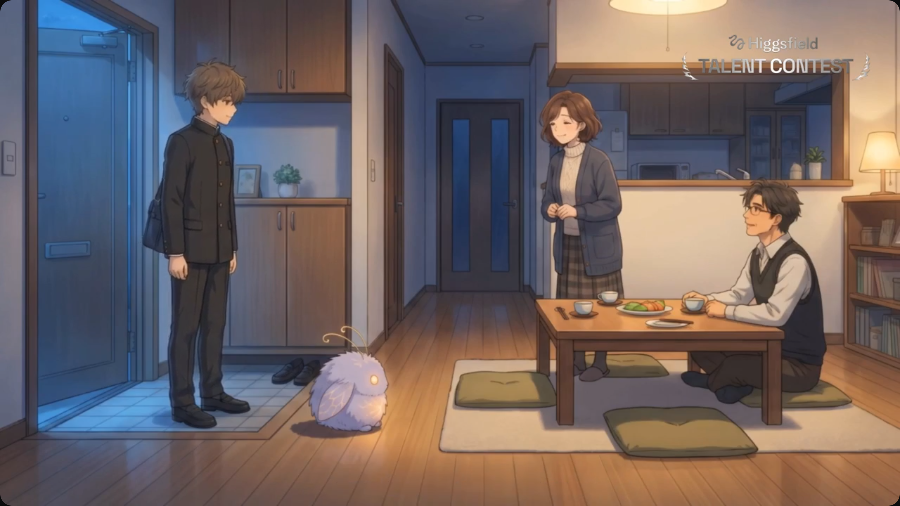
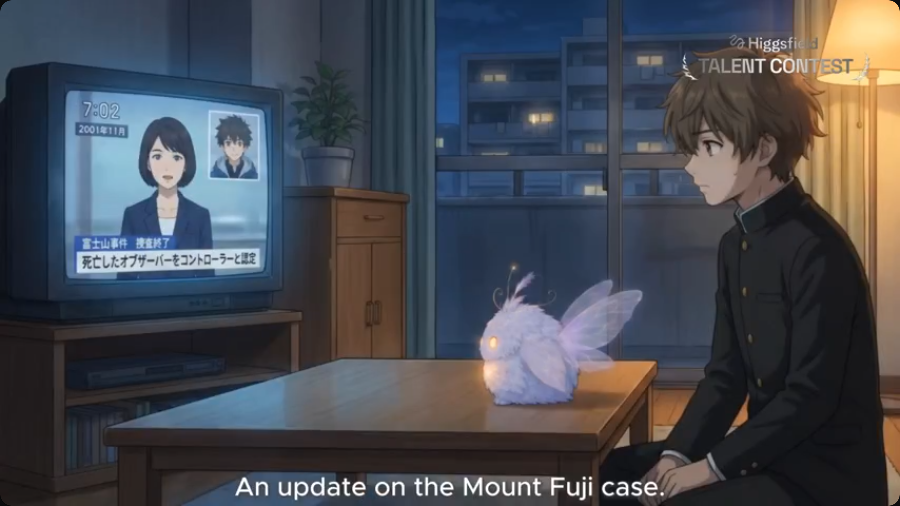
November 2001. Ren walks home at dusk, and tells us his secret in the first line: “I can see things others can’t.” At home, his parents are at the tea table, and at the door is Fairy — a small creature only Ren can see, his friend for eleven years. But Fairy has been low for almost a year, and Ren does not know why. On the television, the news is reporting an incident — an update on the Mount Fuji case, and word of a dead Observer. Ren holds his childhood sketch and says what he has clearly needed to say for a long time: “You really are real.” The film then opens the past: a flashback to snow, a crashed bus, firefighters, and young Ren reaching out — “Mum…?” Fairy, it emerges, restored his parents’ memories after the accident — and then vanished. Ren’s narration carries the question the whole film is asking: his parents raised him, the eleven years together were real, and since Fairy disappeared he has been searching. He watches the Agency’s Observers in an alley, a purple portal opening — “When a creature strays into our world…” — and the memory of the keepsake box returns. For nearly ten years he follows the Observers, until the trail leads him to Tokyo, where he stands in the rain with his sketchbook. The film closes in quiet: Ren in his armchair, the aged sketch beside him, rain at the window, the news muted on the television, and a fade to black. It is a standalone chapter in the world of Beyond the Snow, with the reunion and the full revelation deliberately deferred to that larger story.
The Friend Only Ren Can See
The best thing about The Sketch is that its emotions are never confusing, even when its mythology is. The central relationship — a boy and the invisible friend who may have rewritten his family — is clear from the moment Fairy appears at the door, and the film plays it as grief rather than spectacle. Eleven years is a long friendship, and the film makes you feel its weight in a short runtime: this is not a childhood imaginary friend Ren has outgrown, it is the companion of his whole remembered life, and it has been fading for a year for reasons nobody will tell him.
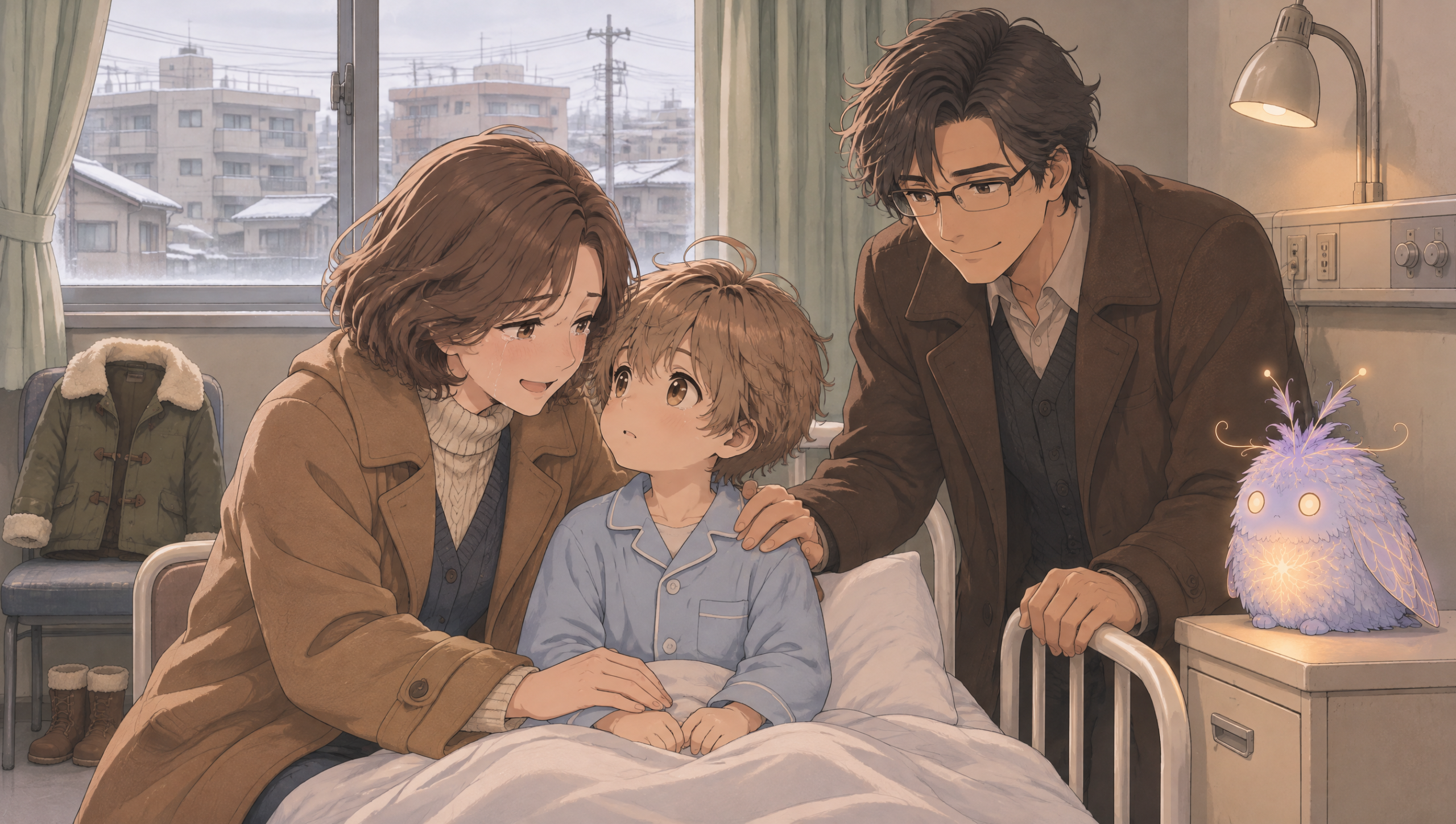
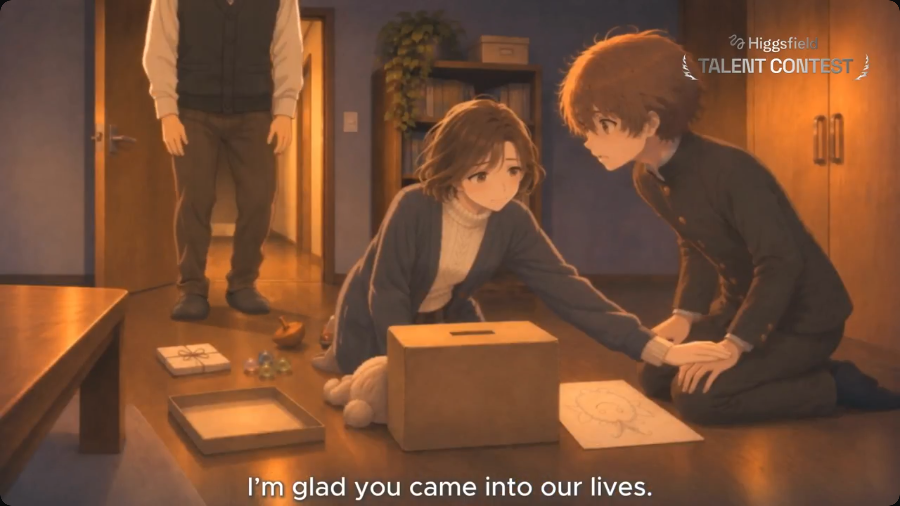
The question the film asks is a genuinely good one: if the memories were altered, were the eleven years real? Fairy restored what the accident took from Ren’s parents — but a restoration performed by a creature only Ren can see is also, from the outside, indistinguishable from an invention. The film is honest enough not to resolve that doubt with a twist. Instead it gives the answer to the parents, in the scene where the family kneels together around the keepsake box and the sketch on the floor: the years were real because they were lived. That is the heart of the film, and it works because the story has earned it — it is a conclusion about love, not about evidence, and the film knows the difference.
Snow, and What the Sketch Remembers
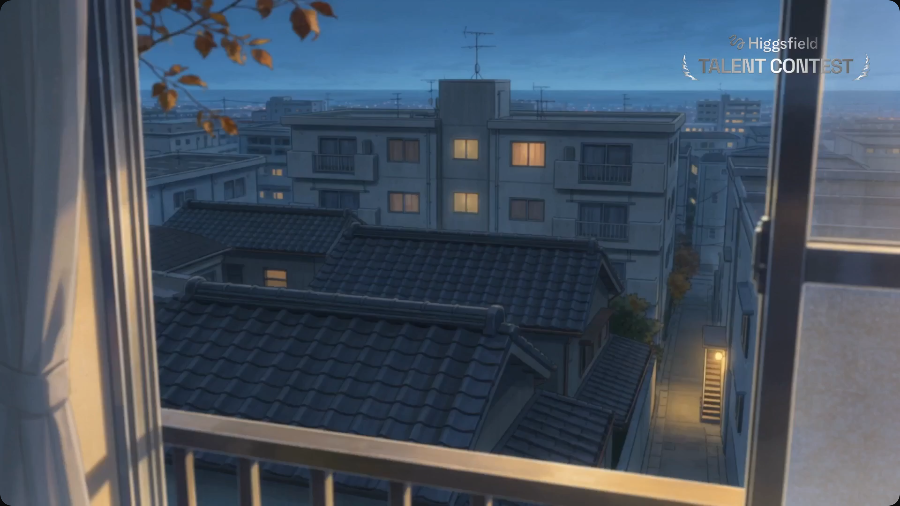
Structurally, I admired the bookends. The childhood sketch in Ren’s hands near the start, and the aged sketch beside the adult Ren’s armchair at the end, close the chapter like a frame, and the epilogue’s rain and muted news give the ending a melancholy hush that suits a story about what survives of childhood. The hand-drawn 2D anime look stays consistent throughout — dusk streets, a warm home, the white of the snow flashback — and English subtitles are present for the Japanese dialogue, which makes the film properly accessible rather than an afterthought.
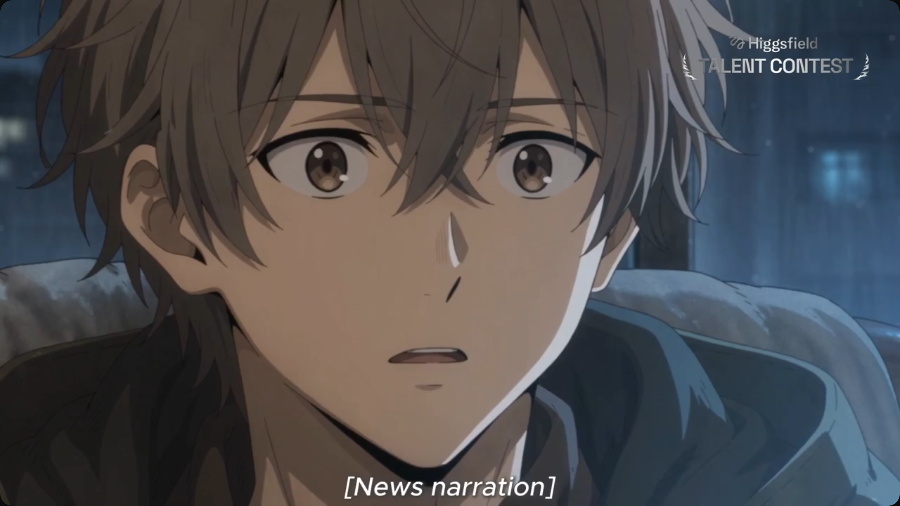
The problems are mostly about withholding. The lore — the accident, the Agency, the Observers, the Mount Fuji case — arrives late and is only lightly sketched in, so the confrontation that should detonate the film lands softer than it should; I understood what Ren felt before I understood what had actually happened. The middle of the film, where Ren follows the Observers for nearly ten years, compresses a decade of searching into a single stretch of narration, and the trail to Tokyo arrives as a fact rather than a discovery. And the ending is deliberately open: this is a chapter, and it behaves like one, pointing toward Tokyo and toward Beyond the Snow for its answers. As a promise of a bigger film, it works. As a complete experience, it stops just short — though I will admit the final image, the sketch aged beside the armchair, does more closing work than the plot does.
Best Scene (2:00–2:30)
“Mum…?”
The snow crash. The film cuts from Ren holding his childhood sketch to the event the sketch has been remembering all along: snow, a crashed bus, firefighters working in the white, and young Ren reaching out toward something — or someone — with one word: “Mum…?” Fairy is there, glowing beside him.
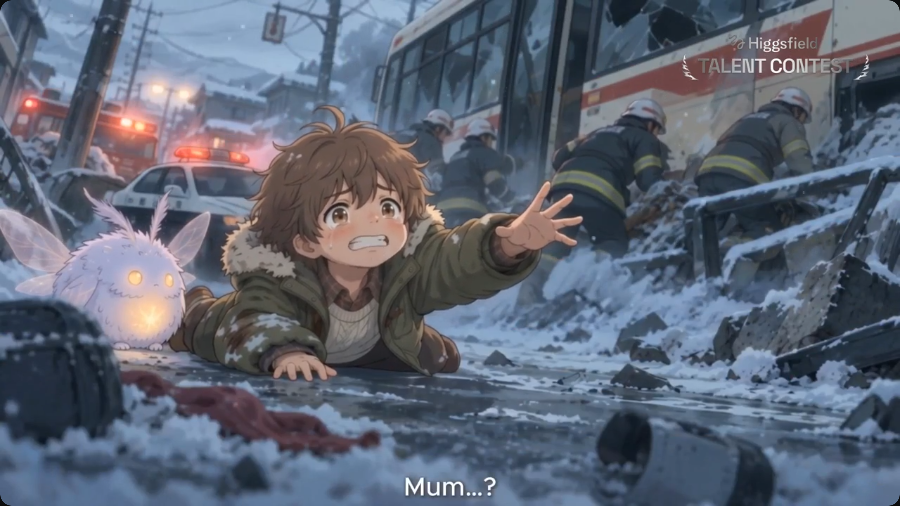
It is the best scene because it is the only one where the film shows instead of tells: everything the present-day scenes have been circling — the accident, the altered memories, the reason a creature might give a family back to itself — is suddenly physical, cold and quiet and terrible, and a child’s outstretched hand carries more of the film’s argument than any of its narration. The eleven years of friendship begin here, in the snow, and the film is never more honest than in this half minute.
Final Thoughts
I came away from The Sketch thinking about the sketch itself — a child’s drawing, kept for decades, carried to Tokyo. The film understands something true about grief: that what we keep is rarely the important object, only the one that proves the important thing happened. Ren’s search may be unfinished, and the film may be a chapter rather than a whole, but its central consolation is complete in itself: a family that was given back is a family, however it was given. Verdict: a gentle, melancholy chapter that earns its feelings honestly — and makes its case for the feature to come.
★★★★ — The friend nobody else could see, remembered in snow
Scene Breakdown
0:00–0:30 — Dusk. Dusk over the neighborhood; Ren walks home in November 2001: “I can see things others can’t.”
0:30–1:00 — Home. Ren comes home to his parents; Fairy is introduced as his friend of eleven years: “Tadaima” / “Ren, welcome home” / “Fairy is my friend” / “We’ve been together eleven years now.”
1:00–1:30 — A year of quiet. Fairy has been low for almost a year; Ren does not know why, as TV news reports an incident: “For nearly a year now, Fairy hasn’t had any energy. I don’t know the reason.”
1:30–2:00 — The sketch. Ren holds his childhood sketch and says Fairy is real, while TV reports the Mount Fuji case and a dead Observer: “You really are real.” / “An update on the Mount Fuji case.”
2:00–2:30 — The snow. Flashback: the snow, the crashed bus, firefighters; young Ren reaches out: “Mum…?”
2:30–3:00 — The memories returned. Ren’s parents kneel with him; Fairy restored their memories, then vanishes: “Fairy gave us back our memories” / “Ren! … Our child, in that accident…” / “You gave our memories back? … What did you do? … Wait!”
3:00–3:30 — The search begins. Ren narrates that his parents raised him, the eleven years were real, and since Fairy disappeared he has been searching: “They raised me. The eleven years we spent together were real.” / “Since Fairy disappeared, I have been searching.”
3:30–4:00 — The Observers. Ren watches Agency Observers in an alley with a purple portal; the keepsake-box memory returns: “There are creatures ordinary people can’t see.” / “When a creature strays into our world…”
4:00–4:30 — Tokyo. Ren follows the Observers for nearly ten years; the trail leads to Tokyo, and he stands in the rain with the sketchbook: “The trail led me to Tokyo.”
4:30–4:57 — The armchair. Ending: Ren in his armchair, the aged sketch beside him, rain at the window, muted TV news; fade to black, no speech in this final stretch.
There are no reviews yet. Be the first one to write one.