
 Jacob Everett
 Creator ID26-11-02-0010

Score breakdown
48 views Kineograph에서
Film Review
This review discusses the ending. If you would rather watch the film first, we recommend you do, and then come back.
Synopsis
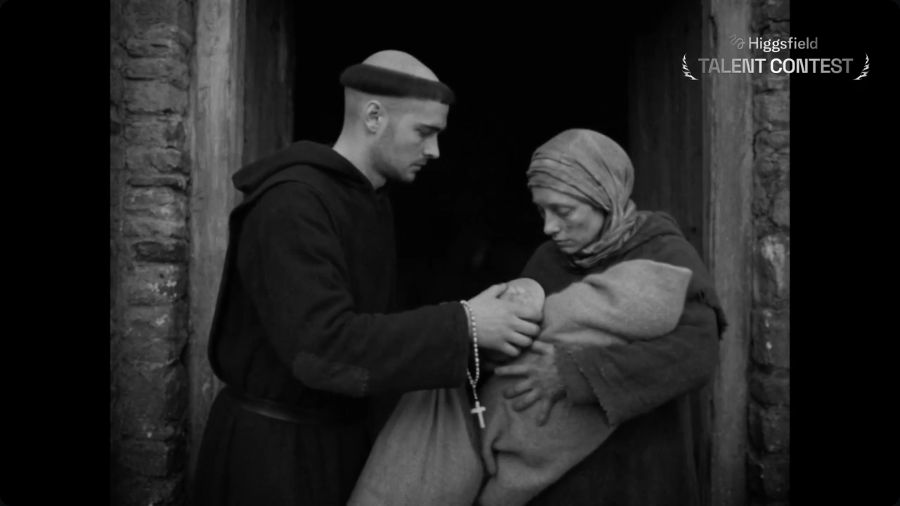
It is the famine winter of 1127. The film opens on a rabbit emerging from its burrow in black-and-white snow, and then on hunger at the abbey gate: a starving mother pleads with the brothers — “Brother, please. I have nothing left to feed my child” — and is refused. “Forgive me, I cannot. I will pray for you.” Inside the walls there is plenty; outside them, death. Brother Osric cannot watch it. In the kitchen he makes his decision: there are rats in the halls feasting at the Lord’s table while the Lord’s sons and daughters starve at the gate, and he will go tonight, alone, and steal from the abbey stores to feed the villagers. In the undercroft, filling his sack by candlelight, he is confronted by the Abbot — “The thief beneath my own roof, brother Osric, you disappoint me” — and Osric answers with the rule itself: “You may have forgotten our vows, but I have not. The rule bids us take in the poor as we would Christ himself, stand aside, Father.” In the scuffle, Osric is killed. The Abbot carries the body into the forest by night and burns it, denying him burial. Riding home, he meets the Wild Hunt: supernatural riders who chase him, encircle him, and bring him to his knees before their Leader — Osric, returned. “Murderer beneath his roof.” The Hunt breaks the abbey gate, the Leader drops the Abbot’s head before the kneeling monks — “Any man in greed will face the same fate” — and at dawn the stores are opened at last, bread is given to the villagers at the gate, and Edwin holds Osric’s cord. The film is built on an account from the Peterborough Chronicle, and it keeps the chronicle’s shape: a human crime, patiently recorded, and then the riders.
The Look of Hunger
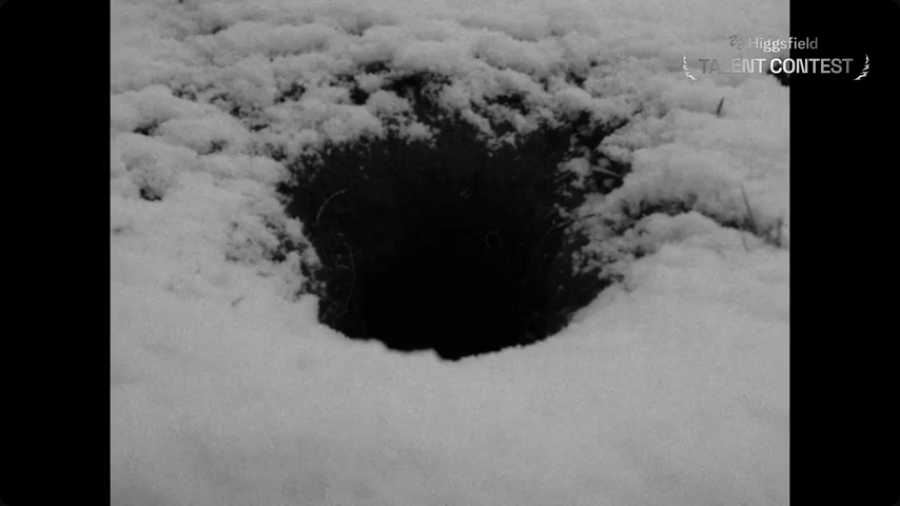
The look is the first thing to praise, because everything else stands on it. The black-and-white photography and the 4:3 frame give THE HUNT a genuine arthouse austerity, and the world holds together: the abbey, the snow, the habits all read as convincing and consistent, which is harder than it sounds in generated period drama, where one wobbling costume can break the spell. Here the spell holds. Everett shoots the famine as a place, not a backdrop — you feel the cold and the emptiness of the stores in the frame. The opening image is the film in miniature: a rabbit out of its burrow in the snow, small life in a white waste, before a single human being appears to plead for food.
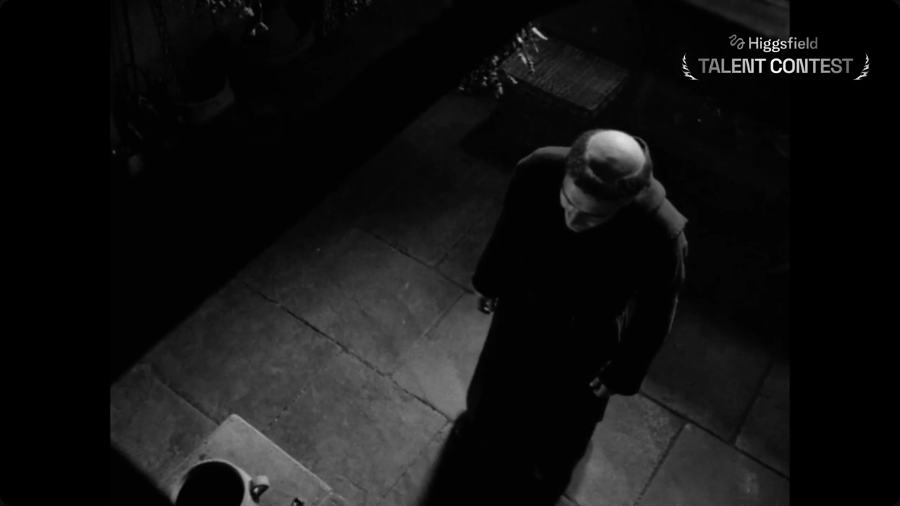
Two scenes anchor the film’s moral architecture. The gate scene, where the starving Mother is refused, establishes everything in one exchange of positions: plenty inside the walls, death outside them, and a prayer offered in place of bread. And Osric’s kitchen speech at around the 1:10 mark makes the Abbot’s sin an image rather than an accusation — rats feasting at the Lord’s table in the halls, while his sons and daughters starve at the gate. When the Hunt finally rides, it works because the film has spent its time on the human crime instead of rushing to the supernatural punishment. Osric’s murder is the hinge, and it is treated with the gravity it needs: this is a story about a judgement the audience has already reached before the riders arrive, which is exactly how the old chronicle accounts feel.
The Murder and the Pyre
The undercroft confrontation is the film’s dramatic peak, and its best-written exchange. The Abbot’s line is perfect in its self-regard — “The thief beneath my own roof, brother Osric, you disappoint me” — theft framed as a personal insult, in a house full of food, in a famine. Osric’s answer is the film’s conscience speaking the rule back to the man who broke it: take in the poor as we would Christ himself. That the argument ends in a scuffle and a killing, rather than in persuasion, is the film’s bleakest and truest choice: greed, confronted with its own vows, does not repent — it reaches for the sack.
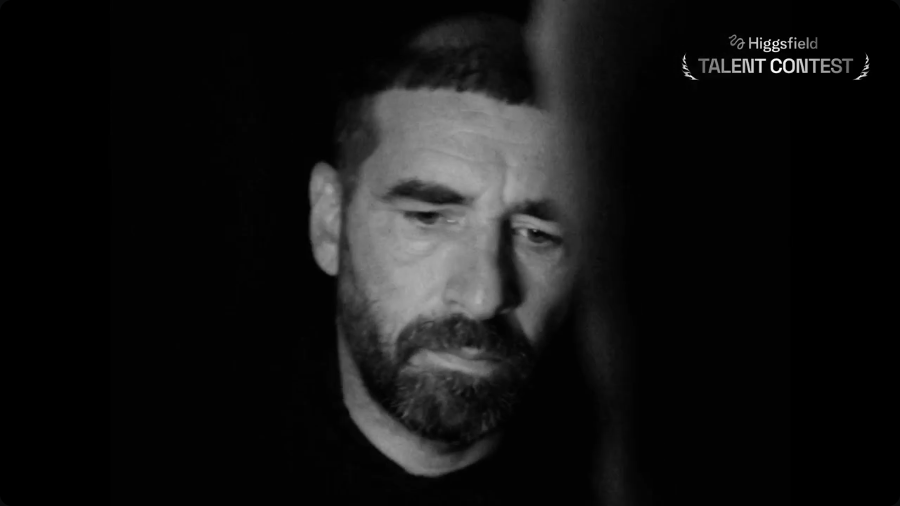
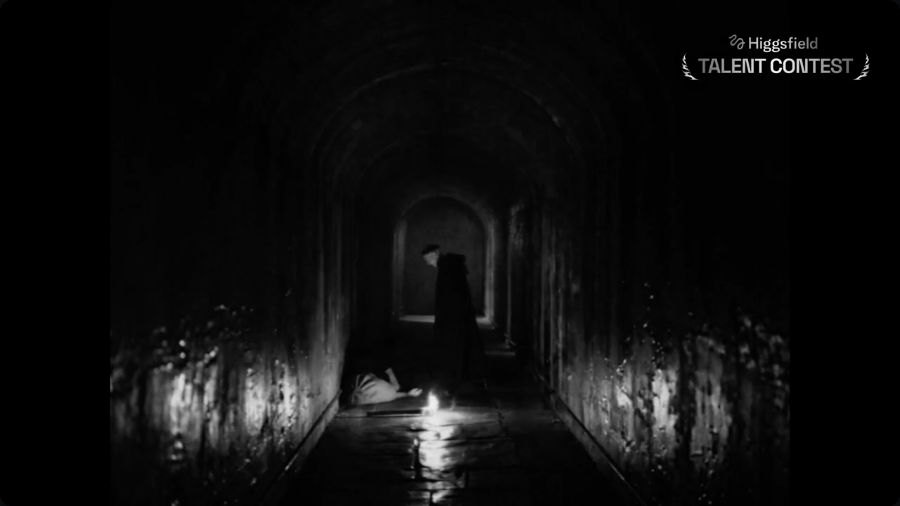
It is also here that the film’s one real weakness begins. The undercroft and pyre passages, around the 3:45 mark, are very dark — the figure and the candle flame indistinct, the Abbot’s worst act, the burning of a brother’s body to deny him burial, half-lost in black. I understand the instinct: this is a night crime, and the film’s palette is austerity itself. But the pyre is not a minor beat. It is the act that completes the Abbot’s damnation — murder compounded by desecration — and the film most needs us to witness it at exactly the moment it becomes hardest to see. Some of the AI dialogue is garbled in these stretches too, which in a film this dependent on sparse, weighty speech costs more than it would elsewhere.
The Riders
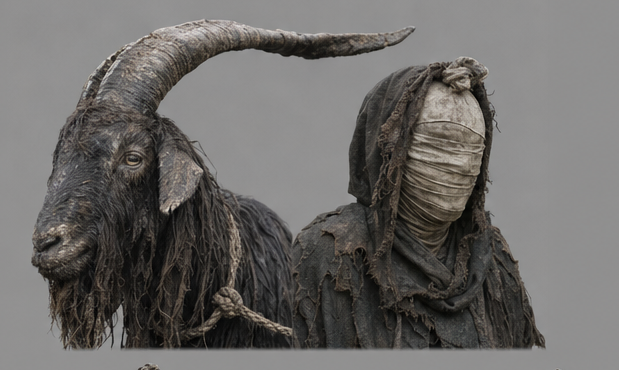
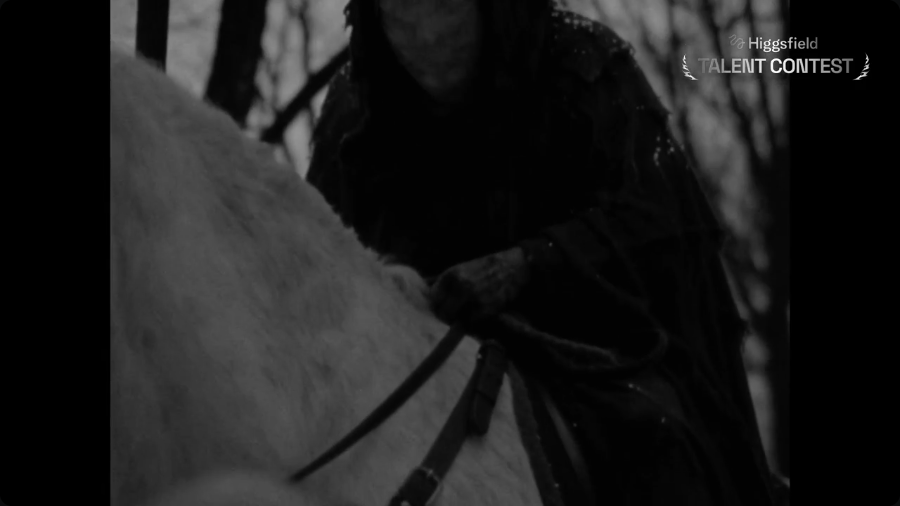
And then the film pays everything off. The Hunt sequence, from the 4:30 mark, is folk horror done the slow, sure way: riders out of the dark, a chase, an encirclement, and the Abbot on his knees before a Leader whose face is wrapped in linen — Osric, returned at the head of the very force the old stories promised. “Murderer beneath his roof. A shame.” The verdict scene that follows is swift and terrible: the gate broken, the Abbot’s head dropped before the kneeling monks, and the law of the Hunt spoken plainly — “Any man in greed will face the same fate.”
What lifts the ending above a simple revenge tableau is the dawn. The stores are opened. Bread is given to the villagers at the gate — the same gate, the same hunger, answered at last — and Edwin hands the bread to the Mother and her infant, holding Osric’s cord. The film does not end on the Abbot’s punishment but on the feeding Osric died for, which is the chronicle’s morality exactly: the judgement matters because of what it restores. It is the rare horror ending that leaves you satisfied rather than merely shaken.
Best Scene (4:30–5:30)
“The Hunt Rides”
Riding home from the pyre, the Abbot meets the Wild Hunt. He is chased and encircled, and brought to his knees before the Leader — a rider on a white horse, his face wrapped in linen — and the reveal lands without a word of announcement: the Leader is Osric, the murdered brother, returned. “Murderer beneath his roof.” It is the best scene because it is the one the entire film has been quietly building, shot by shot, refusal by refusal: the gate, the rats at the Lord’s table, the sack, the pyre. Every earlier scene was evidence; this is the trial. And Everett stages it with the same restraint as everything else — no frenzy, no noise, just riders, snow, and a guilty man kneeling — so the supernatural feels less like an effect than like a law of this world finally being enforced. Folk horror lives or dies on whether its judgement feels inevitable. This one does.
Final Thoughts
I came away from THE HUNT thinking about its patience. Seven minutes is not long, and this film spends most of them on a gate, a kitchen, a sack of stolen food — trusting that dread accumulates in the human crime and that the riders, when they come, will mean more for the wait. It is right. The darkness of the middle passages and the occasional garbled line are real costs, but they are the costs of a film reaching for a register — austere, monochrome, chronicled — that AI filmmaking rarely attempts and more rarely sustains. Verdict: cold, patient, and genuinely haunting — a judgement earned minute by hungry minute.
★★★★ — The gate, the sack, the pyre, and the riders who come for all three
Scene Breakdown
0:00–1:00 — The Gate. A rabbit emerges from its burrow in the snow; a starving Mother pleads at the abbey gate and is refused: “We’re going to get out of here.” / “Brother, please. I have nothing left to feed my child. Forgive me, I cannot. I will pray for you.” / “We cannot not tonight. He was watching me at the gate.”
1:00–2:00 — The Plan. In the kitchen, Osric decides to steal the stores to feed the villagers: “He knows we mean to defy him. I can suffer this rot no longer. There are rats in our halls feasting at the Lord’s table, while his sons and daughters starve at the gate. No. I go tonight alone.”
2:00–3:30 — The Murder. Osric fills a sack in the undercroft; the Abbot confronts him and, in the scuffle, Osric is killed: “The thief beneath my own roof, brother Osric, you disappoint me. Greed is eaten this house hollow father, and you with it. What God gives us is not ours to keep. I cannot let you leave with that.” / “You may have forgotten our vows, but I have not. The rule bids us take in the poor as we would Christ himself, stand aside, Father.”
3:30–4:30 — The Pyre. The Abbot carries Osric’s body into the forest by night and burns it, denying him burial.
4:30–5:30 — The Hunt. Riding home, the Abbot meets the Wild Hunt, is chased and encircled, and kneels before the Leader — Osric returned: “Murderer beneath his roof. A shame.”
5:30–6:00 — The Verdict. The Hunt breaks the abbey gate; the Leader drops the Abbot’s head before the kneeling monks: “Any man in greed will face the same fate.” / “Brother, come forward.”
6:00–7:12 — The Dawn. The stores are opened, bread is given to the villagers at the gate, and Edwin holds Osric’s cord. No dialogue in this final stretch, music only.
There are no reviews yet. Be the first one to write one.