

Score breakdown
132K views
Film Review
This review discusses the ending. If you would rather watch the film first, we recommend you do, and then come back.
The Priest Who Came to Kill
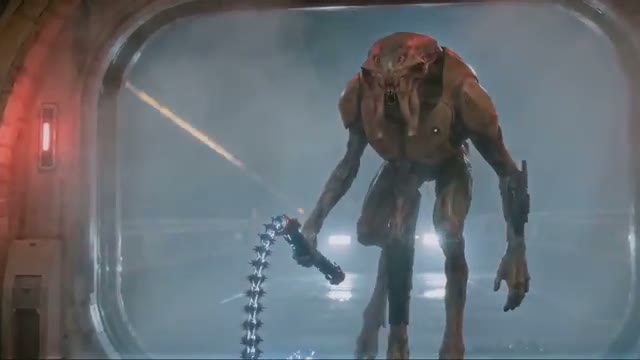
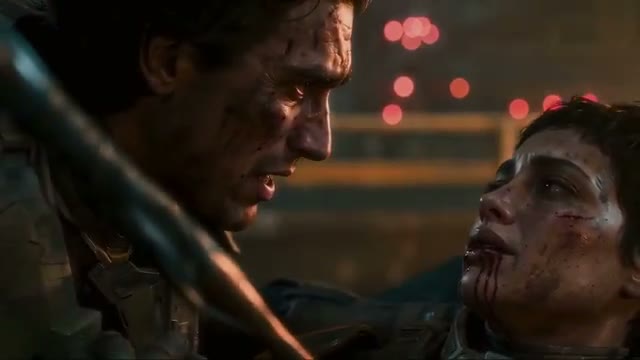
The film opens in the middle of a war and wastes no time telling you what it is about. Soldiers cut a path to an alien core while armored, hunched aliens fight back through burning corridors, and the first clear image I froze — an alien with a spiked weapon in a smoky archway at ≈0:32 — sets the scale: this is not a sketch, it is a war film. The hook lands about two minutes in, when Andrew, blood and dirt on his face, holds the dying Alex and says, “We did it, Alex. The Russians blew the core. We saved everyone,” and she does not answer. That is the whole film in one line — victory and loss in the same breath — and it justifies everything that follows.
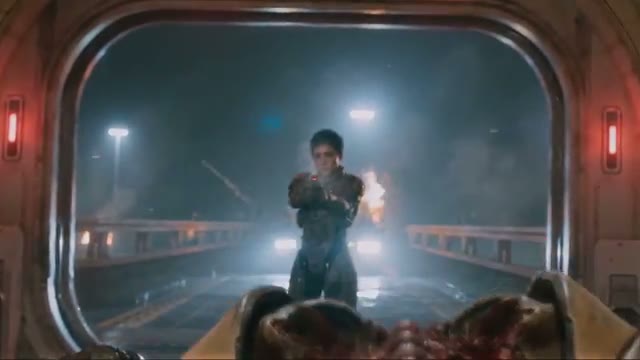
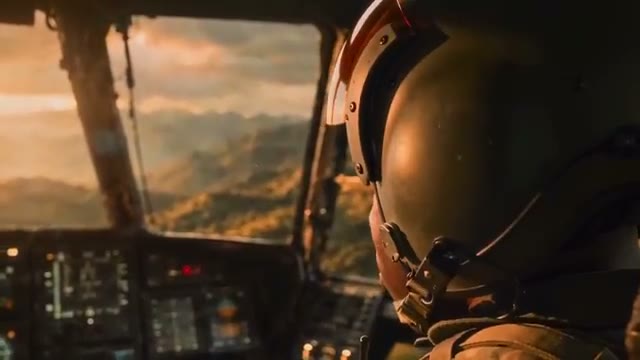
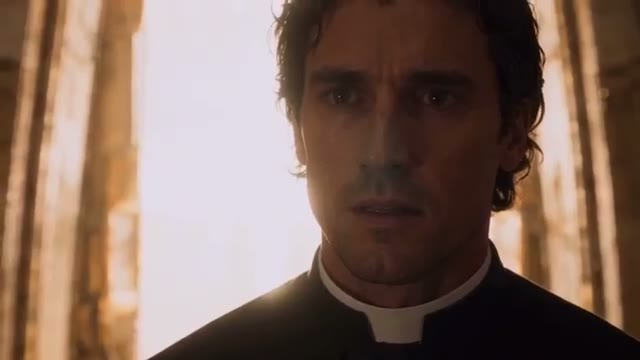
The helicopter banter that comes next is the weakest writing in the film: soldiers trading water-for-weapons gossip and needling “Father” about whether anyone can be saved. One of them throws in a slur that adds nothing but ugliness, and the scene feels like the film killing time before its real idea arrives. But the idea is a good one. Andrew is not a priest; he is a soldier wearing a priest’s collar to get close to the aliens, and that disguise — faith as a weapon, or faith as the only honest way to face what he did — is the smartest choice in the film. The translator scene sells it: an earpiece, a throat mic, and the instruction to say “1033” if something goes wrong. Small, practical, human.
Saving Is Relative
The middle of the film belongs to the alien hall, and it is the best-looking stretch in the whole piece. Andrew walks into a golden, columned space and is greeted by a pale, long-faced alien with the line, “Welcome… conqueror.” That one word — conqueror, not visitor, not priest — tells you the aliens understand exactly what humans are, and the interview that follows is the film’s brain. “We have never been conquered,” the alien says. “This humiliation takes time to adapt to.” Then the offer: “Memory liquid helps. You can try, if you wish.”
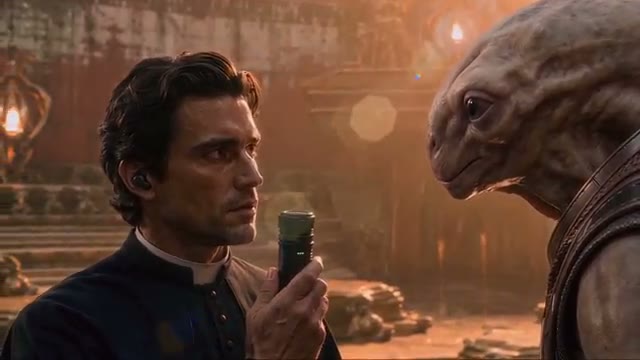
The alien designs hold up here better than anywhere else; the pale alien’s face, the priest’s black shirt and white collar tab, the warm light between them — at ≈6:10 I froze a frame of the two of them face to face and it looks like a real film still. Andrew’s request is specific and strange in the best way: a scar across the neck, yellow armor — and the alien corrects him, “It was green.” That correction is a lovely touch; it says the alien knows this killer personally. The killer, we learn, has not submitted, and lives north, “in the mountains, with death and bones.” The scene is mostly two heads talking, and a burst of assenting cries — “Yes! Yes!” at ≈5:06 — is never explained, which is the kind of small muddle that keeps nagging at me. But the ideas are doing real work: a conquered people who will not flatter their conqueror, and a revenge quest that has to pass through their permission first.
The Humbled, and the Humbling
The last act is where the film both soars and stumbles. After an identity check — “Callahan, Andrew. 94887” — spoken over sunset shots of Andrew and his kit at ≈7:40, Andrew travels north through golden mountain aerials and the memory liquid takes him back to a morning in bed with Alex: “Sorry to wake you. Want a kiss? … We’re late meeting the Drome.” It is a tender scene, and at ≈10:22 the frame of her leaning over him in the morning light is the warmest image in the film.
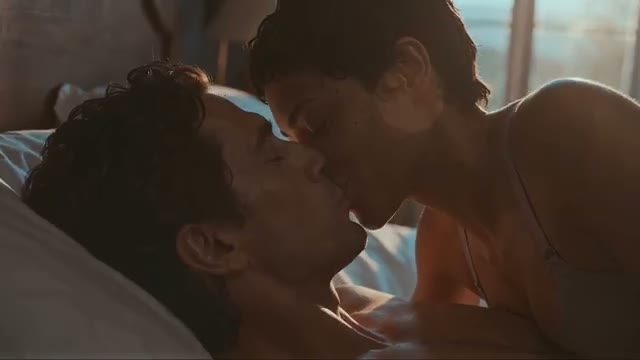
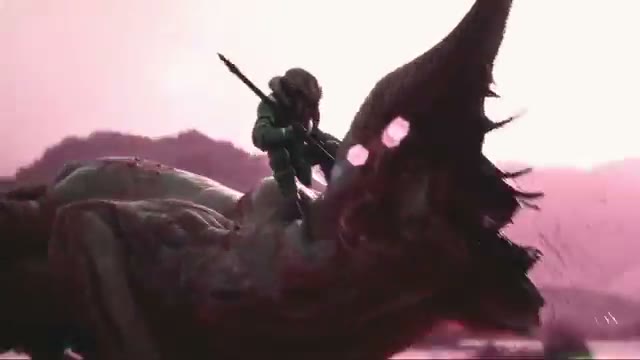
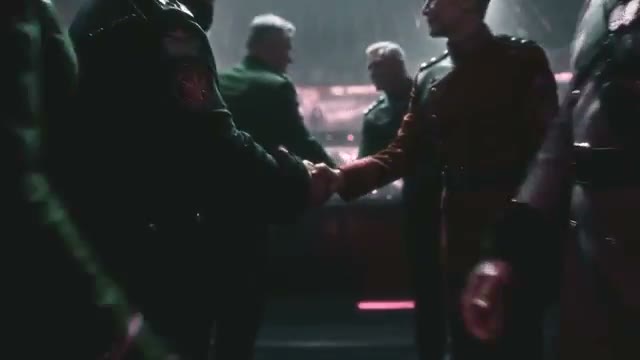
Then comes the long silent montage, four minutes of the war replayed — the march, a giant dead flesh-mass in the mountains at ≈12:00, soldiers shaking hands after the victory at ≈14:01 — and here the film tests my patience. The images are often beautiful, but four dialogue-free minutes in a 17-minute film is a lot of trust to ask for, and the score seems to thin out with the words.
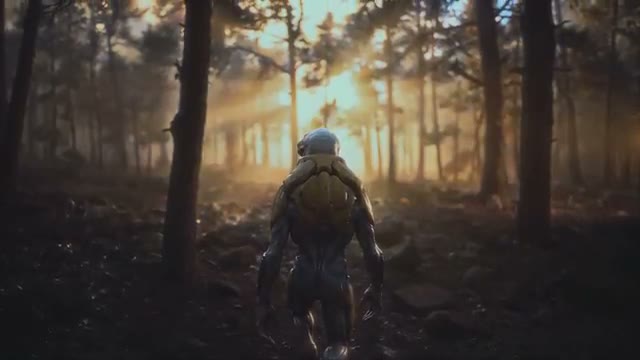
The payoff, when it comes, is worth the wait. Over the scarred alien’s face at ≈15:11, the revelation: “Even we would not kill our own kind. Humans will forever be… the supreme conquerors.” That is the dark secret the description promised, and it reframes everything: the aliens lost because they would not do what humans do to each other. The ending is the bravest choice in the film. Andrew finds the killer, shouts after him — “Hey, get back here. We’re not done yet!” — and the alien simply turns his back and walks away into the pines at ≈16:10, and Andrew lets him go, whispering, “I’m sorry, Alex.” I am still not sure I fully understand why he lets him go, and that is a real flaw. But the choice itself — a revenge film that ends by refusing revenge — is the most human thing in it.
Best Scene (1:45–2:04)
“We saved everyone”
Andrew cradling the dying Alex as the core blows, frame-checked at 1:51: his dirt-smeared, bloodied face looking down at her, blood at her mouth, her eyes half open, red lights blurring behind them. It is the best scene because it is the only one where everything lands at once — the AI imagery is at its most human, the acting reads in a single held close-up, and the writing gives the whole film its engine in one line: “We saved everyone.” She is the exception to that sentence, and the film never lets you forget it.
Final Thoughts
I came away from The Humbled thinking about the title more than the plot. The humbled one is not only the alien who submitted; it is Andrew, who learns that his grief does not entitle him to a killing, and that the people he conquered understood him better than he understood himself. The film is too long in its silent middle and too vague at its ending — but its images stay with me, and its question is better than most alien-invasion films bother to ask. It is a revenge film that ends by refusing revenge, and that refusal is the whole point.
Scene Breakdown
0:00–0:46 — The opening battle. Soldiers and hunched, armored aliens fight in a burning corridor; an alien with a spiked weapon stands in a smoky archway (≈0:32). No dialogue.
0:46–1:45 — Cutting a path. Soldiers push toward the core: “Why are you always slowing me down?” / “Pretty burnt out from cutting a path to the core… The Russians probably need help with the charges.”
1:45–2:28 — Alex. “We did it, Alex. The Russians blew the core. We saved everyone.” Andrew cradles the bloodied, dying Alex (≈1:51); “Alex. Alex.” — she does not answer.
2:28–3:17 — Helicopter banter. Talk of Saudis trading water for weapons to fight the Chinese for more water; the soldiers needle “Father”: “Is there saving these effnuts?” / “Saving is relative.”
3:17–4:01 — Radio check. “Containment Tango 69, authentication Whiskey 74 Charlie… cleared to land pad 2”; a soldier warns the priest to watch his six — the aliens “might look like marshmallows now but the old wiring is still in there somewhere.”
4:01–4:34 — The translator. Andrew is fitted with an earpiece and throat mic: “Just say 1033 into the translator if something goes wrong, we’ll come running.”
4:34–4:56 — The golden hall. Andrew enters the golden alien hall; an alien greets him: “Welcome… conqueror.”
4:56–6:34 — The interview. “Our history. Familiar?” / “I am.” / “Why? Why are humans here?” / “We have never been conquered. This humiliation takes time to adapt to.” / a chorus of “Yes!” (≈5:06) / “I have let go” (≈6:10) / “Memory liquid helps. You can try, if you wish.”
6:34–7:37 — The one who has not submitted. Andrew asks for help finding one of theirs: a scar across the neck, yellow armor — “It was green.” The alien knows him: he has not submitted and lives “North. In the mountains, with death and bones. He is dangerous, cannot be saved.” / “Yes, you’re right.”
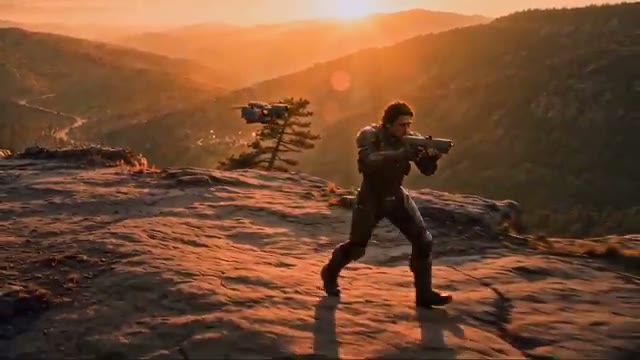
7:37–8:51 — Identity verified. The identity check (“Callahan, Andrew. 94887. Identity verified.”) plays over sunset shots — Andrew’s close-up, a United Earth Defense fabricator printing kit, hands holding a pistol and a glowing canister — and the journey north begins: a soldier on a rocky summit at sunset (≈8:22).
8:51–10:14 — North. Silent travel north through the mountains (aerials and ridges; no dialogue).
10:14–10:59 — The memory. The memory liquid begins: a bedroom morning with Alex — “Sorry to wake you. Want a kiss? … Time to get up. We’re late meeting the Drome… Can you get my red shirt from the wardrobe? I don’t see a red shirt, Alex. Alex? Take me to the beginning.”
10:59–15:01 — The replay. The long silent memory replay: the war, the march, a giant dead flesh-mass in the mountains (≈12:00), soldiers shaking hands after the victory (≈14:01). No dialogue.
15:01–15:49 — The revelation. Over the scarred alien’s face (≈15:11): “Even we would not kill our own kind. Humans will forever be… the supreme conquerors.” / “Thank you.”
15:49–16:23 — The refusal. Andrew shouts after the alien as it walks away into the pines — “Hey, get back here. We’re not done yet! … Hey, I’m talking to you! … I’m sorry, Alex. Don’t you turn your back on me!” — the alien keeps walking (≈16:10); Andrew lets him go.
16:23–16:51 — End card. Black screen, “produced on Cannon Studio” with the GERTYwood avatar (≈16:42).
≈0:35 — In the fast battle shot, the leaping soldier’s limbs smear into motion blur and the fallen bodies at the corridor’s edge melt into the floor’s red glow.
≈12:00 — The giant flesh-mass in the mountains is a blobby, veined texture with no clear anatomy, and the small armored alien climbing it has indistinct, merging limbs.
≈14:01 — In the handshake wide shot, the officers’ faces soften into shadow and the third man’s features smear; the clasped hands hold but look oddly smooth.
≈15:11 — The scarred alien’s face tentacles are detailed, but the armor plates at the frame’s edge shift and shimmer between cuts.
There are no reviews yet. Be the first one to write one.