


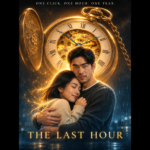
 Jun Sheng
 Creator ID26-11-01-0247

Score breakdown
5 views
Film Review
This review discusses the ending. If you would rather watch the film first, we recommend you do, and then come back.
Synopsis
On a rainy night, a car drives through the dark with its headlights cutting the wet road, and a voice warns, “Slow down. I can’t see the road.” A crash is implied rather than shown. Daniel is then alone in his home — an empty, cold living room, a man grieving his wife, Mei. In a hospital bed, Daniel’s elderly father presses a pocket watch into his hands with a warning: “This is not a toy. Never use it unless there’s no…” The sentence is never finished.
Daniel uses it anyway. Mei returns. She is there at breakfast, surprised at him — “You’re up early?” — and then, seeing his tears, baffled by them: “Why are you crying? It’s only breakfast.” The borrowed hours accumulate into a life in miniature: bowls of noodles together, and a notebook in which Daniel keeps count, one insert reading “Hour 17 — 27 left. We danced. She stepped on my feet on purpose.” There is a slow dance in a kitchen flooded with golden light. Then the countdown ends, and the film cuts to a hospital, where it is Mei who pleads — “Promise me, live.” “Open the curtains.” “I promise.” “Wake up for me. Wake up for me.” — and the truth lands: Daniel is the patient. The borrowed hours were Mei’s. The film closes on the hospital bed and fades to black.
A Watch, a Warning, and a Countdown
The premise is the engine, and it is a strong one. Plenty of short films gesture at grief; this one gives grief a device with a price and a tally. The notebook insert at around the 2:40 mark is the film’s quietest and cruellest detail — “Hour 17 — 27 left. We danced. She stepped on my feet on purpose.” Daniel is not just visiting Mei; he is bookkeeping her. Every hour is numbered, every hour is subtracted from a finite total, and he writes the hours down the way a man writes down anything he knows he is going to lose. That single insert does more storytelling than a page of dialogue could: it tells us the supply is limited, that Daniel knows it, and that what he chooses to record is not the miracle but the ordinary, teasing, married detail of her stepping on his feet on purpose.
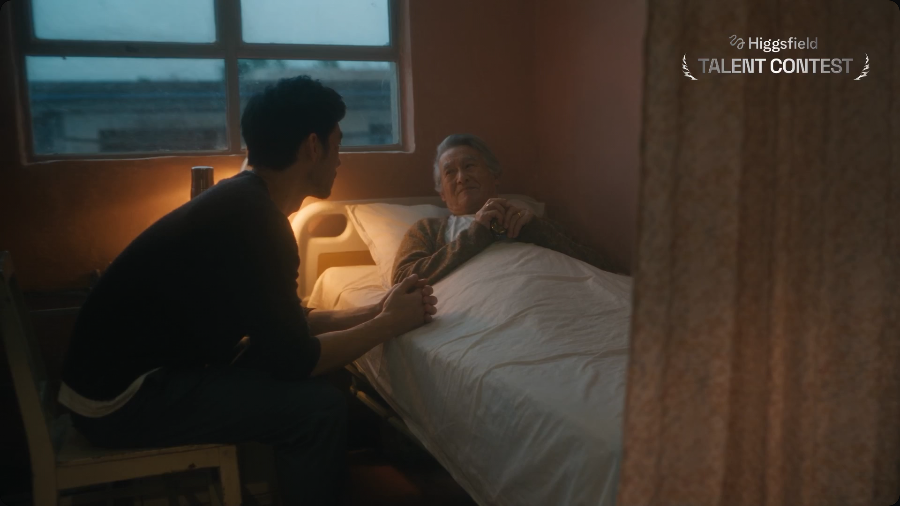
The father’s warning is the film’s one piece of unfinished business, and I keep going back and forth on it. “This is not a toy. Never use it unless there’s no…” — and the line stops. Read generously, the truncation is the point: the condition is one Daniel is in no state to hear, and the film is about a man using a thing whose terms he never learned. Read plainly, the film’s central rule is left half-whispered, and a viewer who wants to know what the watch costs, and who set the number of hours, will leave with the question still open. I land somewhere in the middle: the mystery suits the mood, but the film leans on it. The countdown gives the story its shape; the film never quite gives the countdown its reason.
Golden Hours, Cold Rooms
The lighting is the standout craft choice, and it is doing narrative work. Daniel’s present-day life is an empty room in cold light — the still at 0:52 is all grey air and absence, a home with the life gone out of it. The borrowed hours are the opposite: the slow dance at around 3:50 happens in a kitchen saturated with gold, the kind of warmth that reads as memory itself. You always know which side of the watch you are on before a word is spoken, and that contrast is the film’s real special effect. It costs nothing and it carries everything.

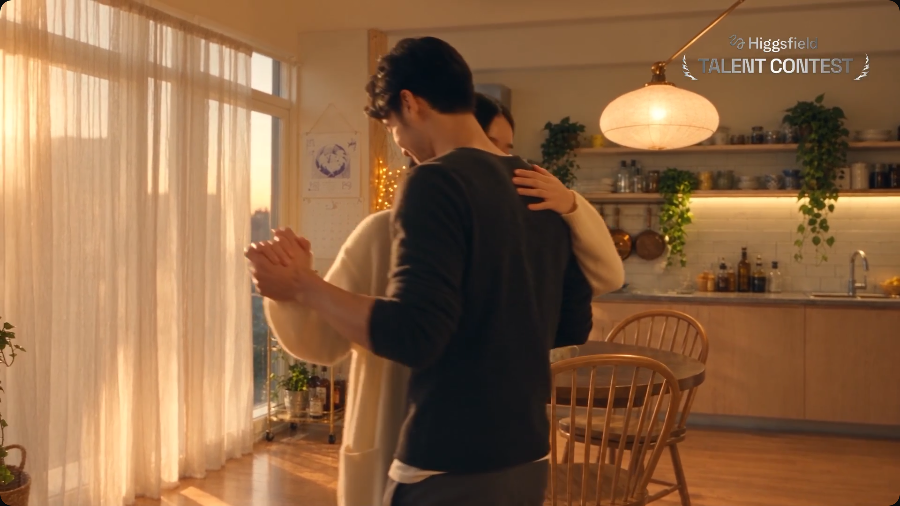
The domestic scenes are played with the right lightness, and that lightness matters. The noodles at 2:40, the breakfast exchange — “Why are you crying? It’s only breakfast” — work because Mei is not written as a ghost or a vision. She teases, she eats, she steps on his feet on purpose. The film understands that what a widower would buy with borrowed hours is not a grand farewell but an ordinary Tuesday, and it spends its middle section proving the hours were well spent. If the middle has a weakness, it is only that these scenes are gentle to the edge of slight — the film is so committed to tenderness that it occasionally coasts on it. But the countdown is always running underneath, and the film knows the coasting is itself the tragedy: this is what the hours were for, and they are nearly gone.
The Reveal That Reframes Everything
Everything the film has built is cashed in between 3:55 and 4:50. The countdown ends, and we are in a hospital — but it is Mei who is pleading, and Daniel who is in the bed. “Promise me, live.” “Open the curtains.” “I promise.” “Wake up for me. Wake up for me.” The reveal — Daniel is the patient; the borrowed hours were Mei’s — does not just surprise. It reverses the direction of every scene we have watched. The man we thought was spending a magical inheritance to visit his dead wife was a dying man being visited. The golden hours were her gift, her vigil, her way of keeping him in a life he was slipping out of — feeding him noodles, dancing with him, stepping on his feet on purpose, inside whatever the watch makes possible, while in the real world she sat with a husband who would not wake.

The closing image seals it: Daniel in a hospital gown, a cannula in place, and Mei asleep on his chest — she stayed. It is a risk, ending a film on a reversal this size, because a badly handled one makes the audience feel tricked. This one makes the earlier scenes sadder rather than falser, which is the test a reveal has to pass. The breakfast tears we watched Daniel cry were real in both versions of the story. That is why the film works.
Best Scene (3:55–4:50)
“Wake Up for Me”
The countdown ends and the film cuts to the hospital, and for a few seconds we read the scene the way the film has trained us to: another ending, another goodbye. Then the pleading starts and the geometry of the whole story rotates. Mei’s “Promise me, live” lands first as a dying woman’s request — until “Wake up for me. Wake up for me.” makes it unmistakable that she is not the one leaving. She is begging him to stay. The camera then settles the question with the closing composition: Daniel in the gown and cannula, Mei asleep on his chest, a woman who has spent her borrowed hours — the hours we watched from inside, golden and ordinary — keeping vigil over the man who thought he was the one doing the visiting. It is the best scene because it is the rare twist that pays backward as well as forward: every scene before it gains a second meaning, and none of them lose their first one.
Final Thoughts
I have thought about the notebook more than anything else in this film — a man numbering his hours with his wife, 17 gone, 27 left, recording that she stepped on his feet on purpose. The Last Hour understands that grief is mostly arithmetic: time had, time left, time spent. Its watch is never fully explained and its middle is almost too gentle, but its structure is honest, its lighting thinks, and its final minute earns the ache the title promises. A tender hour-counting fable whose last reveal turns a story about visiting the dead into a story about being visited — and being loved — by the living.
★★★½ — A countdown of golden hours, and a reveal that makes every one of them count twice
Scene Breakdown
0:00–0:35 — The rainy road. Headlights on a wet night road; a crash is implied, not shown. “Slow down. I can’t see the road.”
0:35–1:15 — The empty house. Daniel alone in the cold, empty living room of his present-day life, grieving Mei.
1:15–1:45 — The watch. Daniel’s elderly father, in a hospital bed, gives him the pocket watch: “This is not a toy. Never use it unless there’s no…” — the warning is never completed.
1:45–2:30 — Mei returns. Daniel uses the watch and Mei is back; breakfast together. “You’re up early?” / “Why are you crying? It’s only breakfast.”
2:30–3:10 — Borrowed hours. Noodles together; the notebook insert keeps the tally: “Hour 17 — 27 left. We danced. She stepped on my feet on purpose.”
3:10–3:55 — The dance. Daniel and Mei slow-dance in the golden kitchen.
3:55–4:50 — The hospital. The countdown ends. Mei pleads with Daniel: “Promise me, live.” / “Open the curtains.” / “I promise.” / “Wake up for me. Wake up for me.” The reveal: Daniel is the patient — the borrowed hours were Mei’s.
4:50–5:15 — The vigil. Close on the hospital bed: Daniel in a gown with a cannula, Mei asleep on his chest. Fade to black and the end card.
There are no reviews yet. Be the first one to write one.