
 Disruptorcreatorc
 Creator ID26-11-01-0027
 KekoCreator ID26-11-02-0012

Score breakdown
50 views su Kineograph
Film Review
This review discusses the ending. If you would rather watch the film first, we recommend you do, and then come back.
Synopsis
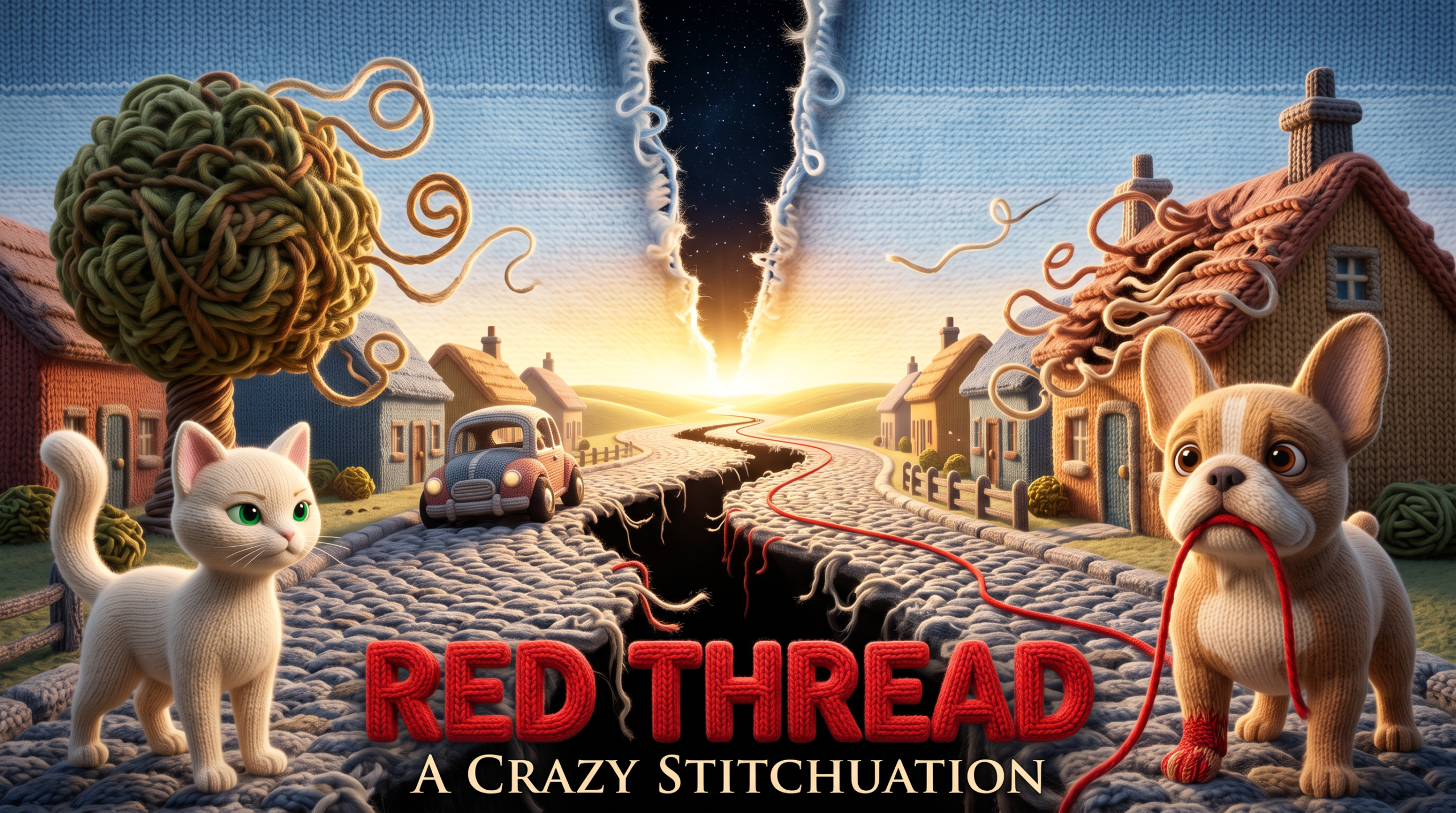
In a cozy house in a world made of knitting, Grandma knits while a loose red thread stands on the carpet. Frenchie, a French bulldog, bites the thread and tugs — and the pull does what a pull does in a world made of wool: everything starts to unravel. The house comes apart into a knitted village, the street folds underfoot, and at the crisis point the sky itself tears open in a black rip. Kitty confronts Frenchie over the damage, and then the two of them set about mending what he broke: Kitty re-stitches with blue yarn, working the blue around the red, and the pair pull together until the world holds again. They reconcile in a hug on the rug, and the credits roll over Frenchie with a red ball of yarn, closing on black and falling embers. There is no spoken dialogue anywhere in the film; a continuous AI song carries the story, its lyrics narrating the action as it happens.
A World With Rules
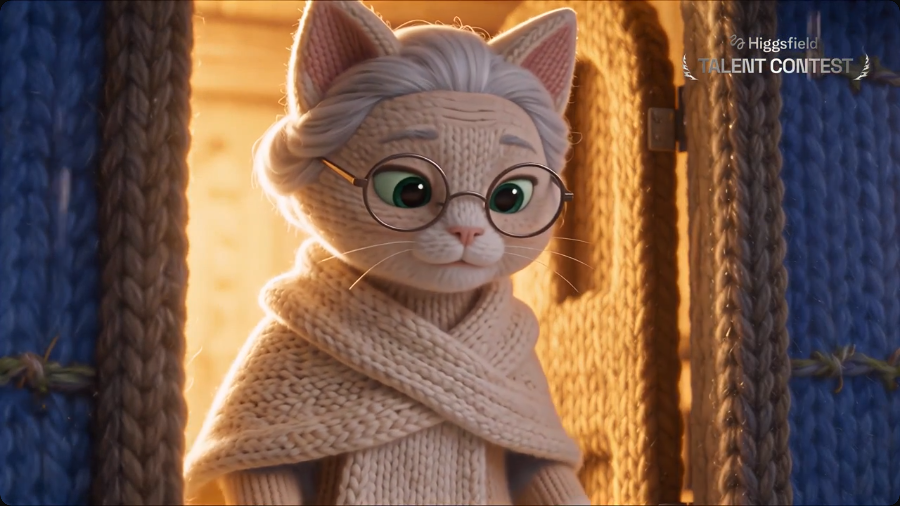
The visual identity is the headline, and I want to be precise about why. Everything here is knitted — the village, the clouds, the lamps, the characters themselves — and the conceit is not a filter laid over the film but the substance of it, held consistently from the first frame to the last. That consistency is what AI animation so often fails at, and it is why this film scores as clean as it does: the world has rules, the film obeys them, and the result is genuinely charming rather than merely cute. When Grandma’s knitted cat appears in the doorway at 0:08, all loops and stitches, the film has already told you everything about the place you are in — and it never once breaks its own material language afterward.
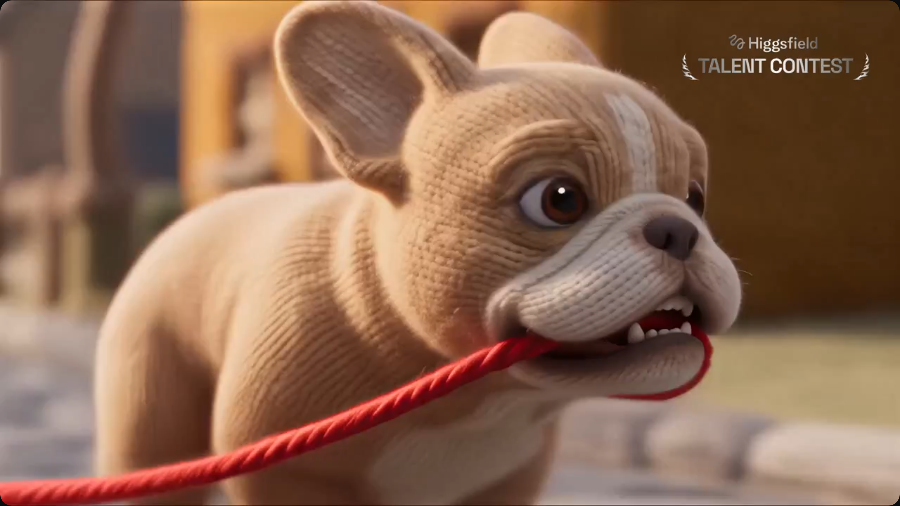
A world made of wool also gives the story its perfect mechanism. A loose thread in a knitted world is not a small problem; it is the end of everything, one pull at a time. When Frenchie takes the thread in his teeth around 0:50 and the song chirps “Look what a little thread can do,” the joke and the threat are the same thing. The film understands that its premise is a disaster movie in miniature, and it plays the escalation with a straight face, which is exactly why it is funny.
Escalation, Sung
The storytelling is admirably clear. There is no spoken dialogue — a continuous sung track carries the film — yet the escalation is never in doubt: one pull, one unraveling, consequences spreading through the village in a way that is funny precisely because it is so logical. By 1:30 the house has come apart into a whole knitted village, and Kitty is face-to-face with Frenchie, the song giving her the line every culprit in history has offered: “I thought I had it under control.” She had not, and neither had he, and the film is honest about whose fault this is. Frenchie broke the world. That matters, because it is what the second half is built on.
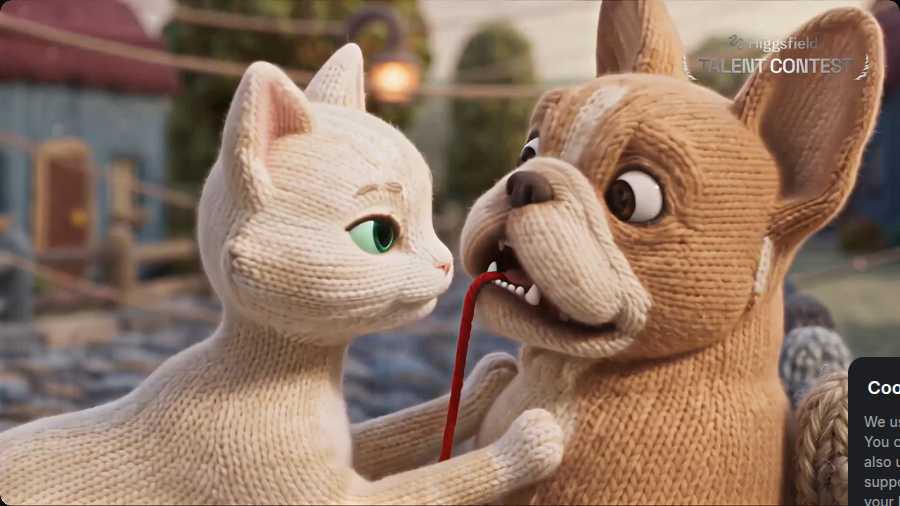
Around 2:20 the street itself folds, and the song turns uncertain — “Wait, the road, just moved…” — as the damage climbs from the ground to the sky. This is the film doing the hardest thing in short-form storytelling: raising the stakes without raising its voice. Nothing explodes. Wool simply does what wool does when you pull it, further and further, until the tear reaches the one place it should never reach.
The Mend, and What It Costs
The repair is where the film’s heart is, and also where it slightly cheats. From 3:10, Kitty re-stitches the world with blue yarn, the song instructing as she works: “You wrap the blue around the red…” It is a lovely idea — the mend is not a restoration but a change, the red thread of the damage woven permanently into the repair, the blue worked around it rather than over it. And the emotional logic is exactly right: Frenchie does not get to watch the world be fixed for him. He helps. He broke it; he helps mend it; the hug on the rug at 5:31 is earned by work, not granted by the plot.
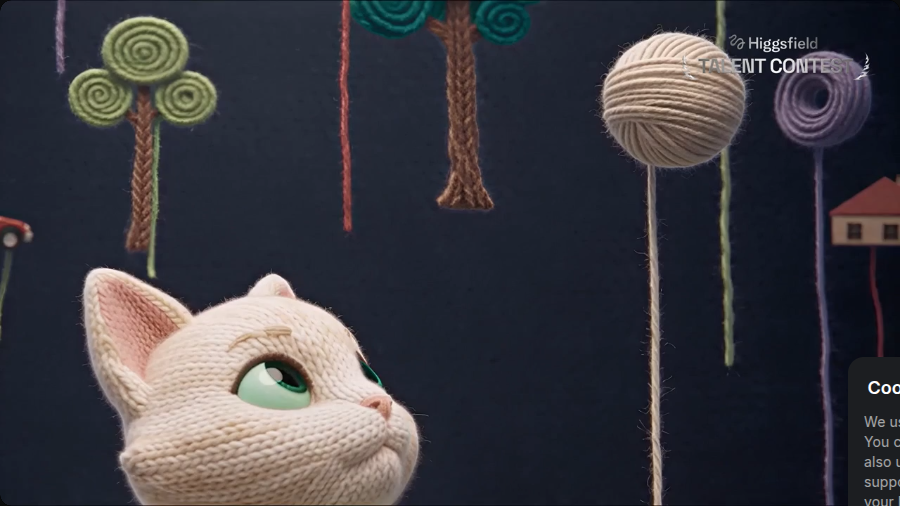
And yet the repair itself is implied more than it is shown step by step, which slightly cheats the most important sequence in the film: we get the intention and the result more than the work. For a film whose whole world is a craft — stitching, looping, pulling through — the actual stitching deserved the same patient attention the unraveling got. The unraveling is a process we watch; the mending is a montage we accept. It is the one place where the film asks for faith instead of earning belief, and in a film this disciplined about cause and effect, the gap registers.
The sung track is the other mixed blessing. The vocals are often garbled, and the middle verses turn repetitive, so the ear checks out in stretches where the eye never does. In a dialogue-free film the song is doing the work of narration, character and score all at once, and when its words blur, the film briefly loses its only voice. Faces shift slightly here and there too, though in a wool world that reads more as texture than error — one of the quiet advantages of choosing a material that is supposed to be soft.
Best Scene (3:00–3:20)
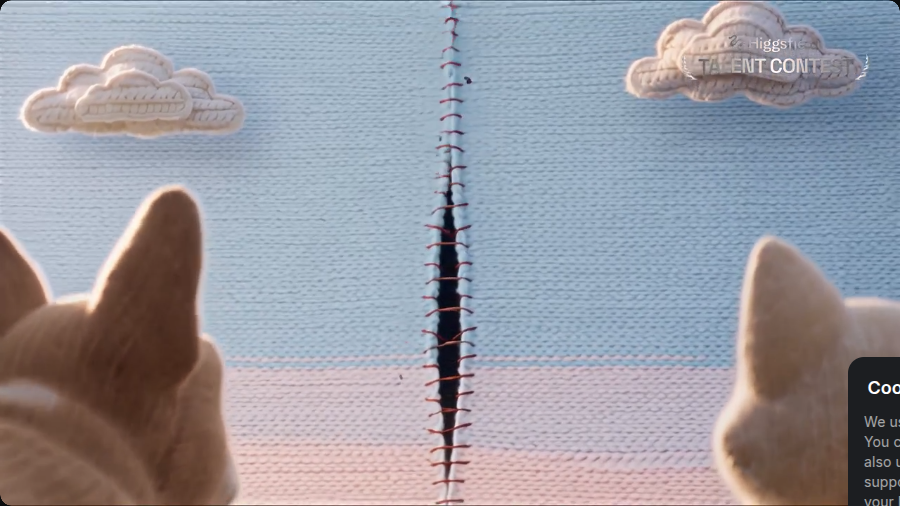
“The Sky Tears”
The street has folded, the village has come apart, and then, around the three-minute mark, the damage reaches the sky: a black tear rips open across the knitted heavens. It is the best scene because it is the moment the film’s conceit pays off at full size. A tear in a wool world is not a metaphor the film has to explain — it is the literal worst thing that can happen here, rendered in the film’s own material language, a rip in fabric where the sky should be. Everything before it is a dog with a thread; everything after it is two friends deciding the world is worth mending. The black rip against the soft colors of the village is the film’s boldest image, and it converts a cute premise into genuine stakes in a single shot. When Kitty starts stitching the blue around the red at 3:10, she is not fixing a sweater. She is closing a wound in the sky, and the film has made you feel the difference.
Final Thoughts
I keep thinking about the choice at the center of the repair: the blue is wrapped around the red, not instead of it. The damage stays visible in the mended world, worked into the pattern, and that is a more honest ending than a restoration would have been — Frenchie’s mistake is not erased, it is incorporated, and the friendship is stronger for having done the work together. The credits image, Frenchie with his red ball of yarn over black and falling embers, is the film winking at its own moral: the thread is still there. It always was. What changed is who is holding it, and how carefully. It is such an adorable film, and I love how it came out — honestly, it makes me want to buy any collectible that could be made from this world. Verdict: pull this thread — it is a genuinely charming film, a disaster movie and a friendship story stitched into the same six minutes.
★★★★ — A knitted world, a guilty dog, and a mend that means something
Scene Breakdown
0:00–0:50 — The loose thread. Grandma knits in a cozy house while a loose red thread stands on the carpet, waiting. The world establishes its material — wool, loops and stitches — in every object on screen.
0:50–1:30 — The pull. Frenchie bites the thread and tugs, delighted with himself, as the song announces: “Look what a little thread can do.”
1:30–2:20 — The unraveling. The pull spreads; the house comes apart into a knitted village, and Kitty confronts Frenchie face-to-face. The song gives her the culprit’s eternal defense: “I thought I had it under control.”
2:20–3:10 — The sky tears. The street folds underfoot — “Wait, the road, just moved…” — and the damage climbs until a black rip tears open in the knitted sky. The crisis at full size.
3:10–4:35 — The mend begins. Kitty re-stitches the world with blue yarn, working it around the red thread of the damage: “You wrap the blue around the red…” Under the yarn-ball trees, the sky still dark, the repair becomes the story.
4:35–5:35 — Pulling together. Frenchie and Kitty pull together, reconcile, and hug on the rug — the friendship repaired along with the world.
5:35–6:20 — Credits. The credits roll over Frenchie with a red ball of yarn, closing around 5:53 into black and falling embers.
There are no reviews yet. Be the first one to write one.