
 Alex Camacho
 Creator ID26-11-01-0253
 Brandon MartinCreator ID26-11-01-0260

Score breakdown
42 views en Kineograph
Film Review
This review discusses the ending. If you would rather watch the film first, we recommend you do, and then come back.
Synopsis
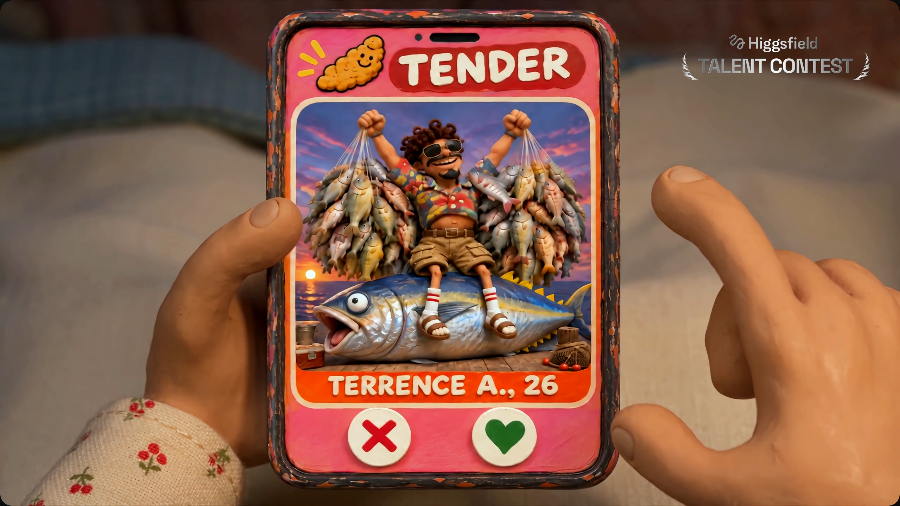
On a felt-and-clay Lower East Side, Arnold scrolls the dating app TENDER and talks himself into a blind date: “A blind date? Seriously?… There’s plenty of fish in the sea. I’m a catch.” His courage comes from his fandom — Brutella, Warrior Goddess, who “defeated the 12 elf lords during the second rising at the battle of Treyhorn with a single arrow” — and from the send-off he gives himself: “Go forth, my son. Conquer thy fear and claim thy maiden.” In his solo, Arnold sings his wish list: “Could she be it? Could she be the one? Someone who can make me laugh…” Across town, Becky sings hers: “Could he be it?… Six foot four, cool tattoos and hair and a man bun. Stop. Actually scratch the man bun.” The two solos join in a duet — “And it all begins with a perfect first day!” — and then, at last, they meet in the café: “Becky? Down here. Arnold? That’s my name. Don’t wear it out.” The date turns when the Brutella fandom surfaces on both sides of the table and the two of them sing the elf-lords line in unison — strangers no longer. The waiter checks in (“Can I get you anything else?” — “Nope. I think this is… It.”), the solos return as reprises, the duet closes the story, and a ring of dotted lights carries the end credits.
The Song Is the Film
Start with the song, because the film does. The wish-list number is the engine, the charm, and the structure all at once, and it is staged with real wit: two people who have never met, singing mirror-image hopes at each other across a city, each list specific enough to be a character sketch. Arnold wants someone who can make him laugh. Becky wants six foot four, cool tattoos, hair — “Stop. Actually scratch the man bun.” That correction, mid-lyric, is the funniest line in the film, because it is exactly how people actually edit their fantasies in real time. And the choreographed scenes around the singing are where the film truly shines — the movement is joyful, deliberate, and handmade, every gesture visibly crafted rather than rendered. I love the song, and I love the choreographed scenes; those are the two things I keep saying, and this film is why.
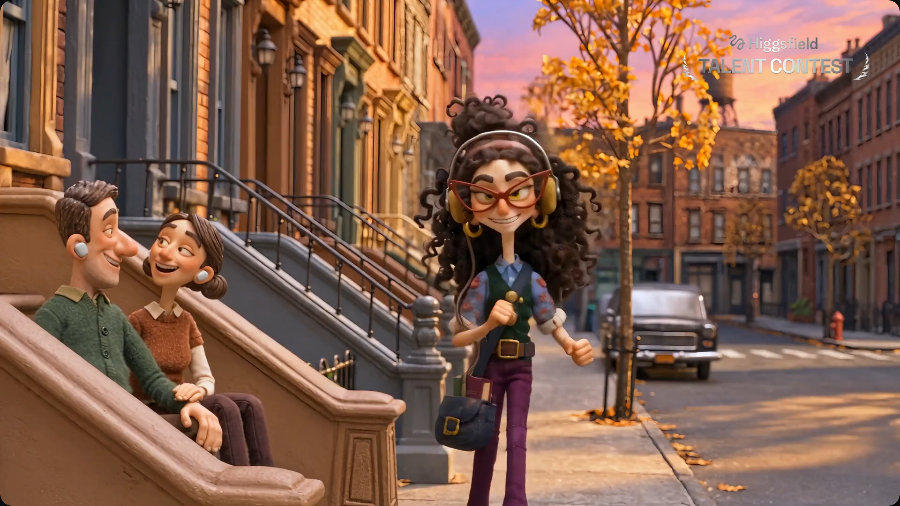
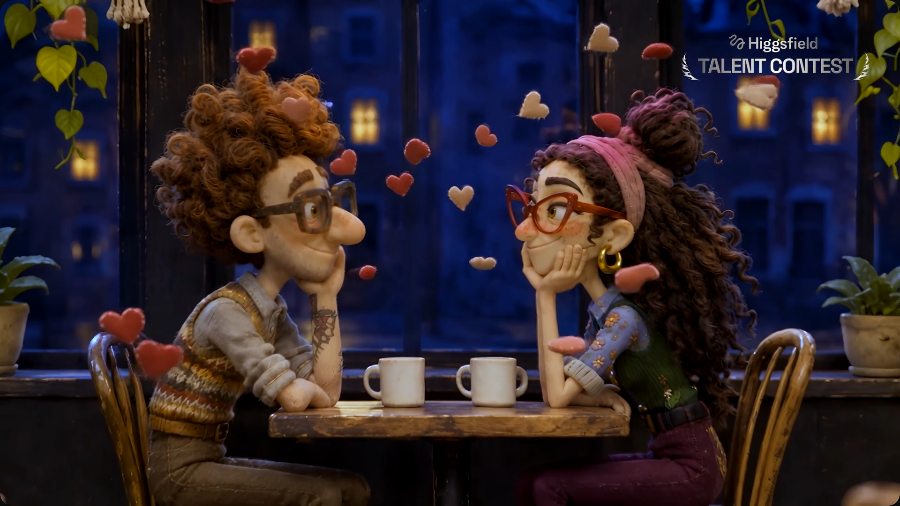
The structure deserves its own credit, because it is real musical structure. Arnold sings his solo; Becky sings hers; the solos converge in the café when the two discover they have been singing about the same thing all along — and then, after the date lands, the solos come back as reprises (Arnold’s at around 3:32, Becky’s at around 3:59), near-verbatim, before the finale duet. That is not padding and I won’t score it as repetition: a reprise is how a musical says the same words mean something different now. The wish list sung by a hopeful stranger is a wish; sung again by someone who has just found the person, it is a receipt.
A Handmade Lower East Side
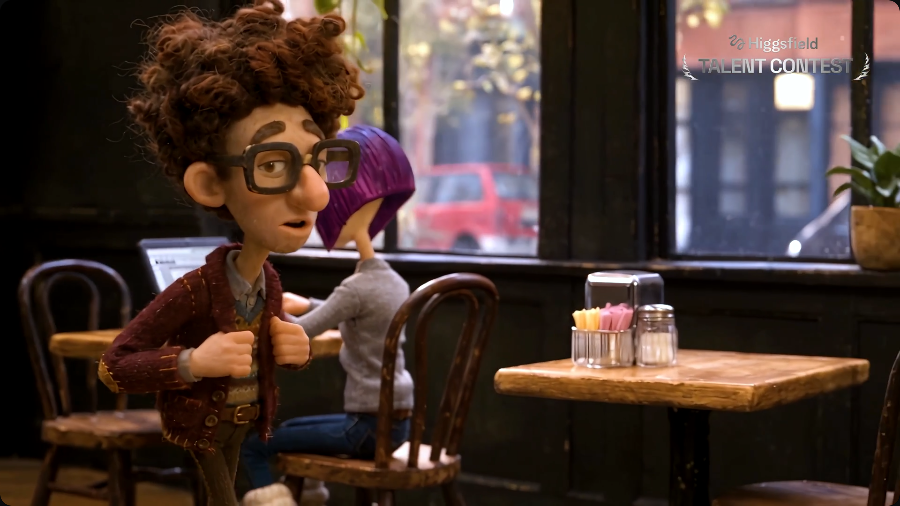
The felt-and-clay world is doing serious work. Every frame has a warmth photorealism cannot buy, and the handmade look forgives the medium’s usual wobbles: where a generated face might wobble, a felt face simply looks like felt. This is a mostly clean film, and part of its cleanliness is wisdom — it chose a material that forgives. The opening is the perfect example: hands holding a phone, the TENDER app open, a whole dating life in one tactile shot. Arnold’s fandom monologue — the twelve elf lords, the second rising, the battle of Treyhorn, delivered with the reverence of a man reciting scripture — establishes him completely before he sings a note: this is a person whose inner life is rich, specific, and entirely unembarrassed.
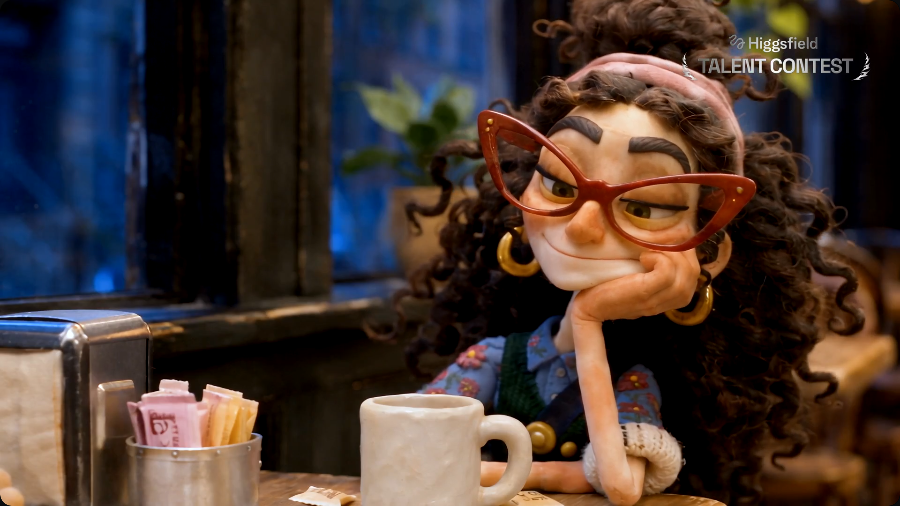
Becky gets the same respect. Her solo is not the female echo of his; it has its own jokes, its own standards, its own last-minute edit of the man bun. When the two of them finally sit across a café table, the film has done the musical’s real work: we already know both of them, so the meeting is not an introduction — it is a collision we’ve been set up to hope for.
The Date Itself
The café meeting plays the awkwardness honestly before it plays the spark. “Becky?” — “Down here.” — “Arnold?” — “That’s my name. Don’t wear it out.” It is small, dry, human dialogue, and it matters that the film can do quiet as well as it does sung. Then the Brutella bond surfaces, and the elf-lords line — his private scripture from the opening — comes out of both of them in unison. That is the truest observation in the film: people do not fall for each other over candlelight and eye contact. They fall over the discovery that someone else loves the same obscure thing, with the same unnecessary depth of lore. The waiter’s single check-in is perfectly judged — “Can I get you anything else?” — “Nope. I think this is… It.” — the date reviewing itself, five stars, no notes.
Fifteen Seconds and One Wrong Word
Now the flaw, honestly, because it is the only one I named coming out of the screening and it sits in the worst possible place. In the first fifteen seconds, the voices don’t sound like the characters’ voices. Then they settle — and for the remaining five minutes they are right, consistent, and characterful. But a musical makes its promise in its opening moments, and for those first seconds the spell is not yet cast: you hear the machinery instead of the people. It is a strange, specific crack, and the film’s misfortune is that everything after it is good enough to make you notice the wobble by contrast.
The one other true flaw is a single wrong word, sung twice. The duet’s big line lands as “And it all begins with a perfect first day” — day, not date — at around 1:47, and the slip recurs in the finale at around 4:28. In a film whose title is its thesis, the thesis word is the one that has to be right. It costs the film a little polish and nothing else; the tune survives it, which tells you something about the tune.
Best Scene (2:40–3:06)
“The Brutella Bond”
Two solos converge. Across the café table, Arnold’s fandom comes out — and Becky doesn’t politely nod; she knows. The elf-lords line, which Arnold recited alone in his room like a prayer (“when she defeated the 12 elf lords during the second rising at the battle of Treyhorn with a single arrow”), is suddenly sung by two voices in unison, and the date is over as a question and settled as a fact. It is the best scene because it is the film’s whole argument in twenty-six seconds: the thing you were embarrassed to love is the thing that finds you your person. The choreography of the discovery — two heads lifting, the lyric locking together — is the choreographed joy this film does so well, concentrated into one beat.
Final Thoughts
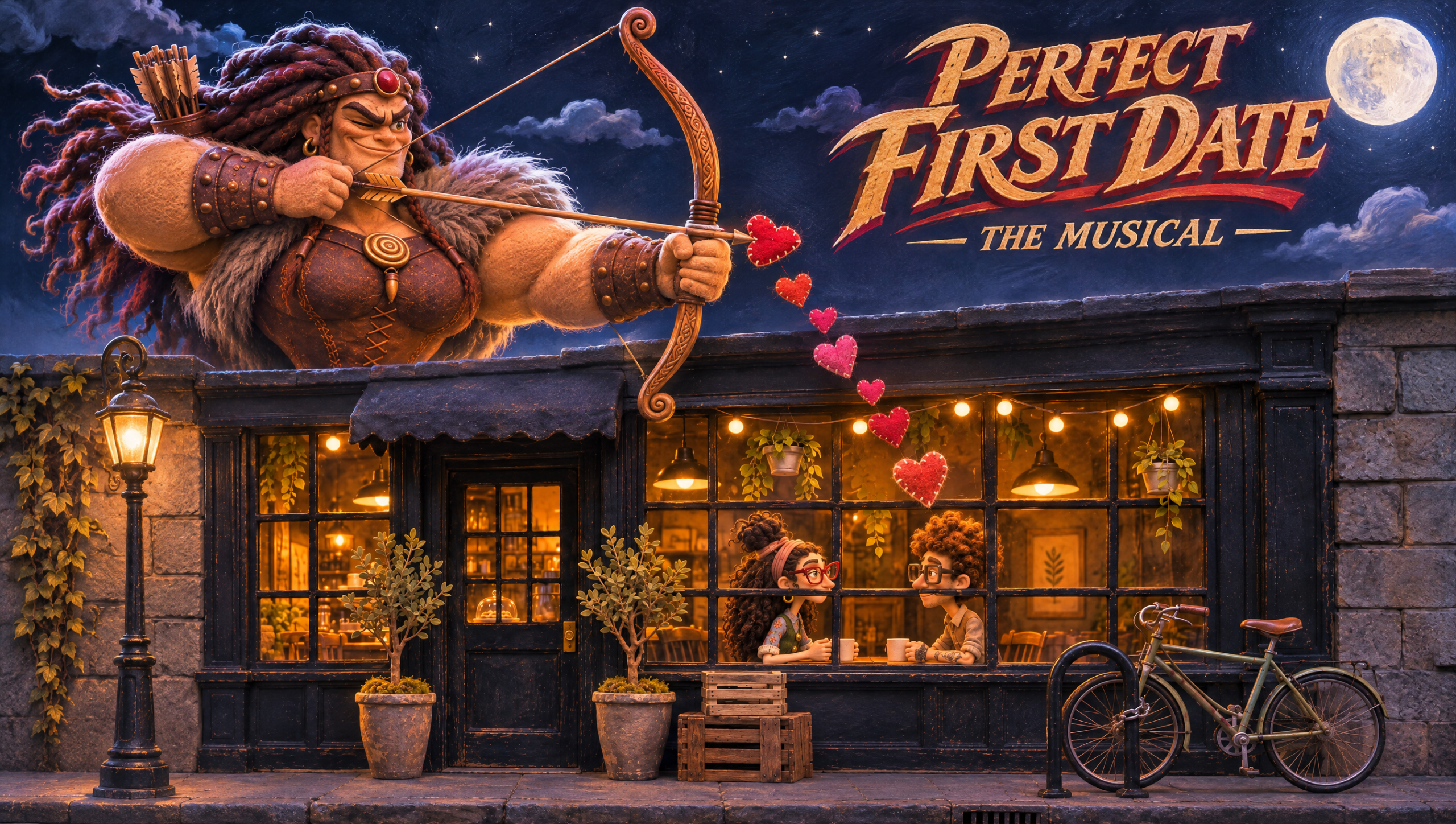
Perfect First Date: The Musical is the film I would show someone first: the one with the song, the choreography, and the heart, handmade out of felt and clay and sheer nerve. Its opening fifteen seconds wobble, its title word slips twice, and neither matters much against five minutes of earned joy — a musical that understands musicals are not about realism, but about the moment feeling gets too big for speech. Arnold and Becky’s feelings get there in the first minute and stay there. Pure fun — a tiny felt musical with a big heart, one fifteen-second crack in the spell, and a song you will be humming tomorrow.
★★★★ — Felt, clay, and a chorus you can’t shake
Scene Breakdown
0:00–0:26 — The app. A felt-and-clay Lower East Side; Arnold scrolls the TENDER dating app and talks himself into it: “A blind date? Seriously?… There’s plenty of fish in the sea. I’m a catch.”
0:26–0:51 — The fandom. Arnold’s courage, sourced: “Brutella! Warrior Goddess, when she defeated the 12 elf lords during the second rising at the battle of Treyhorn with a single arrow.” / “Go forth, my son. Conquer thy fear and claim thy maiden.”
0:51–1:18 — Arnold’s solo. The wish list, sung: “Could she be it? Could she be the one? Someone who can make me laugh…”
1:18–1:47 — Becky’s solo. The counter-list: “Could he be it?… Six foot four, cool tattoos and hair and a man bun. Stop. Actually scratch the man bun.”
1:47–2:12 — The duet. The solos join: “And it all begins with a perfect first day!” — day, where the title promises date.
2:12–2:40 — The meeting. Café, first words: “Becky? Down here. Arnold? That’s my name. Don’t wear it out.”
2:40–3:06 — The Brutella bond. The fandom surfaces on both sides of the table; the elf-lords line is sung in unison, and the two solos become one song.
3:06–3:32 — The waiter. “Can I get you anything else?” / “Nope. I think this is… It.”
3:32–3:59 — Reprise: Arnold. His solo returns, near-verbatim — the wish list, now sung by a man whose wish is sitting across from him.
3:59–4:28 — Reprise: Becky. Her solo returns the same way, man bun edit and all.
4:28–4:53 — Finale duet. The closing number; the story ends at around 4:45, with “first day” slipping in for “first date” one last time.
4:53–5:05 — Credits. A black screen and a ring of dotted lights; no dialogue.
There are no reviews yet. Be the first one to write one.