
 ZD Neural Studio
 Creator ID26-11-10-0265

Score breakdown
43 views auf Kineograph
Film Review
This review discusses the ending. If you would rather watch the film first, we recommend you do, and then come back.
Synopsis
Decades ago, a flood swallowed the town; a giant whale rose beside a boat carrying two boys and took the survivors onto its back, in return for a promise: find land where the children can live, and “we will all protect you. You won’t be alone anymore.” Now the town still rides the whale above a sea of clouds, kept by the Whale Keeper Gen — one of those boys, grown old, his fish-shaped ocarina at his chest — and the whale is weakening. When the town begins to fall, the mayor — the other boy, grown into office — orders the whale chained down to hold it in place. Gen is appalled: “Have you forgotten what it means to be a Whale Keeper?” He sends his granddaughter Nagi inside the whale to listen to its voice. She finds land below the clouds. Doubted by the town, defended by Gen, her report forces the mayor to remember the promise — and the town must decide whether safety means chains, or gratitude means letting go.
The Promise Melody
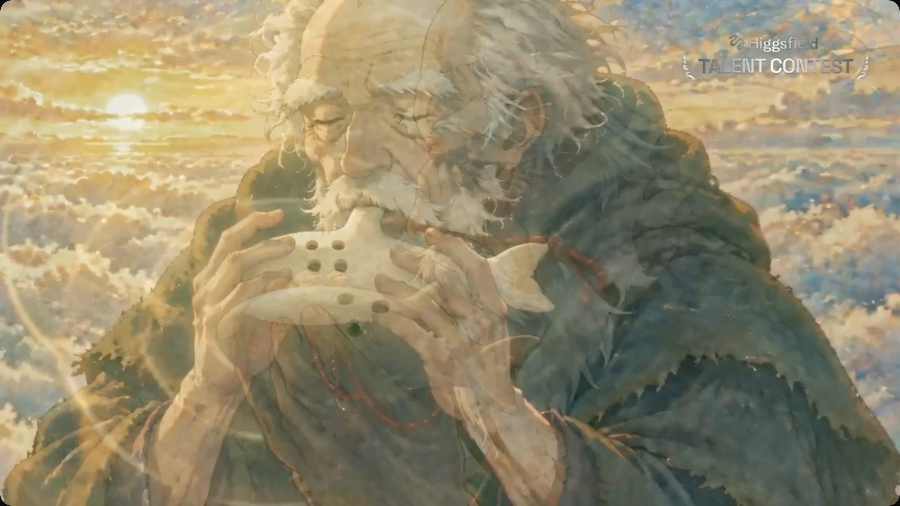
The turning point of this film is played, not spoken. Nagi stands on the whale’s back and plays the promise melody on her fish ocarina, eyes closed, red scarf flying. Gen joins her. Then — the film’s whole argument won without a word of dialogue — the mayor joins them: three generations, three ocarinas, in the rain, playing the tune the two boys played the day the whale saved them. The mayor does not apologise; he remembers. It is a climax built entirely from music and memory, and it resolves the chaining scene more completely than any speech could.
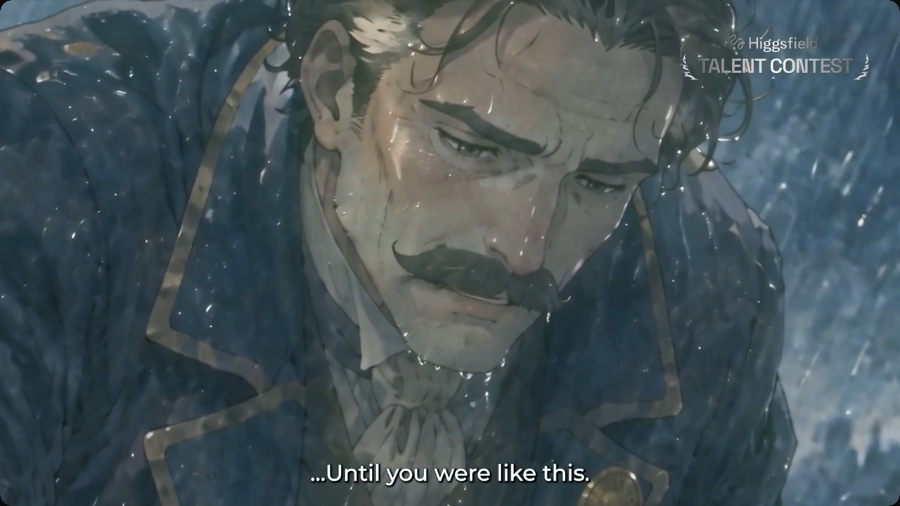
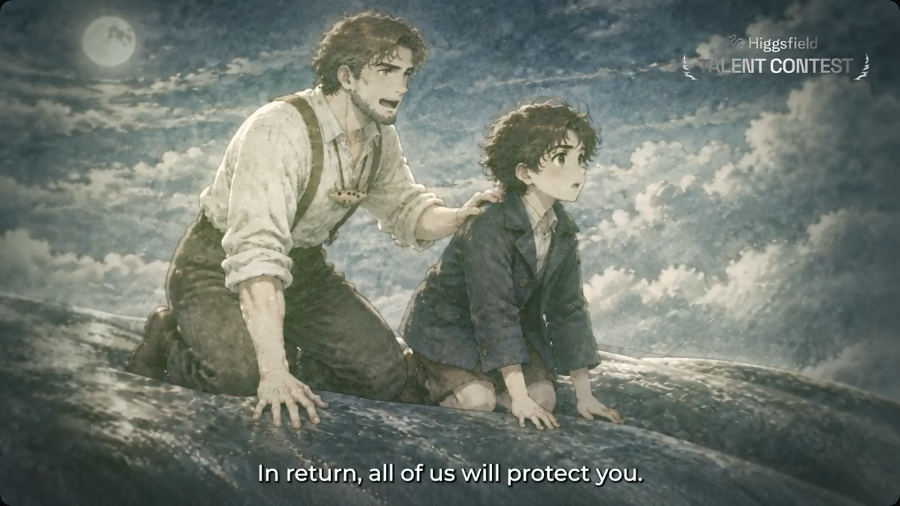
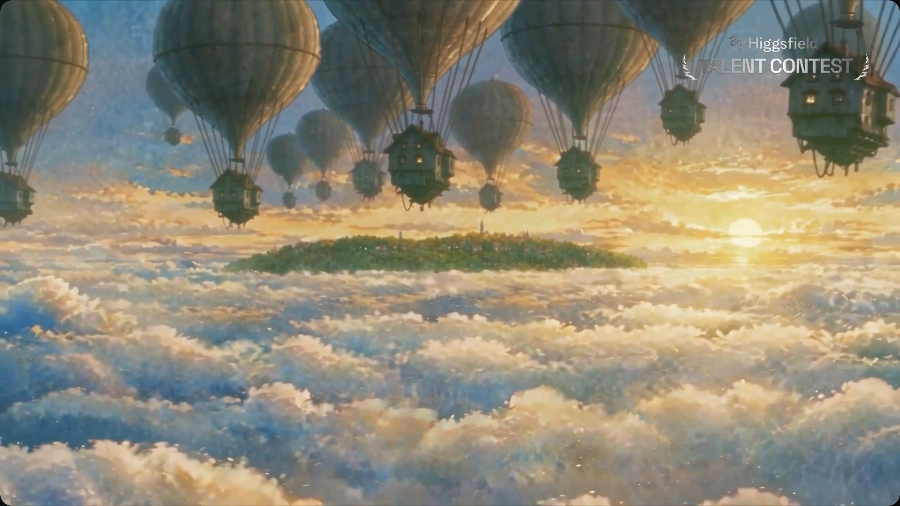
The construction around it is just as considered. The flashback is placed exactly where it belongs — after Nagi is doubted, when the audience needs to know what the promise actually was — and it re-reads the mayor completely: the man ordering chains is the boy who once played the ocarina on the whale’s back at sunset. The release that follows is staged as work, not sentiment: “Tie the ropes to the houses! Return this whale to the sea! Hurry!” — the town’s houses lifted by balloons, the whale let go, and Nagi’s farewell, crying and smiling: “Thank you for protecting us all this time.”
Painted Sky, Anime Soul
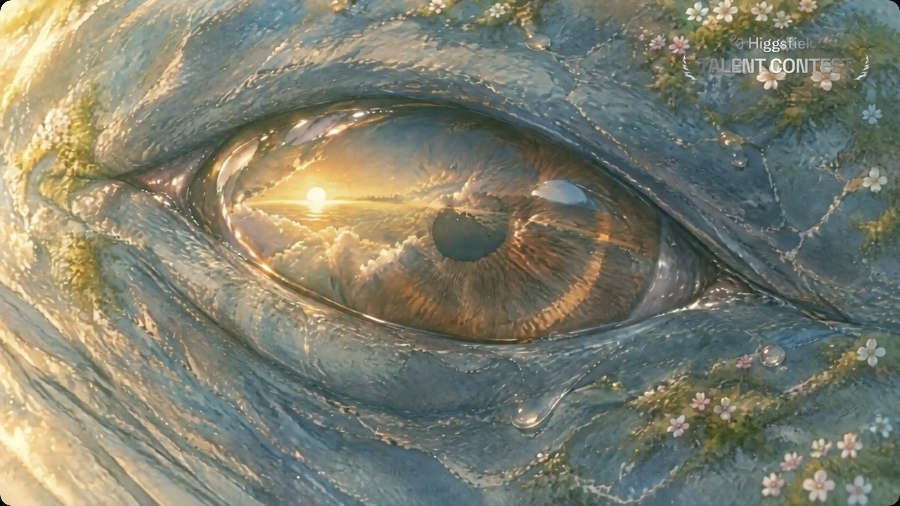
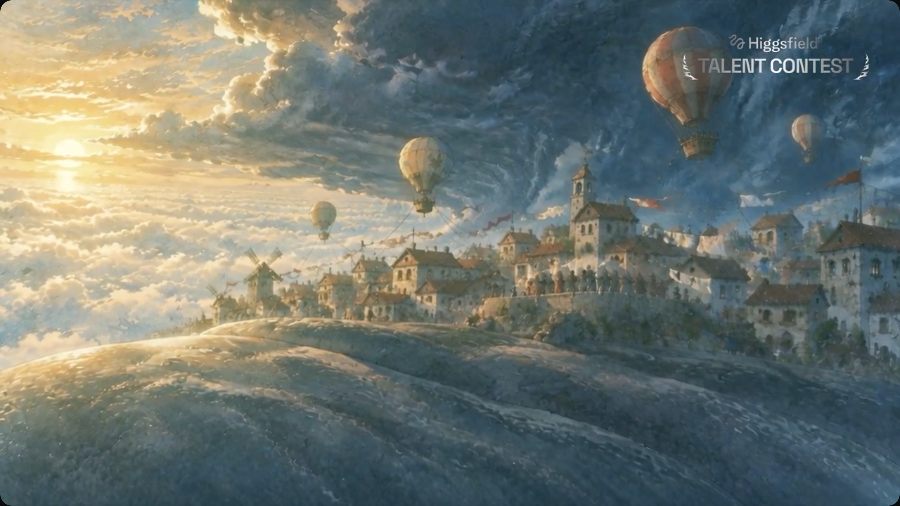
The film is painted in a soft, storybook watercolour that suits it everywhere — the flooded town of the opening with its church spire and windmill above the water, the sea of clouds at sunrise, the whale’s back with a whole town standing on it, the final image of the whale spouting in a real sea at sunset. The whale itself is beautiful, and so is the inside of it — the sunlit, rib-arched cathedral Nagi walks through to listen to its voice. The epilogue montage earns its place: a market on land at sunrise, Gen by a window polishing his ocarina, the empty sea. This is what the story was about, shown rather than summarised.
And yet — for all its beauty, I was never allowed to forget that this is not, quite, anime. That is not this film’s failure alone; it is the standing problem of AI anime. The models were trained on live action, not on anime, and when they reach for the anime look, what comes out tends to be more 3D than drawn — surfaces a little too rendered, light a little too real. The Whale Town has that sheen, and it kept reminding me of itself. I have seen it done the other way — Allan Ripley’s Otsukai somehow replicates the authentic anime look, flat and drawn and true — which only underlines what happens here. But if the surface is not anime, the soul is: this is a classic anime story, told the anime way, in the company of Howl’s Moving Castle — a floating world, a child who listens, an old promise, kindness treated as a form of strength. It did not make me feel I was watching anime; it reminded me, all the way through, that its soul is anime. It is worth the watch for exactly that.
Best Scene (4:35–5:25)
“The Promise Melody”
Nagi plays; Gen joins; the mayor joins. Three generations on the same small instrument, in the rain, above the clouds — the argument of the whole film settled by a tune. It is the emotional centre of the film, and the sequence I will remember longest.
Final Thoughts
The Whale Town builds a world, breaks it, heals it with music instead of speeches, and lands an ending about gratitude that is genuinely moving: the protected setting the protector free. It belongs in the company of Howl’s Moving Castle — the same floating-world tenderness, the same belief that kindness is a kind of strength — and it earns its place there. Verdict: a town, a whale, a promise kept both ways — a beautiful story whose soul is anime.
★★★★ — Three ocarinas in the rain, and a promise remembered
Scene Breakdown
0:00–0:20 — The flood. A wide sunset shot: a church spire and a windmill standing out of the water over a sea of clouds. The town the flood swallowed, before the whale.
0:20–1:20 — Morning on the whale. The town on the giant whale’s back above the clouds. “Good morning, whale keeper!” Gen and Nagi play their fish ocarinas together; Gen, to the whale: “…I see. You’re that old already.” Nagi asks to go and listen to its voice.
1:20–2:20 — The fall. “The town’s falling!” The mayor orders the whale chained down. Gen confronts him: “You think chaining the whale protects the town?” — “Have you forgotten what it means to be a Whale Keeper?” He sends Nagi: “Go listen to the whale’s voice!”
2:20–3:45 — Inside the whale. Nagi among huge rib-like arches and sunbeams, her ocarina glowing; below the clouds, green coastal land. Back in the town she reports it and is doubted — “Nagi doesn’t lie” — and Gen turns the question on the mayor: “Have you forgotten our promise to the whale?”
3:45–4:35 — The promise. Flashback: night, moonlight, a boat in the flooded town, the whale rising beside it. Young Gen and the boy who will be mayor climb on. “Find land where these children can live. In return, we will all protect you. You won’t be alone anymore.”
4:35–5:25 — The melody. Nagi plays the promise melody on the whale’s back; Gen joins her; then the mayor joins them — three ocarinas in the rain. The mayor remembers.
5:25–6:00 — The release. “Land! I can see land!” “Return this whale to the sea! Hurry!” The houses are lifted away; Nagi, crying and smiling: “Thank you for protecting us all this time.”
6:00–7:12 — Epilogue. To song: the whale’s tail diving into the clouds; a market on land at sunrise; Gen polishing his ocarina by a window; a wide sea at sunset; and the whale’s back, spouting in a real sea. Black. No credits.
There are no reviews yet. Be the first one to write one.