
 Ms_Prod
 Creator ID26-11-01-0243

Score breakdown
28 views auf Kineograph
Film Review
This review discusses the ending. If you would rather watch the film first, we recommend you do, and then come back.
Synopsis
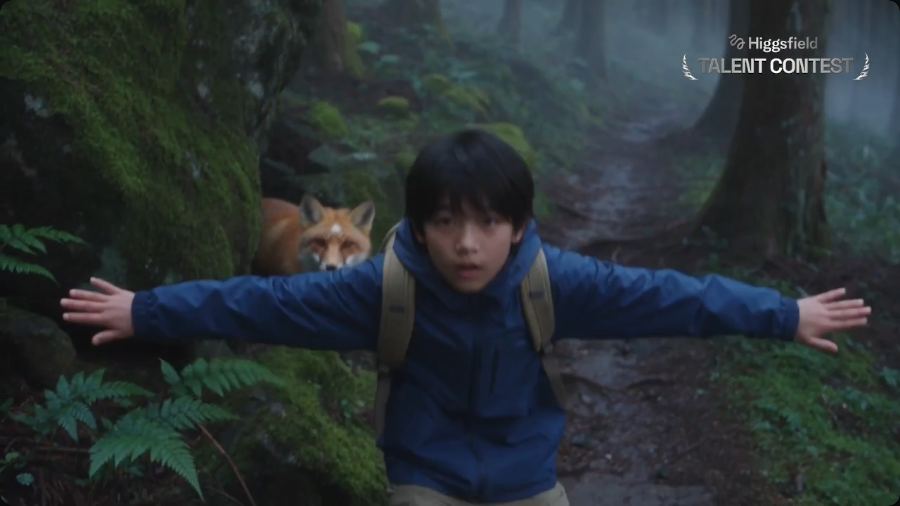
In a misty mountain forest, a bear stands over a wounded fox — and Ren steps in. Arms out, he shields the animal with his own body, and the film cuts to black on his cry. He wakes in a hospital, his hand bandaged, and the fox comes back to him: the creature he saved has stayed, bound to him, and the two begin the halting work of knowing each other — whether it has a name, and what it is that only they can see in each other.
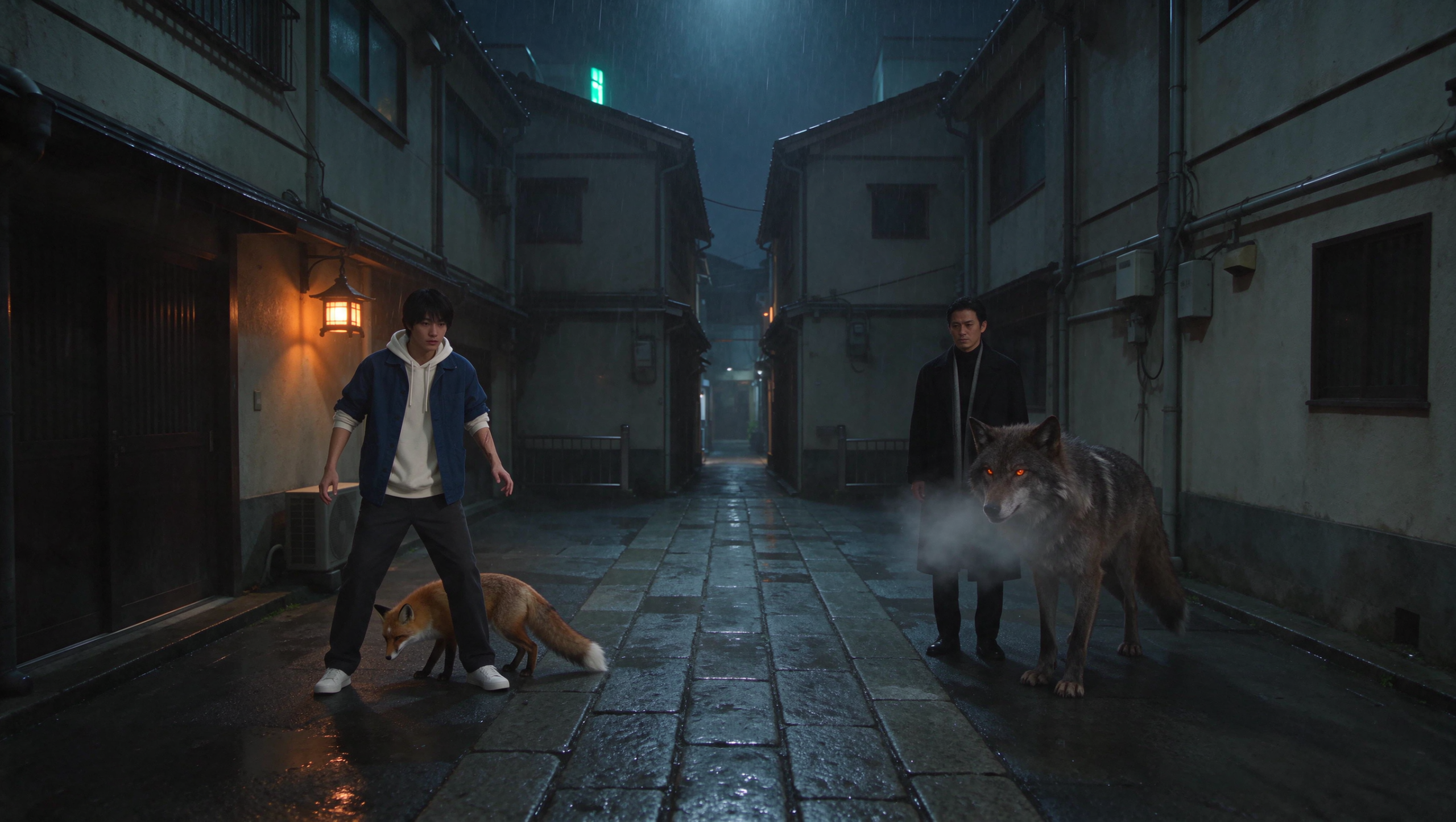
The fox leads Ren out into the night, to a shrine in the rain: torii gates, fox statues, a wolf moving through the wet dark, and the sense of a place that has been waiting a very long time — three hundred years, the film suggests. Then the story steps back into that past. In the Edo of three centuries earlier, in falling snow, there is a hunter, a young man, and a fox — and a recognition, spoken over a hand stroking the fox’s fur in the snow: “Yuki… You are Yuki.” The bond Ren stumbled into as a boy is not new. It is the latest turn of something very old.
The film closes in the present, on a Tokyo night: on a wet ledge, a crow’s feet beside a man’s shoe — and then the company assembled at last, crow, wolf, fox and man together, the gathering the whole film has been walking toward. It holds there, and ends on a nine-flame card.
A note on the dialogue: the film is in Japanese, with some English subtitles, and the subtitle lines in places are approximate. I have quoted sparingly, and only where the line is clear — the images, fortunately, carry this film a long way on their own.
The Boy Who Stepped in Front of a Bear
The opening is the film at its most decisive. No preamble, no mythology lecture: a misty forest at 0:00, a bear standing over a wounded fox, and a boy who puts his body between them, arms out (0:29). It is the whole film in one gesture — the bond is not explained, it is enacted, at cost, before we know anyone’s name. The cut to black that follows is, per the film’s own design, deliberate, and it works: we wake when Ren wakes, in the hospital, knowing exactly as much as he does.
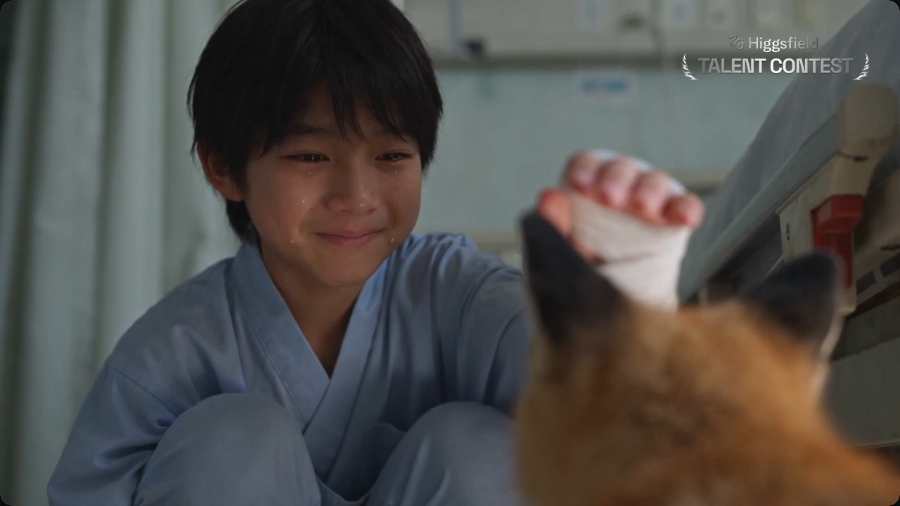
The hospital stretch (0:47–2:12) is where the film wins its emotional license. Ren in a hospital gown, bandaged hand reaching toward the fox, smiling through tears at 2:12 — that single image does more for the boy-and-fox bond than any amount of exposition could. Whatever he saved has come back to him, and his response is not fear but joy through pain. The film is wise to keep the exchange small and partly untranslated: two beings working out what they are to each other, in glances as much as words.
Three Hundred Years of Rain and Snow
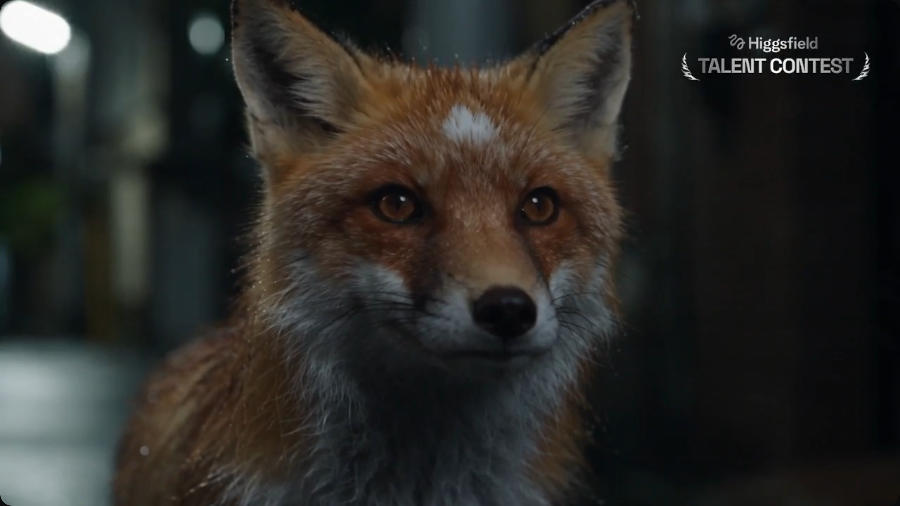
The middle of the film is a lesson in held atmosphere. The fox leads Ren to the shrine (2:12–4:21): torii in the rain at night, fox statues watching, a wolf in the wet dark, and the fox’s face in close-up at 4:21, rain on its fur, as composed as a portrait. Three visual worlds — mountain mist, shrine rain, Edo snow — and the film never dissolves at the joins, which is precisely where films like this usually come apart. Character and creature stay themselves across every register change. That consistency-with-variety is the hardest thing in AI filmmaking, and Kondo Koso does it beautifully.
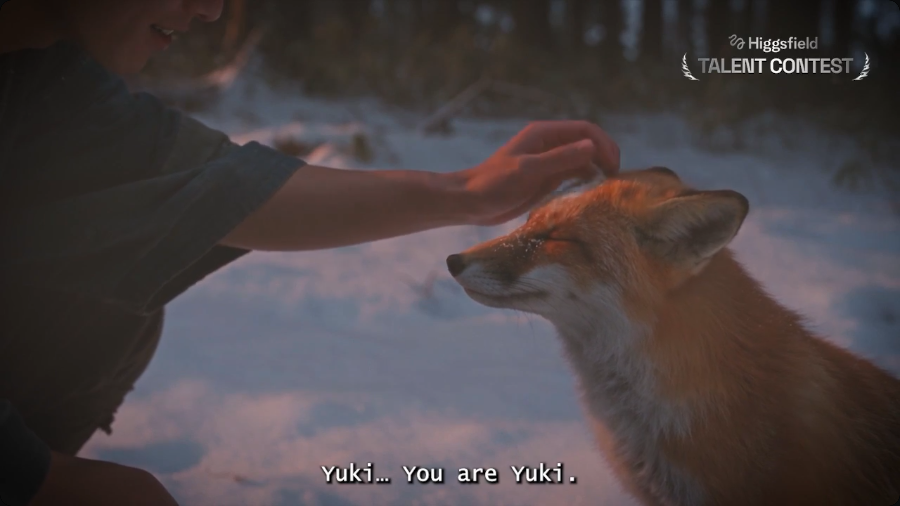
The Edo flashback (4:21–5:54) reframes everything before it. Three hundred years earlier: a hunter, a young man, snow — and the recognition that the fox has been known, and named, before. “Yuki… You are Yuki,” spoken over a hand stroking the fox in the snow at 5:54, turns Ren’s childhood rescue into one episode of a very long story. The fox is not a pet or a mascot; it is a being with a history that keeps intersecting with human lives, and Ren is the latest intersection. It is the film’s best idea, and it is delivered in its quietest voice.
A Gathering Instead of an Ending
Which brings me to the honest reservation, and it is a familiar one: the film ends where its story should ignite. The final movement (5:54–7:11) assembles the company in the Tokyo night — crow, wolf, fox and man, “at last, we’re all here” — and then simply holds the assembly, closing on the nine-flame end card. As a piece of atmosphere, it is lovely: the wet ledge, the crow’s feet beside a man’s shoe at 6:45, the whole company finally in one frame. As a story, it is a door opened onto a room we never enter. Three hundred years of history, a hunter in the past, a wolf in the present — the film gathers all of its pieces and then declines to play them.
I want to be fair about the size of that deduction. What Kondo Koso withholds is a climax; what it delivers — world, bond, history, mood — it delivers at a rare level. The 6.8 is not a judgement on anything it attempts and fails. It is a judgement on the act it does not attempt.
Best Scene (5:54–6:45)
“You Are Yuki”
The hinge of the film, and its best scene, is the turn from snow to city. It begins in the Edo past: a hand stroking the fox in the snow, and the recognition spoken aloud — “Yuki… You are Yuki.” Three hundred years collapse into a name. Then the film cuts to the Tokyo night and the gathering: the company the past has been assembling — crow, wolf, fox and man — finally in one place, on wet stone, under city light. It is the best scene because it is where the film’s two halves touch: the ancient bond and the modern boy, the named fox and the gathered company, history arriving in the present tense. Everything the film is about — loyalty across centuries, creatures waiting for their people — is in this minute, and it is staged with the restraint the whole film trades in.
Final Thoughts
There is real filmmaking here: three worlds, one held visual identity, a boy and a fox you believe in, and a past that deepens the present instead of decorating it. Kondo Koso is docked for the story it assembles and does not play out, not for anything it attempts and fails — and if Ms_Prod continues this story, the gathering at the end will read, in retrospect, as a promise rather than a shortfall. And honestly, I am in love with how this film looks, and I am looking forward to seeing its continuation. Verdict: a cinematic piece — atmospheric, consistent and quietly moving, ending exactly where it should begin paying off.
★★★ — A boy, a fox, and three hundred years of weather
Scene Breakdown
0:00–0:47 — The rescue. Misty mountain forest: a bear stands over the wounded fox; Ren steps between them, arms out, shielding it. A cut to black — deliberate, per the film’s design. “Oh, no!”
0:47–2:12 — The hospital. Ren wakes, his hand bandaged; the fox returns to him. The two size each other up — whether it has a name, and what passes between them that no one else shares.
2:12–4:21 — The shrine. The fox leads Ren out into the night: torii gates in the rain, fox statues, a wolf in the wet dark. The place carries the weight of three hundred years.
4:21–5:54 — Edo, three hundred years earlier. The flashback: a hunter, a young man, falling snow — and a recognition. “Yuki… You are Yuki.”
5:54–6:45 — The gathering. Tokyo night: a crow’s feet on a wet ledge beside a man’s shoe, and then the company assembled — crow, wolf, fox and man. At last, they are all here.
6:45–7:11 — The nine flames. The gathering holds; the film closes on a nine-flame end card.
There are no reviews yet. Be the first one to write one.